Clinically reviewed by Dr. Ponlawat Pitsuwan, Physician, Doctor Samui. Last reviewed: August 2026
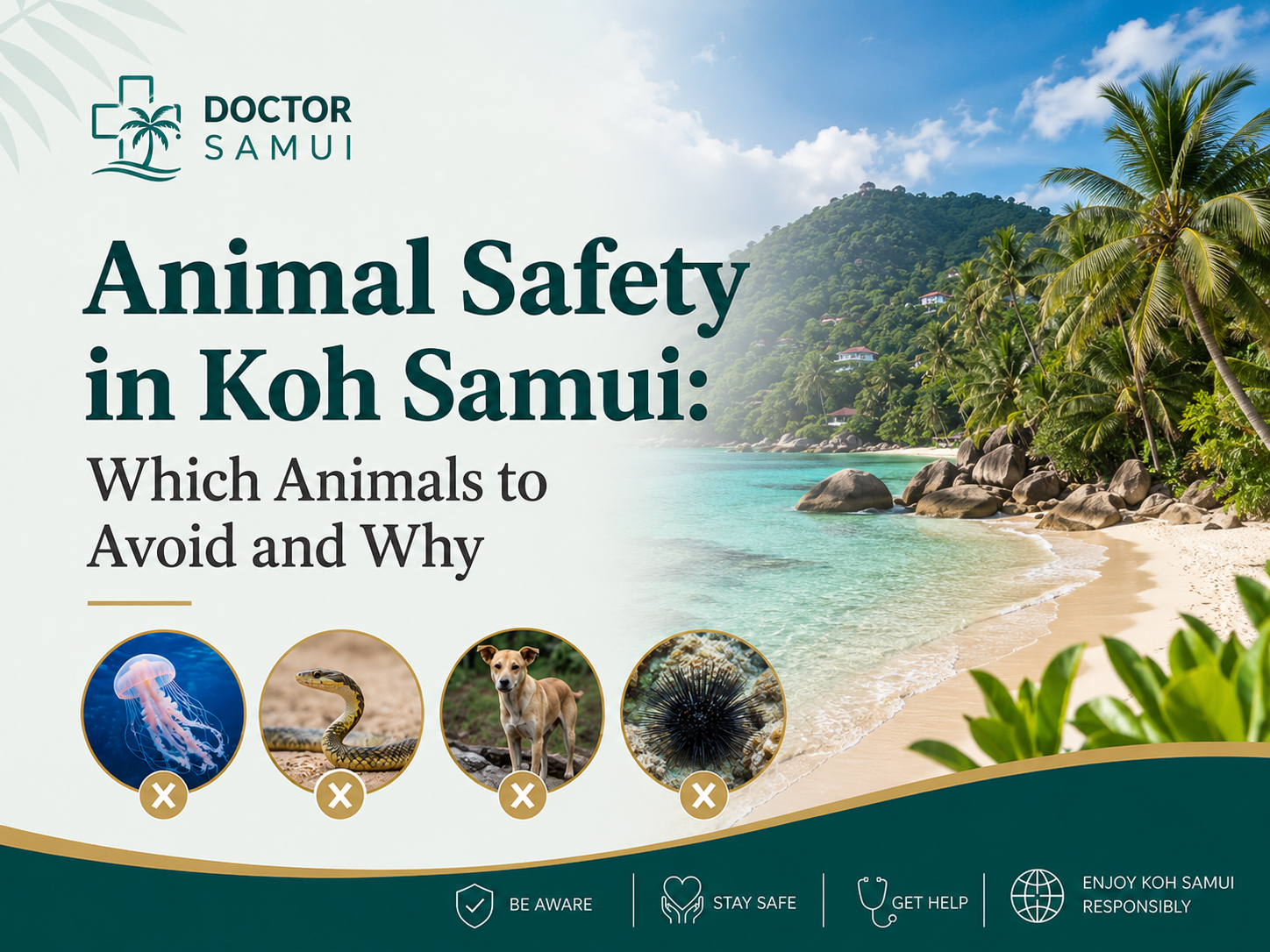
Koh Samui has genuine animal hazards: stray dogs with rabies exposure risk, macaque monkeys at temples, box jellyfish in the Gulf of Thailand, and venomous land creatures that turn up in villas and jungle trails. Most encounters are preventable. When they happen anyway, the first 15 minutes matter more than anything else. Wash the wound, do not close it, and get to a clinic the same day.
You are walking back from Big Buddha, your kids running ahead, when a soi dog trots over looking friendly. Your five-year-old reaches down before you can stop her. Or you are floating over the reef near Chaweng and something wraps around your calf and burns like a brand. Either way, you are now standing somewhere on this island, heart racing, wondering what just happened and what to do next.
Samui is a beautiful island and most trips go without incident. But the hazards here are specific and real, and the generic travel-safety advice you find online rarely maps onto what actually happens on the ground. This guide covers the animals that matter, the risks that are real versus overstated, and exactly what to do in the first few minutes after an encounter.
The Real Risk Level for Animal Safety on Koh Samui
Most tourists arrive worried about snakes. In practice, the animals that cause the most problems are stray dogs, macaque monkeys, and jellyfish. Snakes, scorpions, and centipedes exist here, but serious envenomations are uncommon compared to how often people fear them.
Uncommon does not mean impossible. The animals worth taking seriously are the ones where doing the wrong thing in the first few minutes makes the outcome significantly worse. That is the focus of this guide.
Stray Dogs and Soi Dogs — The Number One Animal Risk on Koh Samui
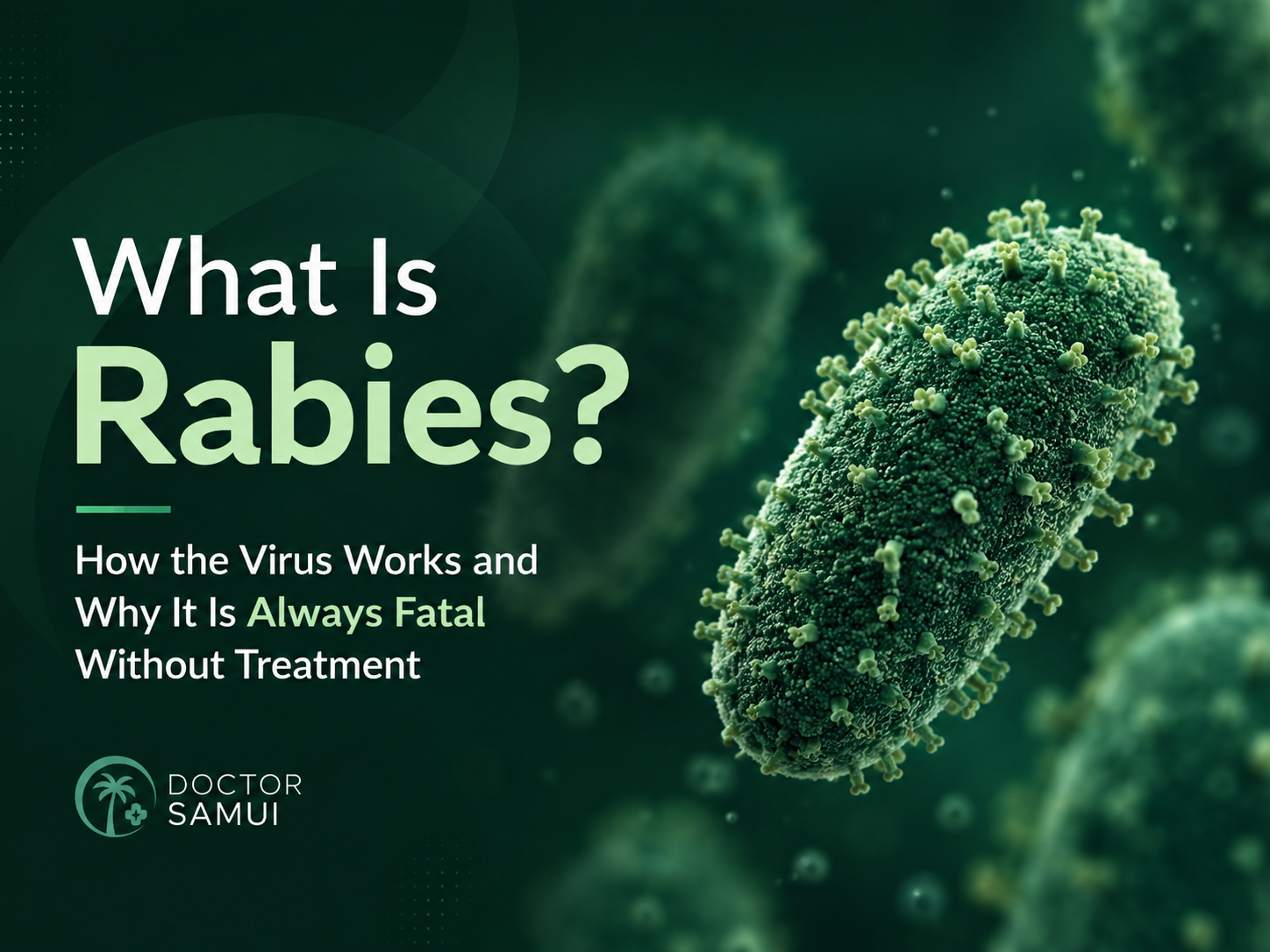
Thailand is classified as a rabies-positive country by the WHO. That single fact changes everything about how you treat a dog bite here, even from an animal that looks healthy and well-fed.
Most soi dogs on Samui are calm and used to tourists. But calm does not mean vaccinated. A bite, a scratch that breaks the skin, or even a lick on an open wound all carry exposure risk. Children are at higher risk because they approach animals impulsively, and bites to the face or neck carry a faster progression risk if rabies has been transmitted.
The WHO puts animal exposures into three categories. A lick on intact skin is Category I — no treatment needed. A scratch or bite that does not break the skin deeply is Category II. A puncture wound, a bite that bleeds, or contact with a mucous membrane is Category III. Category III exposures need post-exposure prophylaxis, called PEP, started as soon as possible and ideally within 24 hours.
PEP for someone not previously vaccinated means a course of Verorab injections given over several weeks, plus rabies immunoglobulin injected into and around the wound on day one. Do not wait to see if the dog seems fine. Rabies is fatal once symptoms appear. Treatment before symptoms is straightforward. After symptoms, there is no effective treatment.

Monkeys — Why Temple and Viewpoint Encounters Go Wrong
The macaque monkeys at Wat Plai Laem, around Grandfather and Grandmother Rocks, and at viewpoints across the island look entertaining right up until they bite. The usual scenario: a tourist holds out food, a monkey grabs it, the tourist pulls back, and teeth make contact.
Macaque monkeys can carry Herpes B virus, which is rare but potentially fatal in humans without rapid treatment. This is not a reason to avoid Samui’s temples. It is a reason not to hand-feed monkeys or get close enough for a selfie that puts your face near theirs.
If a monkey bites or scratches you, treat it exactly as you would a dog bite. Wash immediately with soap and running water for at least 15 minutes, then get to a clinic the same day. Do not let anyone tell you it was just a scratch. Scratches from primates need the same clinical assessment as bites. More detail on which animals to avoid in Koh Samui and why is on our rabies vaccine page.
Marine Hazards — Box Jellyfish, Sea Urchins, and Coral Cuts
Box jellyfish are the most clinically serious marine hazard on Koh Samui. The Gulf of Thailand has documented stings requiring hospitalisation, and risk is highest between July and October in calm, shallow water at dawn and dusk. Children wading in knee-deep water near shore are just as exposed as snorkelers.
Beach wisdom says to urinate on a jellyfish sting. This is wrong and can make things worse. If you or your child gets stung, flood the area with vinegar for at least 30 seconds. Do not use fresh water. Do not rub the skin. Rubbing fires off unfired stinging cells and deepens the envenomation. If the sting covers a large area, breathing changes, or the person becomes confused or collapses, this is an emergency.
Sea urchin spines in the foot are the injury we see constantly after reef days near Chaweng and Lamai. Most spines dissolve on their own, but some need removal and all carry infection risk in tropical heat. Coral cuts look minor and become infected fast. Stonefish hide in shallow reef areas and on sandy bottoms near rocks — a sting causes severe pain and needs urgent care.
Land Creatures Tourists Overlook — Snakes, Scorpions, and Centipedes
Samui has venomous snakes, including the Malayan pit viper and several cobra species. They rarely appear on beaches but turn up in gardens, near waterfalls, and occasionally in villa grounds during wet season when rainfall pushes them toward buildings.
If you find a snake in your room or villa, do not handle it. Call hotel staff immediately. Samui Snake and Wildlife Rescue handles removals and can be contacted through your accommodation. If bitten, immobilise the affected limb at roughly heart height, stay calm, and get transport to a clinic. Do not cut the wound. Do not try to suck out venom. A photo of the snake from a safe distance helps the treating doctor.
Scorpions and centipedes on Samui are genuinely painful but rarely life-threatening in healthy adults. Children and anyone with heart conditions or allergies are at higher risk of a serious reaction. Shake out shoes left on the floor overnight, check towels and clothing left on the ground, and watch where you place your hands on rock walls and tree bark near jungle trails. If the pain is severe, spreading, or comes with chest tightness or dizziness, come in.
Should You Get a Rabies Vaccine Before You Arrive?
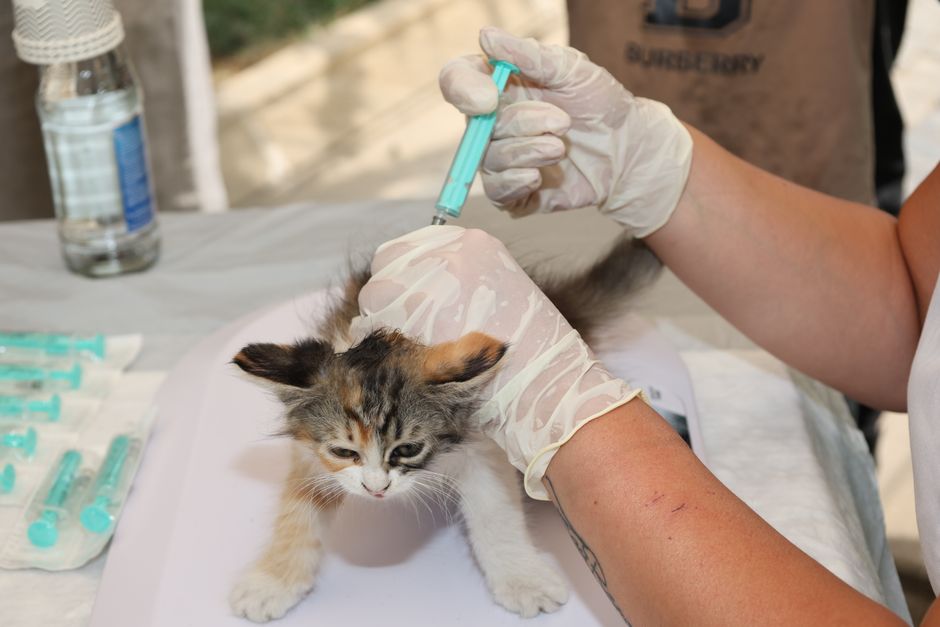
Pre-exposure vaccination for rabies does not prevent an infection after a bite, but it simplifies treatment significantly. You need fewer doses of vaccine after a bite and, critically, you do not need rabies immunoglobulin, which is expensive and must be injected into and around the wound.
Short-stay tourists in resort areas are lower priority. Pre-exposure vaccination makes sense for anyone staying more than a month, families travelling with young children, and anyone planning jungle treks, waterfall hikes, or temple visits. The course is three doses over three to four weeks. If you have not completed it before your trip, our rabies vaccine clinic in Chaweng can advise whether pre-exposure vaccination or a readiness plan suits your situation.
What to Do in the First 15 Minutes After an Animal Bite on Koh Samui
Most people do the wrong thing first. They photograph the animal, call family, or check their travel insurance documents. Do this instead.
Wash the wound under running water with soap for at least 15 minutes. Not a quick rinse. Fifteen full minutes. This is the single most effective step you can take to reduce rabies transmission risk. Then apply iodine solution or 70% alcohol. Do not tape the wound shut. Closing a bite wound traps any pathogen inside. Leave it open, cover it loosely, and get to a clinic.
For jellyfish stings, flood with vinegar immediately. For sea urchin spines, do not dig them out with tweezers. For snake bites, immobilise the limb and move toward medical care calmly. For any bite or scratch from a dog, cat, monkey, or bat, start the clock. The 24-hour window for beginning PEP matters.
Getting Medical Help on Koh Samui After an Animal Encounter
If you are in Chaweng or nearby, walk in to Doctor Samui directly. We see animal bites and stings regularly, carry Verorab for rabies PEP, assess WHO bite category on the spot, and handle the documentation your travel insurer needs for a multi-dose vaccine course.
If you are across the island in Bophut, Lamai, Maenam, Choeng Mon, or further toward Nathon or Taling Ngam, call us. We run 24/7 hotel and villa visits across Koh Samui. If it is 2am and your child has just been bitten at your villa, you do not need to wait until morning.
Bring any photos of the animal. Know when the bite occurred. If you have had rabies pre-exposure vaccination previously, tell us the dates if you have them. All of this helps us classify your exposure correctly and start the right protocol without delay.
Bitten, stung, or scratched on Koh Samui? Doctor Samui offers same-day walk-in care at our Chaweng clinic and 24/7 doctor visits to hotels and villas across the island. We carry rabies vaccines, handle post-exposure prophylaxis, treat jellyfish stings and infected wounds, and provide all documentation needed for travel insurance claims. If it happened today, come in today.
FAQ
Dr. Ponlawat Pitsuwan
Physician, Doctor Samui
a walk-in clinic based in Chaweng, Koh Samui, with 24/7 hotel and villa visits across the island. He sees tourists, families, and long-stay expats for animal bites, rabies post-exposure prophylaxis, jellyfish and marine stings, wound care, and all common island injuries. His focus is straightforward, evidence-based care delivered in plain language.