Clinically reviewed by Dr. Ponlawat Pitsuwan, Physician, Doctor Samui. Last reviewed: August 2026
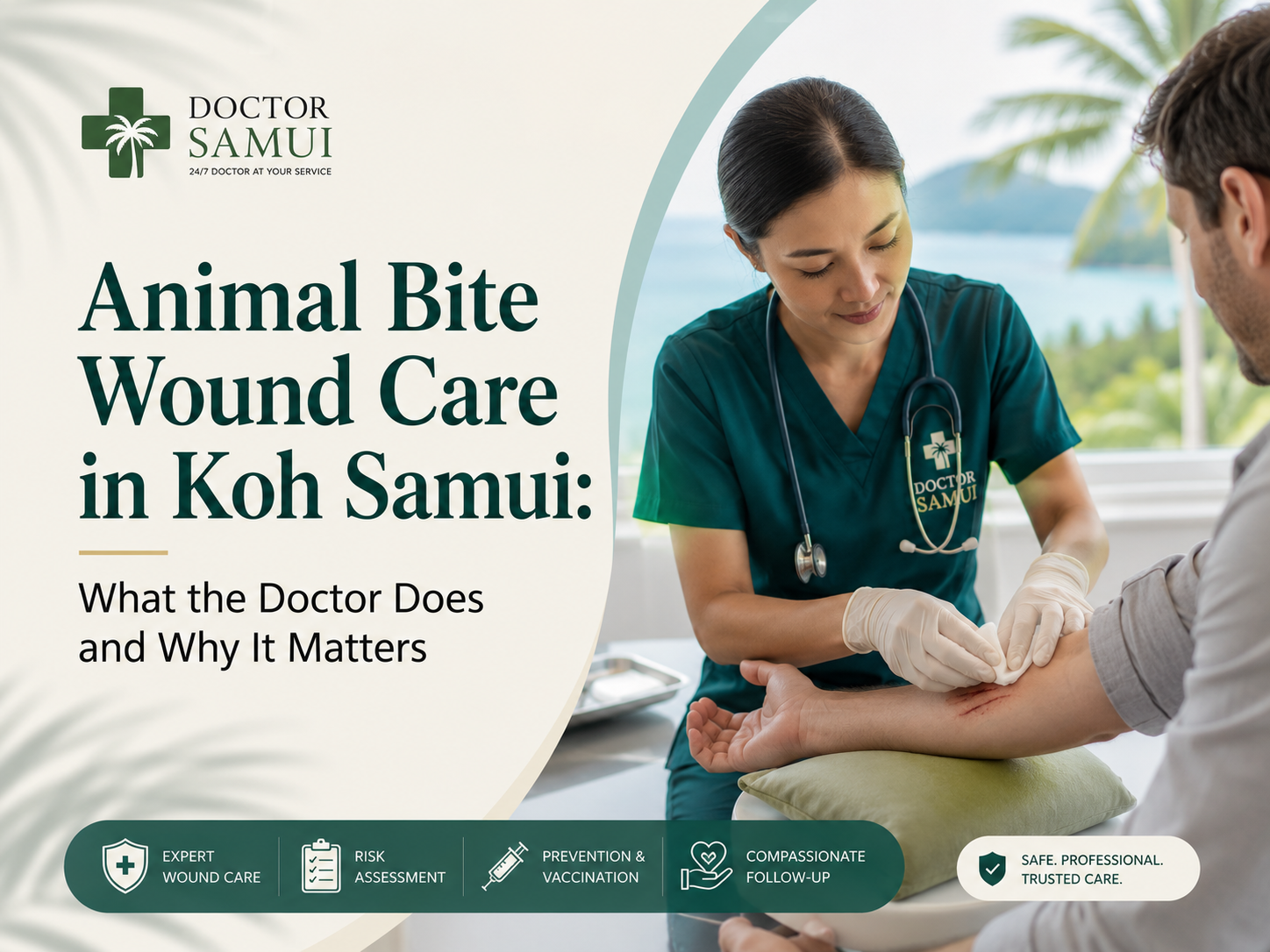
Most animal bite wounds are not stitched right away. Animal mouths carry bacteria that can get sealed inside a closed wound and cause a serious infection. The doctor’s job is to assess the bite location, depth, time since injury, and the animal involved, then decide whether to close the wound immediately, wait a few days, or leave it open entirely. In Thailand, rabies risk is assessed at the same time, and that decision also shapes how the wound is managed.
A stray dog steps out from the tree line near a Chaweng beach bar, there is a sharp bite to your ankle, and suddenly you are standing on the sand wondering what to do next. Press on it? Go to a clinic? Will it need stitches? These are exactly the right questions. The answer most people do not expect: the doctor may deliberately choose not to close that wound at all.
Animal bites are not the same as cuts. A coral graze on your foot and a dog bite on your hand can look similar, but they carry very different infection risks. Bites push bacteria deep into tissue, and closing the wound can trap that bacteria inside. In Samui’s heat and humidity, that can turn into an abscess or a spreading infection within 24 hours. When you come in after an animal bite, we assess several things before we even consider animal bite sutures.

Why Animal Bite Wounds Are Often Left Open
Animal mouths are not clean. Dogs, cats, and monkeys carry bacteria that survive deep in closed tissue, including organisms that thrive without oxygen. When a bite wound is sutured immediately, those bacteria get sealed inside. The result is often an abscess or a rapidly spreading wound infection.
Puncture wounds are the most dangerous for this reason. A tooth drives deep through the skin, deposits bacteria at the base, and the small entry point closes over the top. That is close to the worst possible scenario for trapping infection. These are almost never sutured.
Wounds seen more than six to eight hours after the bite carry the same concern. Bacteria have already had time to multiply. Closing the wound at that point gives them a protected space to keep growing. The standard approach is to leave the wound open, irrigate it thoroughly, pack it if needed, and review it in two to three days.
When Sutures Are the Right Choice for Animal Bite Wounds
There are situations where suturing is the right call, even with a bite wound. A large, gaping laceration on the face is one example. Facial wounds have a strong blood supply, which lowers infection risk. Leaving a wide facial wound open can also cause scarring and closure problems later. In these cases, careful suturing after thorough cleaning is appropriate.
Bites to the scalp and trunk sometimes qualify for primary closure too, as long as the wound is clean, the injury is recent, and the patient is otherwise healthy. The doctor weighs infection risk against the functional and cosmetic cost of leaving the wound open.
What we do not do is close a hand bite, a foot bite, a puncture wound, or any bite assessed well after the injury without very strong clinical reason.
Sutures, Steri-Strips, or Skin Glue: Which Closure Method and When
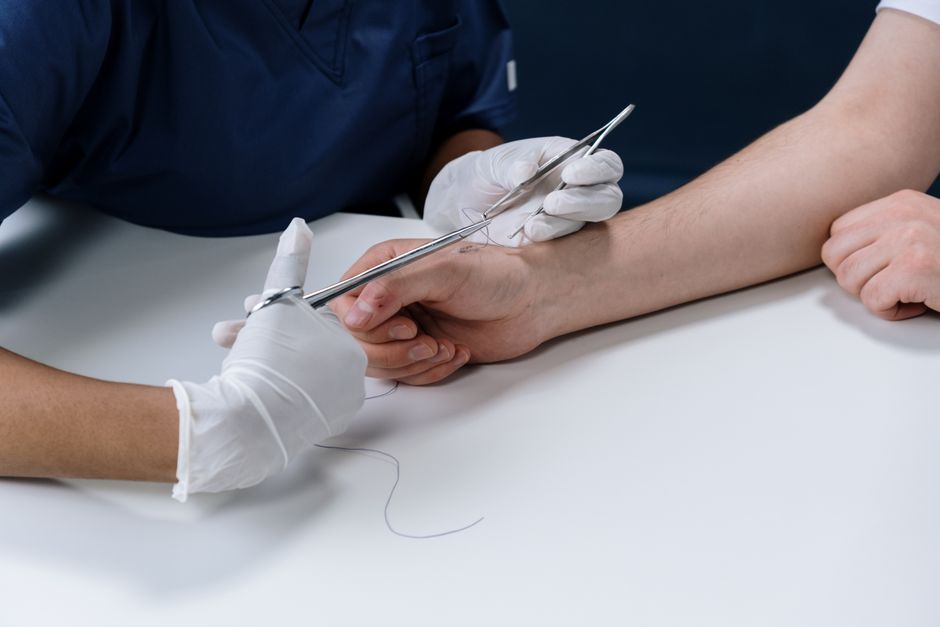
Sutures are not the only option. When a wound needs some support but full closure is too risky, there is a range of approaches. Adhesive strips, known as Steri-Strips, can hold wound edges together loosely without fully sealing the wound. Skin adhesive works for shallow wounds with clean edges. Neither traps bacteria the way traditional sutures do.
Delayed primary closure is a standard technique for bite wounds. The wound is left open for three to five days while the patient takes antibiotics. If there is no sign of infection after that period, the doctor closes it then. This is common for bites to the lower limbs, where healing is slower and infection risk is higher.
Open packing, placing sterile gauze inside a deeper wound to keep it open and absorbing, is used for deep puncture wounds or bites showing early signs of infection. The packing is changed daily. At Doctor Samui, we manage this with scheduled wound dressing appointments so tourists do not have to improvise wound care back at their hotel.
Animal-Specific Bite Profiles on Koh Samui
Dog bites here are usually from stray beach dogs or dogs near restaurants and temple grounds. Depth matters most. A shallow graze may only need cleaning and a dressing. A deeper bite with torn tissue needs proper irrigation and a clinical decision on closure. All dog bites in Thailand require rabies risk assessment.
Cat bites look minor and are actually more dangerous. A cat’s teeth are thin and sharp and create deep puncture wounds that close almost immediately on the surface. Pasteurella bacteria, common in cats, can cause a rapid, painful infection within hours. Cat bites on the hand are treated as high-priority wounds. They are never sutured early.
Monkey bites at the viewpoints and temple grounds around the island are a separate category. Their bites are almost always puncture wounds with a high contamination profile. They are almost never closed immediately. If you are bitten by a monkey on Samui, come in the same day.
Rabies Risk and the Animal Bite Suture Decision in Thailand
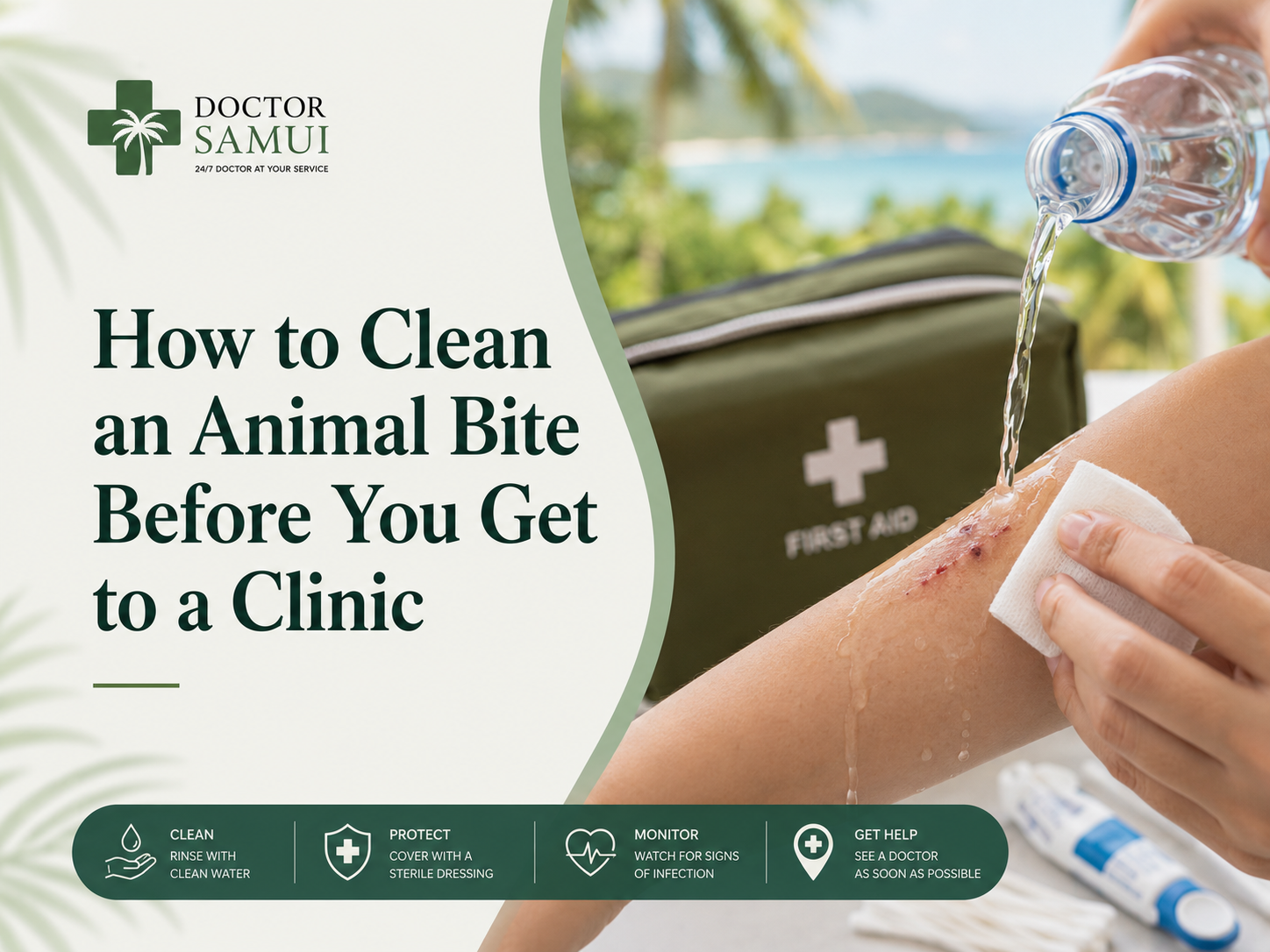
In Thailand, any bite from a dog, cat, or monkey triggers a rabies risk assessment. The wound must be irrigated with soap and water immediately and thoroughly before anything else happens. This step alone reduces transmission risk significantly.
Any bite that breaks the skin is classed as a serious exposure under WHO guidelines. This requires a course of rabies vaccines and, for deep or multiple bites, rabies immunoglobulin injected into and around the wound. That injection is another reason bite wounds are kept accessible rather than sutured closed straight away.
Suturing a bite wound before rabies immunoglobulin is administered can interfere with the local immune response the treatment is designed to trigger. At Doctor Samui, we assess rabies category and wound closure suitability together, not as separate decisions.
How Koh Samui’s Tropical Climate Changes the Wound-Closure Decision
This is where Samui’s setting genuinely changes the standard approach. In cooler climates, a wound that is borderline for closure is usually manageable. In Samui’s heat and humidity, that same wound carries higher risk. Bacteria multiply faster. Sweat keeps the wound moist. Many patients are also heading back to a beach, a pool, or the sea within days.
Seawater exposure after a bite wound is a real concern. Marine bacteria can enter a healing wound and cause aggressive infections. Tropical ulcers, deep slow-healing wounds driven by mixed bacteria in hot, humid conditions, are not rare here. We factor all of this into the closure decision.
If you were bitten yesterday and want to go snorkeling off Koh Tao or out to Angthong tomorrow, that timeline affects the wound plan. Be honest with your doctor about what you have planned.
What to Expect at Doctor Samui After an Animal Bite
You come in, or we come to your hotel or villa. The first step is proper wound irrigation. This is not a quick rinse. Thorough cleaning is one of the most important steps in both infection prevention and rabies risk reduction, and it takes time to do properly.
We assess the wound location, depth, time since the bite, and the animal involved. We check your tetanus status and start antibiotics if indicated. We assess rabies risk and begin post-exposure prophylaxis if needed. Then we make the wound closure decision: immediate suture, delayed closure, adhesive strip support, or open wound management.
If the wound stays open, we arrange dressing appointments at the clinic on a daily or every-other-day basis. If you are leaving the island soon, we make sure you have clear instructions and everything you need to continue care at your next stop. None of this requires a trip to the hospital in Nathon or Surat Thani.
Bitten by a dog, cat, or monkey on Koh Samui? Walk into the Doctor Samui clinic in Chaweng or call us for a 24/7 hotel or villa visit. We assess animal bites, start rabies post-exposure prophylaxis where needed, make the wound closure decision on the same visit, and provide ongoing wound dressing care for tourists staying on the island. No appointment needed for walk-ins.
Frequently Asked Questions
Dr. Ponlawat Pitsuwan
Physician, Doctor Samui
a walk-in clinic based in Chaweng, Koh Samui, with 24/7 hotel and villa visits across the island. He sees tourists, families, and long-stay expats for animal bite assessment, wound closure decisions, rabies post-exposure prophylaxis, and ongoing wound management in tropical conditions. His focus is clear, evidence-based care delivered in plain language.