Clinically reviewed by Dr. Ponlawat Pitsuwan, Physician, Doctor Samui. Last reviewed: August 2026
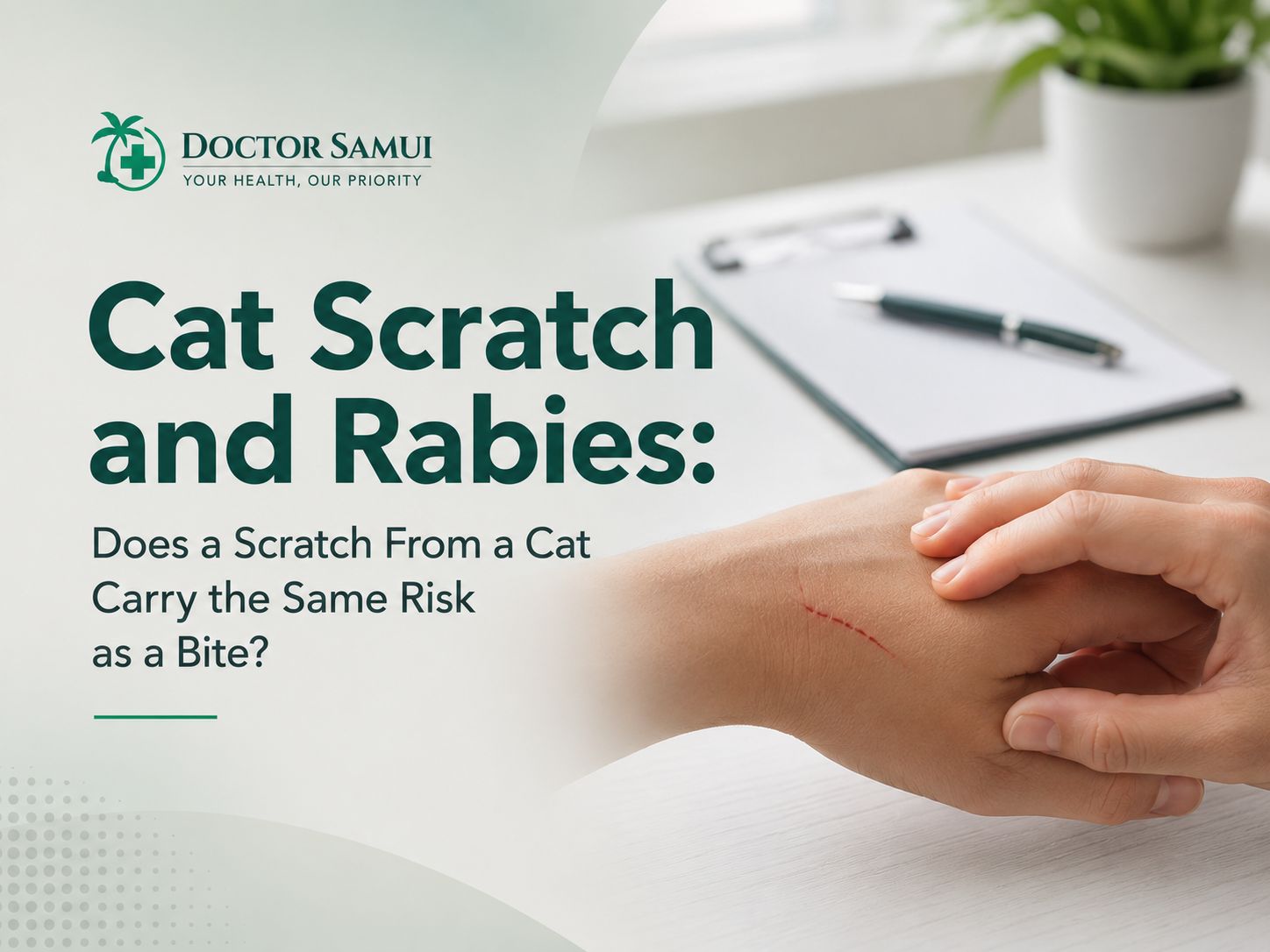
A cat scratch that breaks the skin is classified as a Category II rabies exposure by the WHO. In Thailand, a rabies-endemic country, this means you need medical assessment the same day, especially if the cat was a stray or its vaccination history is unknown. A scratch is lower risk than a deep bite, but it is not zero risk. Wash the wound immediately and see a doctor.
You are sitting outside a beachside restaurant in Chaweng when a skinny cat jumps onto the table. Your child reaches out, the cat swipes, and there is a small but bleeding scratch across the back of the hand. The cat drops down and walks off. Now you are Googling at the table, trying to work out whether this is something to worry about. The short answer: in Thailand, any scratch that draws blood from an unvaccinated or unknown cat needs a doctor’s opinion the same day.
This is not a reason to panic. It is a reason to move quickly. The difference between a scratch and a bite affects how we assess risk, but here on Koh Samui, where most cats wandering beaches, temples, and resort gardens have no vaccination history, we treat an unobserved stray cat scratch as a potential exposure until we know otherwise. Treatment is simple, effective, and available now.
Why Koh Samui Changes This Conversation Entirely
Back home, if your vaccinated house cat scratches you, the risk is genuinely close to zero. That cat has a vet record. You know where it sleeps. This is a completely different situation.
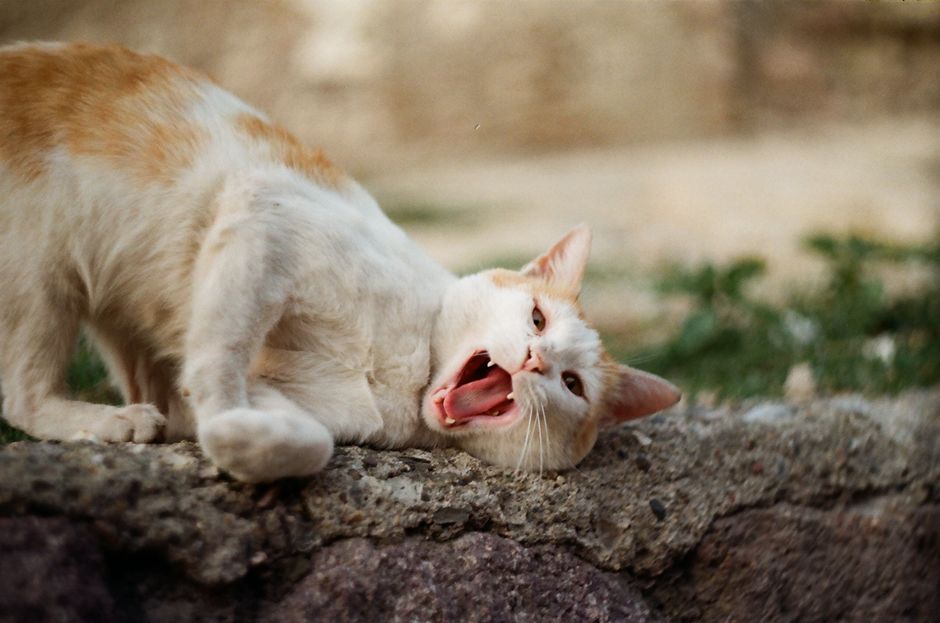
Thailand is classified as a rabies-endemic country by the WHO. Koh Samui has a large population of free-roaming cats around temples, night markets, beaches, and resort areas. Very few of them have confirmed vaccination histories. When the cat’s status is unknown, we cannot apply the same reassurance we would give you about a pet at home.
The 10-day observation rule applies when a known, healthy animal can be monitored by a vet. It is rarely usable here. You are on holiday. The cat has vanished. That changes the picture entirely.
How WHO Classifies a Cat Scratch
The WHO divides animal exposures into three categories, and knowing which one applies to you is the first thing we work through at the clinic.
Category I is touching or feeding an animal, or licks on intact skin. No broken skin, no treatment needed. Category II is a scratch or nibble that breaks the skin without deep puncture wounds. Most cat scratches land here. It requires wound washing and a course of rabies post-exposure prophylaxis, known as PEP. Category III is a deep puncture wound, heavy bleeding, or contact with eyes or mouth. Category III requires PEP plus Rabies Immune Globulin, called RIG.
Most cat scratches are Category II. A deep scratch near the face, or any saliva contact with eyes or mouth, moves into Category III.

The Saliva-on-Claws Mechanism
Here is the part that surprises most people. Rabies spreads through saliva, not claws. So why does a scratch carry any risk?
Cats groom constantly. They lick their paws dozens of times a day, leaving dried saliva on their claws. If those claws break your skin, the same virus pathway as a bite becomes possible. The deeper the scratch and the more it bleeds, the higher that risk becomes.
Any scratch that reaches a mucous membrane, an eye, the inside of the mouth, or an open wound elsewhere, is treated as a bite-equivalent under WHO guidance. A scratch to the face warrants extra urgency on that basis alone.
Does It Matter If It Was a Kitten?
Yes, and this comes up often with families staying at resorts across the island.
Kittens have extremely sharp, fine claws and almost no impulse control when playing. They scratch more frequently and more deeply than adult cats. Their vaccination status at beach resorts is almost never confirmed. A kitten scratch should be assessed exactly as you would assess a scratch from an adult stray.
For children, there is one more consideration. The smaller the child, the more likely a scratch lands near the face or head. Rabies travels along nerves to the brain, and a shorter distance from wound to head can mean a shorter window before symptoms could appear. Do not wait overnight to see if it looks worse. Get it assessed the same day.
What to Do in the First 15 Minutes
Do this before anything else. It is the single most effective step you can take to reduce risk.
Wash the wound with soap and running water for at least 15 minutes. Not a quick rinse. Fifteen minutes, with soap. Then apply iodine or an alcohol-based antiseptic if you have one. Do not close the wound with tape or a plaster yet. Then call or walk in to a clinic.
If you are at a villa or hotel and do not want to move a distressed child, Doctor Samui offers 24-hour hotel and villa visits across the island. A doctor can assess the wound on site and start PEP the same day if it is needed. You do not need to travel to begin treatment.
What to Expect at the Clinic After a Cat Scratch
When you come in to our Chaweng clinic, or we visit you at your hotel, we will ask about the cat, the wound depth, and whether you have had any previous rabies vaccination. That last question matters a lot.
If you have never had a rabies vaccine, and the exposure warrants PEP, the full course is four doses of cell-culture rabies vaccine given on Day 0, Day 3, Day 7, and Day 14. If the wound is deep or on the face, we also give Rabies Immune Globulin on Day 0, once only, at the start.
If you already completed pre-exposure rabies vaccination before your trip, the protocol is much simpler: two booster doses on Day 0 and Day 3, and no RIG needed. This is one of the main reasons we recommend pre-exposure vaccination before travelling to Thailand. It does not eliminate the need to see a doctor after a scratch, but it makes the whole process shorter and easier. Days 3 and 7 of the vaccine schedule can often be completed here on Samui or arranged at a clinic in your next destination. We help coordinate that regularly.
Other Risks From a Cat Scratch That Are Not Rabies
Rabies is the most urgent concern, but it is not the only one worth knowing about.
Cat scratch disease is caused by a bacterium called Bartonella henselae, which lives in cat fleas and under cat claws. It usually causes a small bump at the scratch site, then swollen lymph nodes over the following weeks. It responds well to antibiotics. Pasteurella, a bacterium common in cat saliva and on claws, can cause a skin infection that spreads quickly, especially in people with diabetes or a weakened immune system.
Cat scratches also carry a tetanus risk if your vaccination is not current. At our Chaweng clinic, a wound assessment covers all of this. We check tetanus status and look for signs of early infection, not just rabies exposure. If you need advice on keeping your tetanus cover up to date while travelling, ask when you come in.
Scratched by a cat on Koh Samui? Whether you are at a resort, villa, or beach, Doctor Samui can assess the wound, classify your exposure, and start rabies post-exposure prophylaxis the same day. Walk in to our clinic in Chaweng, or book a 24-hour hotel or villa visit anywhere on the island. We keep WHO-approved cell-culture rabies vaccine in stock. Do not wait until tomorrow.
Frequently Asked Questions
Dr. Ponlawat Pitsuwan
Physician, Doctor Samui
a walk-in clinic based in Chaweng, Koh Samui, with 24-hour hotel and villa visits across the island. He regularly assesses tourists, families, and long-stay expats for animal exposures including cat and dog scratches and bites, administers rabies post-exposure prophylaxis following WHO protocols, and advises travellers on pre-exposure rabies vaccination before arriving in Thailand.