Clinically reviewed by Dr. Ponlawat Pitsuwan, Physician, Doctor Samui. Last reviewed: August 2026
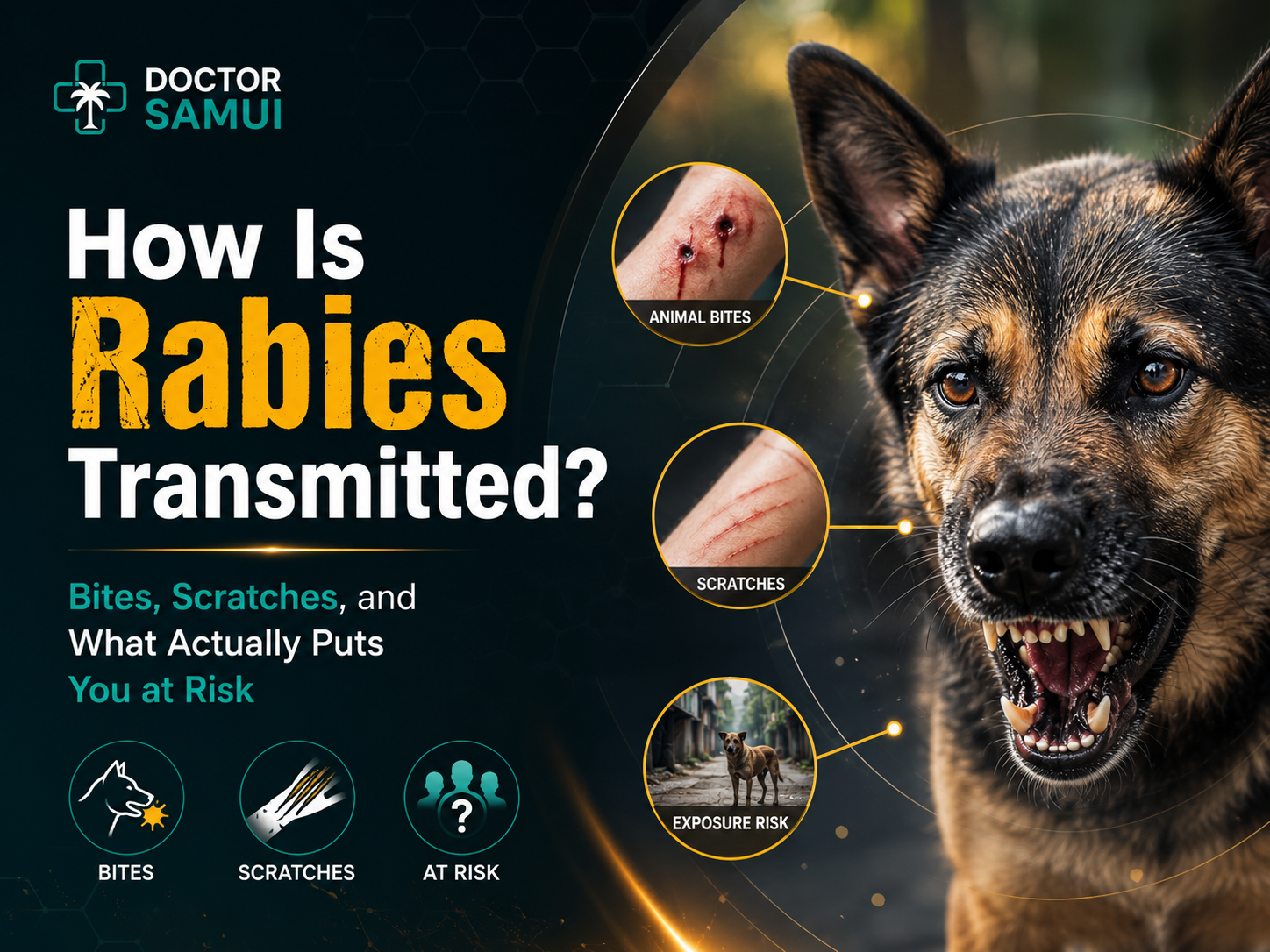
Rabies is transmitted when an infected animal’s saliva contacts broken skin or a mucous membrane, most often through a bite or scratch. On Koh Samui, the main risks are stray dogs, temple dogs, and monkeys near waterfalls and hiking trails. Not every animal contact requires treatment, but any bite or scratch that breaks the skin needs same-day clinical assessment. Do not wait to see how it develops.
You are halfway up the trail at Na Muang when a macaque drops from a tree, swipes at your hand, and disappears before you have processed what just happened. There is a thin red line across two fingers. Is that enough to worry about? On Koh Samui, yes, it is.
Thailand is a rabies-endemic country, meaning the virus circulates in the local animal population. The island has stray dogs on almost every beach, temple dogs that visitors approach daily, and wild monkeys at the waterfalls and forest trails that tourists hike every week. Most animal contacts are nothing. But some are a medical emergency, and the difference is not always obvious when you are standing there with a bleeding scratch and no idea what vaccinations, if any, the animal has had.
What Rabies Transmission Actually Requires
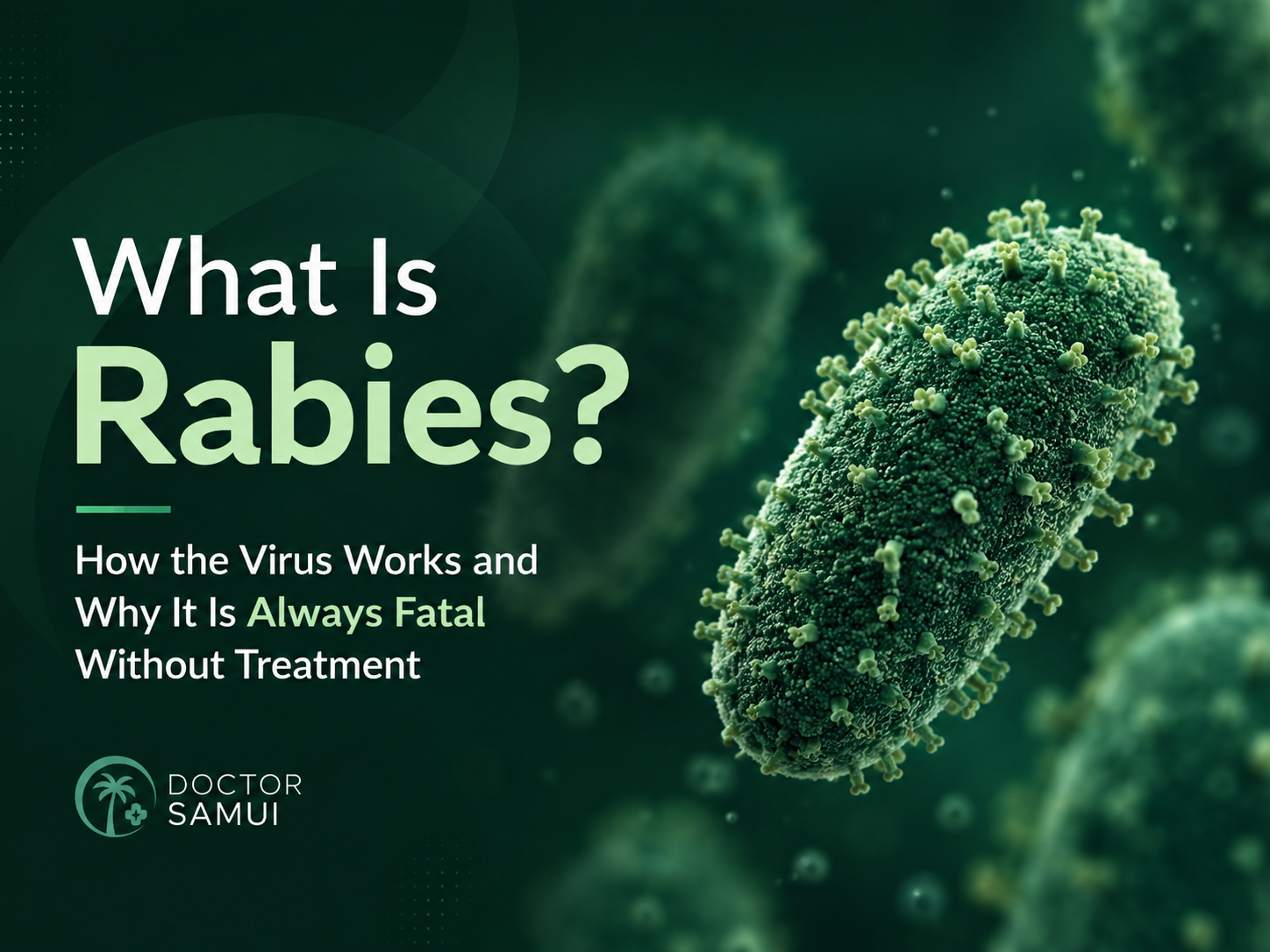
The rabies virus cannot enter your body through unbroken skin. It needs a route in. That route is almost always an infected animal’s saliva entering a wound or contacting a mucous membrane, the soft wet tissue inside your eyes, nose, or mouth.
Once saliva carrying the virus reaches broken skin, it travels into nearby nerve tissue and works its way toward the brain. This is why acting fast matters: the sooner treatment starts, the better.
Rabies does not spread through blood, urine, or feces. It does not spread by touching an animal, breathing near one, or touching a carcass with intact skin. Those are not exposures, and no treatment is needed for them.
Bites, Scratches, and Licks: The Real Risk Hierarchy on Koh Samui
A deep bite from a stray dog carries the highest risk. A dog bite punctures skin and delivers saliva directly into the wound. That is a WHO Category III exposure, and it requires immediate wound care, rabies immunoglobulin injected at the wound site, and a full vaccine course.
A scratch that breaks the skin sits in the middle. Monkeys lick their paws constantly. When a macaque at Na Muang scratches you, there is a real chance its claws carried saliva. That is a WHO Category II exposure. It needs assessment and post-exposure prophylaxis, which most people call PEP.
Saliva on intact, unbroken skin is a Category I exposure. No PEP is needed. The catch is that tourists often do not realise their skin was already broken. Sunburned, abraded, or lightly scratched skin from a day of reef walking counts as broken skin. If a dog licked your sunburned forearm, that warrants a check, not automatic panic, but a check.

The Animals on Koh Samui That Carry Rabies Risk
Stray dogs are the most common source of rabies exposure on the island. You see them on Chaweng Beach, sleeping outside restaurants in Lamai, wandering resort car parks. Most are calm. Some are not. None have a vaccination record you can verify.
Temple dogs are a risk that visitors consistently underestimate. People approach them because they seem calm and cared for. They may not be vaccinated.
Monkeys near Hin Lad Waterfall and Na Muang are wild animals that are used to people, which is exactly when scratches and bites happen. Primate bites and scratches are taken seriously because primates can carry multiple pathogens, not just rabies.
Stray cats in resort gardens are lower on the risk list but not zero. A cat scratch that breaks the skin still warrants assessment, particularly in children.
Bats are present on the island. A bat bite is often painless and can go unnoticed during sleep. If you wake and find a bat in your room, or if a child was left alone near one, treat it as a potential exposure.
Exposures That Do Not Transmit Rabies
Petting a dog or cat without being bitten or scratched, being sniffed or nudged, touching an animal and then touching your face with clean hands, walking near an animal: none of these transmit rabies.
Blood, urine, and feces from a rabid animal are not infectious. Touching a dead bat with a shoe or a stick is not an exposure. A dog barking at you from across the road is not an exposure.
The concern is specifically saliva entering a break in the skin or contacting your eyes, nose, or mouth. If that did not happen, you do not need PEP.
How Rabies Is Transmitted to Humans: The WHO Category System
| WHO Category | What Happened | Treatment Needed |
|---|---|---|
| Category I | Touching or feeding an animal, licks on intact skin | None |
| Category II | Scratch or abrasion breaking the skin, minor bite without bleeding, lick on broken skin | Wound care plus rabies vaccine course |
| Category III | Deep bite wound, multiple bites, bite or scratch on face, hands or neck, saliva contact with mucous membrane, bat exposure | Wound care plus rabies immunoglobulin plus full vaccine course |
A monkey scratch at a waterfall is typically Category II. A stray dog bite that draws blood is Category III. A dog licking your unbroken arm is Category I. The boundary between intact and broken skin is not always obvious in the moment, which is why a clinical assessment makes more sense than trying to self-classify on the trail.
What To Do in the First 15 Minutes After an Exposure on Koh Samui
Wash the wound immediately. Use soap and running water for at least 15 minutes. This is the single most effective first step and genuinely reduces transmission risk. If you are at a waterfall, use whatever clean water you have and get to proper running water as fast as you can.
Do not apply chilli, toothpaste, or traditional remedies to the wound. Do not try to suck it out. Wash first, cover second.
Then contact a clinic. Doctor Samui’s Chaweng clinic is open for walk-ins and can send a doctor to your hotel or villa if you cannot travel. Wound assessment, classification, and the first vaccine dose can all happen the same day.
Getting Assessed and Treated on Koh Samui
When you come in, or when a doctor visits your hotel, the first step is wound assessment. The doctor looks at the wound depth, the animal species, the circumstances, and whether there are signs of broken skin. That classification determines what treatment you need.
If you need PEP, the vaccine series starts the same day. For Category III exposures, rabies immunoglobulin is given into and around the wound site, followed by vaccine doses over the coming weeks. If you are leaving the island before the course is finished, that is manageable: the schedule can continue at a clinic in your home country.
If you already had pre-exposure vaccination before arriving, your treatment is simpler: fewer vaccine doses and no immunoglobulin needed. That is a significant reason why long-stay visitors and families who hike regularly should consider pre-exposure vaccination before an incident happens. You can find out more about the rabies vaccine on Koh Samui at the Chaweng clinic, with no appointment needed for urgent cases.
Pre-Exposure Vaccination: Who Should Consider It on Koh Samui
If you are staying on the island for more than a few weeks, hiking regularly, travelling with young children, or spending time in areas where animal contact is likely, pre-exposure vaccination is worth thinking about before anything happens.
Children are at higher risk because they are more likely to approach animals, less likely to report a bite or scratch, and a bite to the face or neck is more dangerous in a small body. Pre-exposure vaccination gives the immune system a head start. If a bite does happen later, the follow-up treatment is faster and simpler.
Walk into the Chaweng clinic and ask about the rabies vaccine schedule at any time. It does not require a long lead time before it becomes useful, and it significantly reduces the urgency and complexity of any treatment that follows.
If you or your child has been bitten or scratched by an animal on Koh Samui, do not wait. Doctor Samui’s Chaweng clinic offers walk-in wound assessment and same-day rabies post-exposure treatment, including immunoglobulin and the first vaccine dose. A doctor can also visit your hotel or villa across the island, 24 hours a day. To discuss pre-exposure vaccination before an incident happens, walk in any time. No appointment needed.
Frequently Asked Questions
Dr. Ponlawat Pitsuwan
Physician, Doctor Samui
a walk-in clinic based in Chaweng, Koh Samui, with 24/7 hotel and villa visits across the island. He regularly assesses and treats tourists, families, and long-stay expats for animal bites, rabies post-exposure prophylaxis, pre-exposure vaccination, and travel health concerns specific to the island. His approach is practical, evidence-based, and delivered in plain language.