Clinically reviewed by Dr. Ponlawat Pitsuwan, Physician, Doctor Samui.
Last reviewed: November 2026
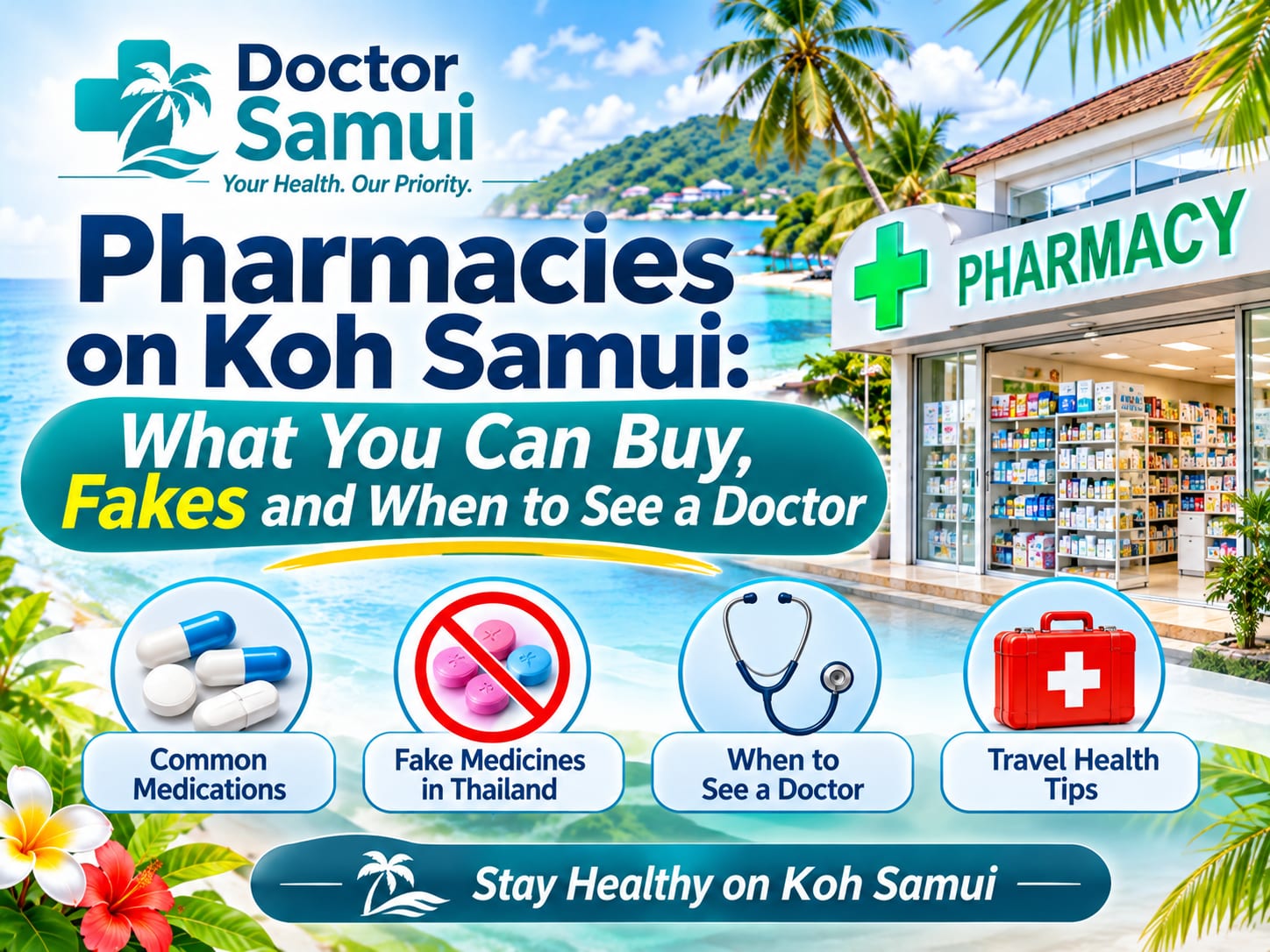
Thai pharmacies sell a wide range of medicines without a prescription, including antihistamines, antidiarrhoeals, antiseptics, and common painkillers. Antibiotics are classified as dangerous drugs under Thai law. Most can be dispensed by a licensed pharmacist without a formal prescription, though the pharmacist is supposed to exercise professional judgment. Enforcement of responsible dispensing varies. Counterfeit medicines are a real risk on Samui, especially from unregistered sellers and online sources. If your condition involves a wound from the sea, a fever, or anything that is not improving, a doctor visit is safer than pharmacy self-treatment.
You scraped your shin on coral near Chaweng reef. The cut looks minor, and the nearest pharmacy is two minutes from your hotel. Reasonable plan. The pharmacy will have antiseptic, dressings, and quite possibly an antibiotic cream. What it cannot tell you is whether that cut carries the kind of marine bacteria that ignores the wrong antibiotic choice. Knowing what a Koh Samui pharmacy actually stocks, what it cannot legally sell without a prescription, and when self-treatment crosses a line is the difference between a quick fix and a week of worsening infection.
Koh Samui has dozens of pharmacies spread across Chaweng, Lamai, Bophut, Maenam, and beyond. They are genuinely useful for everyday travel health. They are also where tourists most often make decisions they later regret: buying antibiotics for the wrong condition, taking a medicine without knowing its interactions, or walking away with something that is not what the label says.

How Thai Pharmacies Work
Thailand regulates medicines through the Thai Food and Drug Administration, the Thai FDA. All legitimate pharmacies must be registered. GPP-certified pharmacies, those meeting Good Pharmacy Practice standards, are required to have a licensed pharmacist on-site during opening hours. You can usually see the registration certificate displayed inside. If you cannot find one, that is worth noticing.
Medicines in Thailand fall into three broad categories. Over-the-counter products can be sold freely. Dangerous drugs can only be dispensed by a licensed pharmacist. They do not formally require a prescription under Thai law, but their dispensing is at the pharmacist’s discretion. Enforcement of this boundary is inconsistent. Specially controlled dangerous drugs require a prescription from a licensed doctor and are genuinely restricted. This is why the answer to "can I buy this without a prescription?" is not simply yes or no.
Chain pharmacies like Boots follow stricter dispensing standards than many independent shops. Hospital pharmacies are the most reliably controlled. Independent local pharmacies vary considerably, and that variation matters most when you are asking for something in the dangerous drugs category.
What You Can Buy Without a Prescription on Samui
Paracetamol, oral rehydration salts, antihistamines, antiseptic creams, antifungal creams, motion-sickness tablets, insect repellent, sunscreen, and basic wound dressings are all sold freely and are generally fine to buy from any registered pharmacy.
For a day trip to Na Muang waterfall or a snorkel out near Angthong, a small kit of antiseptic cream, oral rehydration sachets, an antihistamine, and a digital thermometer covers most minor situations. All of these are over-the-counter in Thailand.
What you cannot reliably self-treat at a pharmacy: an infected coral cut, ear pain after diving, a rash spreading across your torso, a fever that has lasted more than two days, or any animal bite. These need a clinical assessment. For ear problems after a dive, Doctor Samui offers same-day swimmer’s ear treatment and ear infection care at the Chaweng clinic or as a hotel visit.
Antibiotics and Self-Treatment Risks
Antibiotics are classified as dangerous drugs under Thai law. Most can legally be dispensed by a licensed pharmacist without a formal prescription, at the pharmacist’s professional discretion. Many independent pharmacies on Samui do so without any clinical assessment of the patient. That does not make it a good idea.
The core problem is matching. The antibiotic you pick up for a skin infection from a reef graze may not cover the bacteria actually in that wound. Marine bacteria often differ from the pathogens behind a typical land-based skin infection, and choosing the wrong antibiotic means treatment failure. Antimicrobial resistance is a growing issue in Thailand, partly because of this pattern of unsupervised antibiotic use.
Tramadol is now a specially controlled drug in Thailand and requires a doctor’s prescription. Any pharmacy selling it freely is not operating within current regulations.
If a pharmacy has already sold you antibiotics without a prescription and the wound or infection is not clearly improving within a day or two, get seen. Doctor Samui can assess the site and prescribe the right treatment at your hotel or villa if you cannot travel.
Counterfeit Medicines on Koh Samui
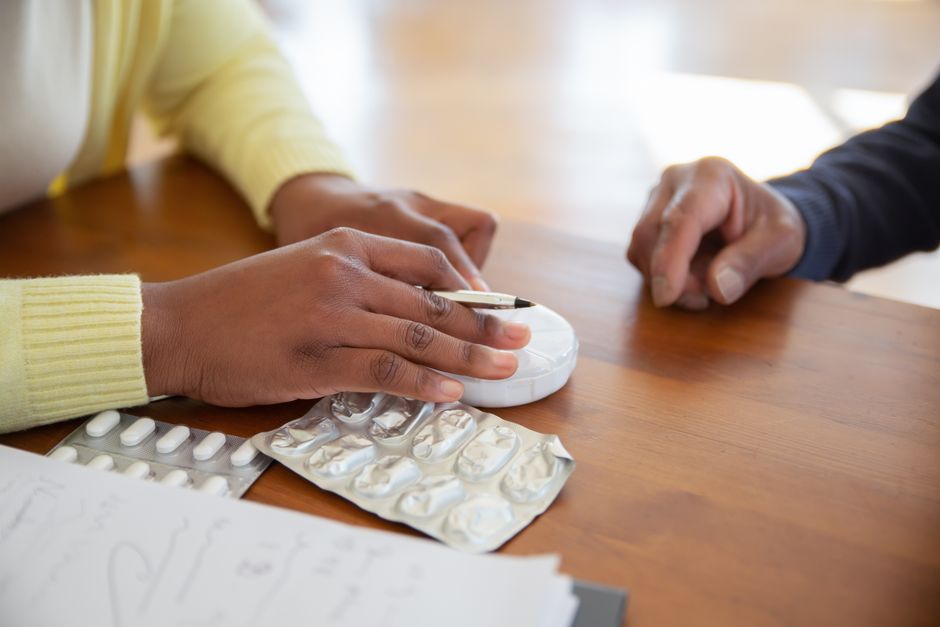
This is a real risk. Counterfeit medicines found in the Southeast Asia region most commonly include erectile dysfunction drugs, anti-infectives including antibiotics, and antimalarial drugs. The danger is not always that they contain something harmful, though sometimes they do. More often, they contain the wrong amount of active ingredient, too little to work, or inconsistent quantities across tablets.
Thailand does not have dedicated online pharmacy legislation, and advertising or selling prescription and pharmacy-dispensed medicines online is prohibited. Any unregistered source offering to deliver medicines to your hotel room is operating outside the law. Analyses of medicines sourced online in Southeast Asia have found a significant proportion contain incorrect doses of active ingredient.
When buying from a physical pharmacy, check for the Thai FDA registration number on the packaging. It is an 8 to 13 digit number preceded by a small logo. If you have already bought something and are not sure about it, bring it in. For a full breakdown of red flags, see the guide on how to spot fake medicine in Thailand.
When to See a Doctor Instead of a Pharmacy
Some situations belong with a doctor, not a pharmacist. The pharmacist has no diagnostic tools. They cannot take a swab, run a blood test, or examine an infected wound properly. They are dispensing based on what you tell them.
Coral cuts and sea wounds that are red, warm, or showing lines spreading outward need a doctor, not antiseptic cream. A fever above 38.5 degrees Celsius lasting more than 48 hours on Samui should be tested. Dengue, leptospirosis, and typhoid all circulate here, and no pharmacy product diagnoses or treats any of them. Diarrhoea with blood, signs of dehydration in a child, or any animal bite need clinical care. If a monkey near one of the temples has scratched or bitten you, that is not a situation for a pharmacy.
Parents travelling with young children should know that weight-based dosing for children’s medicines is critical. A pharmacist may not ask your child’s weight before recommending a dose. If your child has a fever over 38.5 degrees Celsius and is under five, or has a rash that is spreading, call a doctor rather than visiting a pharmacy.
Travel insurance is worth thinking about here. Insurers typically require a formal receipt with a diagnosis code from a licensed doctor to process a claim. A pharmacy receipt alone usually does not qualify. Doctor Samui works with travel insurance providers and can visit your hotel or villa 24 hours a day. For insurance documentation, see the page on cashless treatment with your travel insurance.
If you are in Chaweng, you can walk into the clinic. If you are further out in Lamai, Bophut, Choeng Mon, or anywhere else on the island, a hotel or villa visit means you do not have to move. The mobile doctor team covers the whole island, including IV therapy in Lamai, house calls in Maenam, and visits across Bophut and beyond.
Not sure whether the pharmacy was the right call? Or already there and not improving? Doctor Samui is a walk-in clinic in Chaweng with 24-hour hotel and villa visits across all areas of Koh Samui, including Lamai, Bophut, Maenam, Choeng Mon, and beyond. The English, German, and Hebrew-speaking team can assess wounds, run same-day blood tests, prescribe the right antibiotics, and provide insurance documentation. Contact us at doctorsamui.com or through the button below.
FAQ
Dr. Ponlawat Pitsuwan
Physician, Doctor Samui
a walk-in clinic based in Chaweng, Koh Samui, with 24-hour hotel and villa visits across the island. He sees tourists, families, and long-stay expats for wound assessment, infection treatment, travel medicine, and prescription management. His focus is straightforward, evidence-based care delivered in plain language.
References
- Tangcharoensathien V et al. Sources and patterns of antibiotic use in Thailand. BMC Infectious Diseases, 2020. PMC7705273.
- Nation Thailand. Thailand Tightens Controls on Painkiller Tramadol Amid Misuse Crisis. Nation Thailand, 2025.
- WHO. Substandard and falsified medical products. WHO Fact Sheet, 2023.
- Tilleke & Gibbins. Online Pharmacies in Thailand: Potential Risks. Tilleke & Gibbins, 2024.
- NHS. Antibiotics: uses, side effects, interactions. NHS, 2024.
The information in this article is for educational purposes only and does not constitute medical advice. It should not be used to self-diagnose or replace a consultation with a qualified physician. If you have concerns about your health, contact a licensed medical professional. For appointments at Doctor Samui, visit doctorsamui.com.