
Clinically reviewed by Dr. Ponlawat Pitsuwan, Physician, Doctor Samui. Last reviewed: September 2026
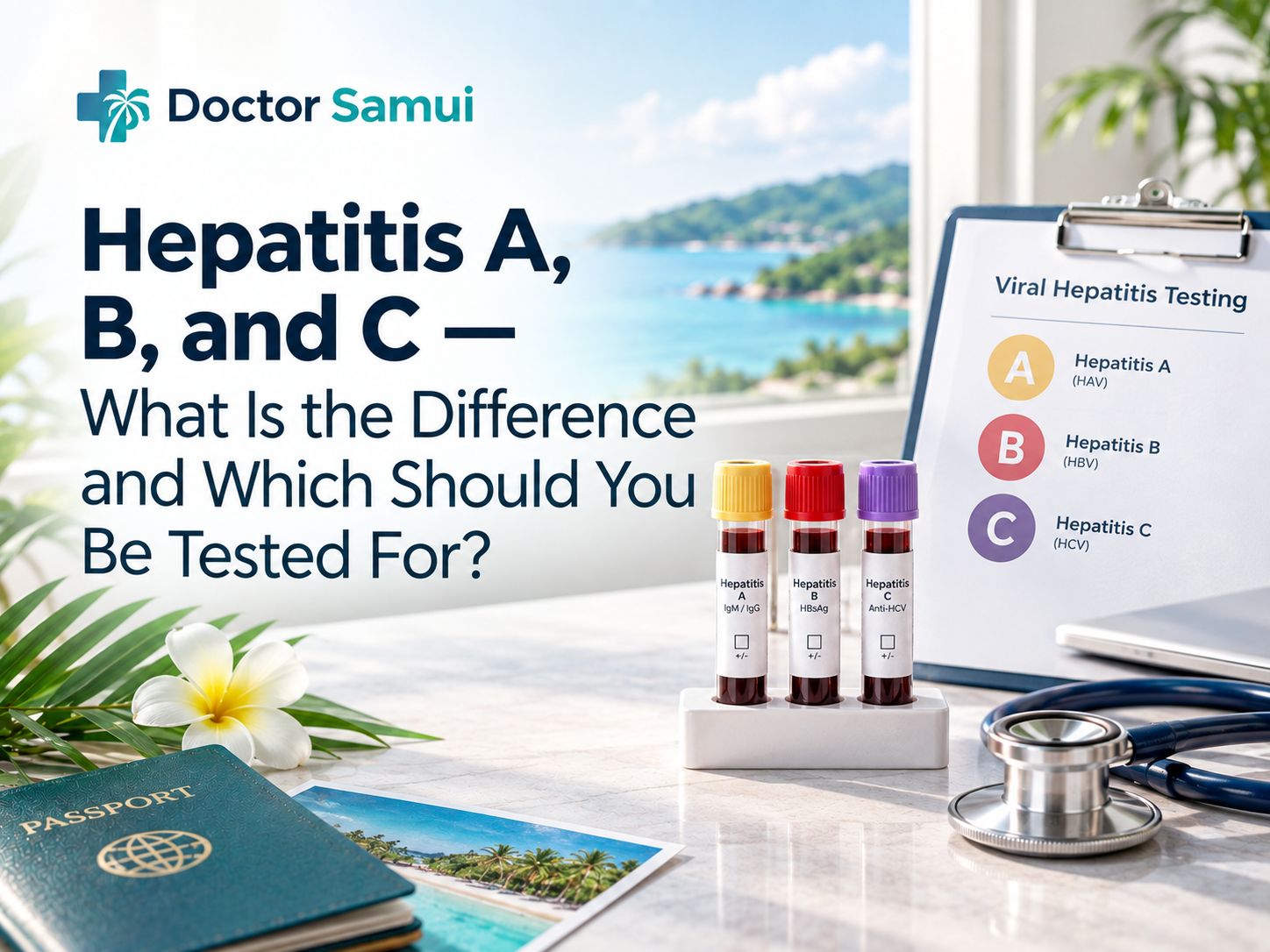
Hepatitis A, B, and C all inflame the liver but spread differently and need different responses. Hepatitis A comes from contaminated food and water and does not become chronic. Hepatitis B and C spread through blood and sexual contact and can silently damage your liver for years without symptoms. A simple blood test tells you where you stand, and Doctor Samui offers walk-in and villa-visit testing across Koh Samui.
You spent Saturday night at the Fisherman’s Village street market in Bophut, ate grilled shellfish, shared drinks with new friends. Sunday you sat for a bamboo tattoo in a studio off the beach road in Lamai. By Tuesday you feel off: tired, a little nauseous, not quite yourself. You start searching online. All three types of hepatitis come up. Now you are not sure which one, if any, applies to your weekend.
That confusion is exactly what this article is here to fix. Hepatitis A, B, and C are three completely different infections that happen to share a name and a handful of symptoms. Which one matters to you depends entirely on what you were exposed to. On Koh Samui, all three are real risks, but they come from very different situations.

What Hepatitis A, B, and C Have in Common
All three infect the liver. All three can cause jaundice (a yellow tint in the skin and eyes), dark urine, fatigue, and nausea. That overlap is why people get confused, and why running the right blood test matters more than guessing.
The similarities stop at symptoms. How each virus spreads, how long it lasts, how serious it becomes, and whether a vaccine exists are all completely different. Getting the right answer starts with knowing which exposure actually happened.
Hepatitis A on Koh Samui: Food, Water, and Night Market Risk
Hepatitis A spreads through contaminated food, water, ice, raw shellfish, and salads rinsed in tap water. This is the type most tourists encounter here, and you usually feel sick two to seven weeks after exposure.
Symptoms come on fast: fatigue, loss of appetite, nausea, stomach pain, and sometimes jaundice. Most adults recover fully. Hepatitis A does not become a chronic infection, and there is no long-term liver damage in healthy people.
The protection is a vaccine, and it works very well. If you arrived in Koh Samui without one, that is worth addressing at our Chaweng clinic. Eating at beach restaurants and night markets without vaccination carries a real risk in this region, particularly with shellfish and fresh produce.

Hepatitis B in Thailand: A Higher Baseline Than Most Travellers Expect
Hepatitis B spreads through blood and sexual contact. Thailand has historically carried one of the highest hepatitis B burdens in Southeast Asia, with a large proportion of the population carrying the virus, many without knowing it. A person can be infectious with no symptoms at all.
This matters practically. A sexual partner, a tattoo artist using shared equipment, or anyone with an undetected infection can pass it on. Hepatitis B spreads through blood-to-blood contact and unprotected sex more easily than hepatitis C does.
Most healthy adults who get hepatitis B clear it within a few months. Around five to ten percent develop a chronic infection, which can lead to liver cirrhosis or liver cancer over decades if unmanaged. A vaccine exists and is highly effective. A blood test checking for hepatitis B surface antigen and antibodies tells you whether you are infected, immune, or still vulnerable.
Hepatitis C: The Silent Infection Expats and Long-Stay Visitors Should Know About
Hepatitis C is blood-borne. Tattooing, piercings, shared needles, and blood-to-blood contact are the main routes. It does not spread easily through sex, though the risk is not zero.
The serious part is that most people who contract hepatitis C have no symptoms for years. Around three in four people who get it will develop a chronic infection, and by the time the liver shows damage, years of silent inflammation may have already passed.
There is no vaccine for hepatitis C. However, it is now curable with a short course of tablets taken over eight to twelve weeks in most cases. Early detection makes treatment straightforward. Testing late means more liver damage to manage before treatment can begin.
If you are a long-stay expat on Koh Samui and have had tattoos, piercings, or blood exposures over the past several years and have never been tested, get tested now. There is no good reason to wait.
Koh Samui Risk Factors You May Not Have Thought About
Bamboo tattooing is popular on the island, especially around Lamai and the Chaweng beach road studios. If the needle or bamboo tool is not properly sterilised between clients, hepatitis B and C can both transfer. Ask directly about sterilisation before you sit down. If you are unsure, get tested afterwards.
Unprotected sex during a holiday is a well-known hepatitis B risk. Given Thailand’s carrier rate, that risk is higher here than in many other destinations. This is not about lifestyle judgement. It is about knowing the numbers and acting on them.
Shared snorkeling or dive equipment is a lower-risk route for blood-borne viruses than tattooing or sex, though it is worth keeping in mind if equipment hygiene is unclear. The bigger dive-related risk on Koh Samui is usually ear and sinus pressure injury, but hepatitis is worth considering if you had skin abrasions and used shared gear.
Hepatitis A and B Vaccines Available at Our Chaweng Clinic
Both hepatitis A and B vaccines are available at Doctor Samui. The Twinrix combined vaccine covers both in a single course and is a practical choice for travellers who are unvaccinated for both. Vaccines are cold-chain verified and stored correctly at our clinic.
For hepatitis A alone, two doses six to twelve months apart give long-term protection. For hepatitis B alone, a standard three-dose course is used. Accelerated schedules are available if you are leaving the island soon.
If you are already on Koh Samui and have not been vaccinated, walk in and we will work out what you need. Starting protection now is better than hoping for the best over shellfish platters and street food.
Which Hepatitis Should You Be Tested For?
That depends on what happened. Here is how we think about it in the clinic.
If you ate at unfamiliar venues, drank tap water or used ice from an unknown source, or you are now experiencing fatigue, nausea, or jaundice: test for hepatitis A. A blood test checking for hepatitis A antibodies confirms it.
If you had unprotected sex, got a tattoo or piercing with uncertain sterilisation, or had any blood-to-blood contact on the island: test for hepatitis B and C. The hepatitis B surface antigen screen covers B. A separate hepatitis C antibody test covers C. Liver function tests give a baseline picture of how your liver is responding.
Window periods matter. Hepatitis B surface antigen can usually be detected from around one to nine weeks after exposure. Hepatitis C antibodies typically appear from eight to eleven weeks. Testing too early after a risky exposure can give a falsely reassuring result. We will tell you exactly when to come back for confirmation based on when the exposure happened.
What to Do After a Risky Exposure on Koh Samui
Time matters most with hepatitis B. If you had a significant exposure to potentially infected blood or had unprotected sex and are unvaccinated, post-exposure vaccination is most effective within 24 hours. Come in the same day if you can.
For hepatitis A, a vaccine given within two weeks of exposure can still prevent illness in many people. It is not a guarantee, but it is worth doing quickly.
There is no post-exposure treatment for hepatitis C. The focus is testing at the right window period and starting antiviral treatment early if the result comes back positive.
Do not wait to see how you feel. With hepatitis B and C especially, feeling fine tells you nothing. These infections are often completely silent in the early weeks.
Worried about a hepatitis exposure on Koh Samui, or unsure whether you need testing or a vaccine? Doctor Samui offers walk-in hepatitis blood testing and vaccinations at our Chaweng clinic, seven days a week. If you are staying at a hotel or villa anywhere across the island, including Lamai, Bophut, Maenam, Choeng Mon, or Chaweng Noi, our team can come to you around the clock for a discreet blood draw and clinical assessment. Walk in, or call us and we will come to you.
Do I need a hepatitis vaccine before coming to Koh Samui?
Most travel health authorities recommend hepatitis A and B vaccination before travelling to Thailand. Hepatitis A is endemic here and spreads through food and water at places you are very likely to eat. If you are already on the island and unvaccinated, Doctor Samui can give you both vaccines or the combined Twinrix course at our Chaweng walk-in clinic.
I got a tattoo in Koh Samui. Should I get tested for hepatitis?
Yes, especially if you are not certain about sterilisation at the studio. Tattooing with non-sterile equipment is a known transmission route for both hepatitis B and C. Test at the right window: roughly one to nine weeks for hepatitis B, and eight to eleven weeks for hepatitis C antibodies. Doctor Samui can advise on exactly when to test based on your tattoo date.
What is the real difference between hepatitis B and C?
Both spread through blood and can cause long-term liver damage, but they are not the same. Hepatitis B has a vaccine and spreads more easily through sexual contact. Hepatitis C has no vaccine but is now curable with a short course of tablets. A single blood panel at Doctor Samui covers both.
Can I catch hepatitis A from eating at Koh Samui’s beach restaurants or night markets?
Yes. Hepatitis A spreads through contaminated food, water, ice, and shellfish, and is a real risk at street markets and beach restaurants across the island, particularly for unvaccinated travellers. Fatigue, nausea, jaundice, and dark urine appearing two to seven weeks after eating at unfamiliar venues are warning signs. The good news is hepatitis A does not become chronic and most adults recover fully.
How do I get a hepatitis blood test on Koh Samui without going to a big hospital?
No hospital needed. Doctor Samui offers walk-in hepatitis testing at our Chaweng clinic and can send a clinician to your hotel or villa anywhere on the island for a discreet blood draw. A standard panel covers hepatitis B surface antigen, hepatitis B and C antibodies, and liver function tests, with results typically available the same day or within 24 hours.
I had unprotected sex in Koh Samui. Should I be worried about hepatitis B?
Given Thailand’s hepatitis B carrier rate, it is a reasonable concern and worth acting on. If you are unvaccinated and the exposure was recent, come in as soon as possible: post-exposure vaccination is most effective within 24 hours. Even if more time has passed, a blood test will confirm your status. Doctor Samui’s sexual health service covers the full picture including HIV, other STIs, and hepatitis screening in one visit.
Dr. Ponlawat Pitsuwan
Physician, Doctor Samui
a walk-in clinic based in Chaweng, Koh Samui, with 24/7 hotel and villa visits across the island. He sees tourists, families, and long-stay expats for hepatitis testing, vaccination, sexual health assessment, and post-exposure management. His focus is straightforward, evidence-based care delivered in plain language.
