Clinically reviewed by Dr. Ponlawat Pitsuwan, Physician, Doctor Samui.
Last reviewed: October 2026
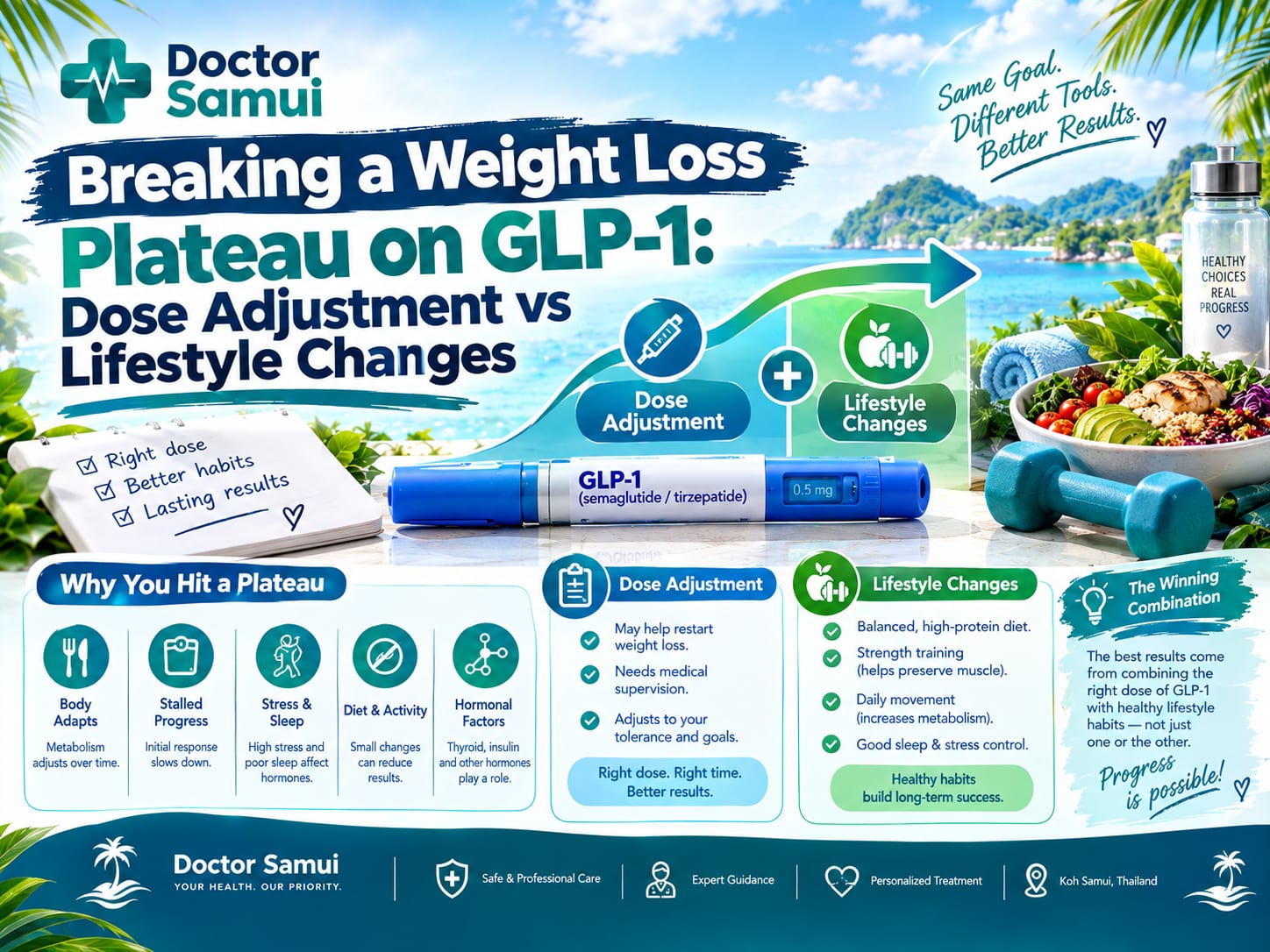
A GLP-1 plateau is real weight loss that has genuinely stalled, not just a slow week. If your weight has not moved for four to eight consecutive weeks despite consistent dosing, diet, and exercise, that counts as a true plateau. The fix is not always a higher dose. The cause matters first, and it could be metabolic drift, a lifestyle factor, or something medical running underneath.
You have been doing the injections, watching what you eat, and the scale moved steadily for months. Now it has not shifted in weeks. You are still on the island, still doing the right things, and your next dose review is with a doctor back home you will not see for another month. That gap is exactly where a good decision can turn into a long stall.
A weight loss stall on GLP-1 medication, whether you are using semaglutide or tirzepatide, is not a sign the drug has failed. It is a signal that something in the equation has shifted. Understanding why weight loss stalls on GLP-1 points you toward the right fix, not just the most obvious one.
What a GLP-1 Plateau Is and What It Is Not
Four weeks without movement on the scale can feel alarming. It is not always a real plateau. Weight naturally shifts day to day based on fluid, salt, sleep, and stress. A true plateau is four to eight consecutive weeks of no meaningful change, with no major disruption to your diet, exercise, or dosing. Anything shorter than that is probably fluctuation, not failure.
Knowing this matters because jumping to a dose increase too early adds side effect risk without adding results. Ruling out other causes first is not optional.
Why GLP-1 Weight Loss Stalls: The Real Causes
The body adjusts. When you lose weight, your body lowers its energy output to match the smaller frame. This is called metabolic adaptation, and it is well documented. Your resting calorie burn drops as body mass falls. GLP-1 medications suppress appetite effectively, but they do not stop this process.
Behavioural drift is the other common driver. Appetite suppression often eases slightly at a stable dose over time. Portion sizes creep back up. Step count drops. Alcohol reappears. None of these feel dramatic, but together they quietly close the calorie gap that was producing results.
True pharmacological tachyphylaxis, where the GLP-1 receptor itself becomes less responsive to the drug, is less common than most people assume. Metabolic drift and behavioural changes are far more likely culprits. Chasing a dose increase when lifestyle work is actually needed is the most common and most avoidable mistake.
Hidden Medical Causes Worth Ruling Out
A genuine GLP-1 plateau break can have a medical cause sitting underneath it, one that no amount of dose adjustment will fix until it is identified.
Underactive thyroid slows metabolism and can stall weight loss independently of your medication. Insulin resistance can deepen during periods of weight loss and slow progress. Hormonal changes, including perimenopause and low testosterone in men, can shift body composition in ways that mask fat loss on the scale. Certain medications, including some antidepressants, antipsychotics, and beta blockers, promote weight retention.
If you have been consistent for eight weeks and nothing is moving, a blood panel is the right first step. GLP-1 medications are not suitable for everyone. People with a personal or family history of medullary thyroid carcinoma or Multiple Endocrine Neoplasia syndrome type 2 should not use them. Anyone who develops severe abdominal pain, persistent vomiting, or signs of an allergic reaction while on a GLP-1 medication should see a doctor promptly. Doctor Samui’s Chaweng clinic can run thyroid, fasting glucose, insulin, and hormonal markers in a single visit. This rules out a hidden driver before any prescription change is made.
Dose Adjustment: When Is It the Right Call
Stepping up your GLP-1 dose over time is a normal part of treatment. But a dose increase only makes sense in one specific situation: your appetite has noticeably returned, hunger is driving your eating again, and you have already ruled out lifestyle and medical causes.
If your appetite is still suppressed and the scale is still flat, more drug is unlikely to help. The bottleneck is elsewhere.
Dose adjustment should always involve a prescriber who knows your history. If you are away from your usual doctor, Doctor Samui can carry out a proper in-person review, assess your current response, check your vitals, and discuss titration if it is genuinely warranted. That is a different level of care from a telehealth call where no one can examine you.
Lifestyle Changes That Actually Move the Needle on Koh Samui
Generic advice says add resistance training and increase protein. That is correct, but it ignores where you actually are. Sustained outdoor cardio in Samui’s heat, 30 to 35 degrees Celsius most of the year, carries real heat exhaustion risk and is not the practical answer for most people on the island.
What works here: early morning beach walks along Chaweng or Bophut before 8am, pool-based resistance work, snorkelling near Lamai or Choeng Mon as daily movement, and gym sessions in air conditioning for any moderate-intensity effort. Daily step count matters more than dedicated cardio sessions for most people working through a GLP-1 plateau break.
Resistance training is worth prioritising specifically because weight loss on GLP-1 medications can include loss of lean muscle alongside fat. Muscle burns more calories at rest. Preserving it protects your metabolism from dropping further. Two to three sessions a week, even bodyweight work, is enough to matter.
Nutrition Adjustments to Break the Stall
Appetite suppression is a feature, but it creates one specific problem: when you eat less overall, you can fall short on protein without realising it. Low protein intake accelerates muscle loss during a calorie deficit, which deepens the metabolic slowdown and stalls progress further.
Prioritise protein at every meal. Koh Samui has excellent options for this. Grilled fish, steamed seafood, egg dishes, and lean chicken are available at almost every local restaurant along the ring road and in Chaweng Night Market. Spreading protein across meals improves the body’s use of it more than trying to hit a daily total in one sitting.
Alcohol is worth addressing directly. Even moderate drinking adds calories that GLP-1 does not suppress appetite for, disrupts sleep, and raises cortisol. If the scale has stalled and drinking has crept back in, test that variable before changing anything else.
The Sleep and Stress Angle
Cortisol, the body’s stress hormone, rises with poor sleep and sustained stress. Elevated cortisol makes fat loss harder, particularly around the abdomen, and can blunt the appetite-regulating effects of GLP-1 medication.
Long-stay expats and tourists on extended Samui trips often have disrupted sleep routines, irregular schedules, and higher alcohol intake than at home. All of these raise cortisol. If your sleep quality dropped in the weeks before your plateau started, that is a real and fixable variable.
Seven to nine hours is the consistently supported target for adults. Getting there in a noisy beach area takes some planning: blackout curtains, earlier last drinks, and consistent sleep timing all help.
How Doctor Samui Approaches a GLP-1 Plateau Review
A plateau review done properly has a sequence. First, confirm the plateau is real and not just fluctuation. Second, screen for hidden medical causes with blood work. Third, assess current lifestyle factors honestly. Fourth, review the dose only if the first three steps point that way.
Doctor Samui’s Chaweng clinic offers in-person GLP-1 consultations with a blood panel, clinical assessment, and dose discussion in a single visit. If you are staying in Lamai, Bophut, Maenam, or anywhere else on the island, our 24-hour hotel and villa visit service covers your area. You do not need to be near your home prescriber to get a proper review.
A prescription change made without an in-person examination is a guess. The right answer to a GLP-1 plateau break is a clinical decision, not an internet protocol. If you want to check your broader metabolic picture at the same time, a health check-up in Koh Samui can cover all of it in one appointment.
Weight stalled on GLP-1 and not sure what to do next? Doctor Samui’s Chaweng clinic offers full plateau reviews including blood panel, clinical assessment, and dose titration discussion in a single visit. We also cover hotel and villa visits across Chaweng, Lamai, Bophut, Maenam, Choeng Mon, and the rest of Koh Samui, 24 hours a day. Book a GLP-1 consultation at doctorsamui.com.
Frequently Asked Questions
Dr. Ponlawat Pitsuwan
Physician, Doctor Samui
a walk-in clinic based in Chaweng, Koh Samui, with 24-hour hotel and villa visits across the island. He sees tourists, families, and long-stay expats for weight management, GLP-1 plateau reviews, metabolic health assessments, and general medicine. His focus is straightforward, evidence-based care delivered in plain language.
References
- Wilding JPH et al. Once-Weekly Semaglutide in Adults with Overweight or Obesity. N Engl J Med. 2021;384(11):989-1002.
- Jastreboff AM et al. Tirzepatide Once Weekly for the Treatment of Obesity. N Engl J Med. 2022;387(3):205-216.
- Rosenbaum M, Leibel RL. Adaptive thermogenesis in humans. Int J Obes (Lond). 2010;34 Suppl 1:S47-55.
- Leproult R, Van Cauter E. Role of sleep and sleep loss in hormonal release and metabolism. Endocr Dev. 2010;17:11-21.
- American Academy of Sleep Medicine and Sleep Research Society. Consensus statement recommending adults sleep 7 or more hours per night. J Clin Sleep Med. 2015;11(6):591-592.
The information in this article is for educational purposes only and does not constitute medical advice. It should not be used to self-diagnose or replace a consultation with a qualified physician. If you have concerns about your health, contact a licensed medical professional. For appointments at Doctor Samui, visit doctorsamui.com.