Clinically reviewed by Dr. Ponlawat Pitsuwan, Physician, Doctor Samui.
Last reviewed: October 2026
GLP-1 medications like semaglutide (Ozempic, Wegovy) and tirzepatide (Mounjaro) are injected under the skin at three approved sites: the abdomen, outer thigh, and upper arm. Rotating between these sites every week reduces the risk of lumps forming under the skin (lipohypertrophy), which can block absorption and quietly undermine your results. A simple 6-week rotation plan keeps every site healthy and your dose working at full strength.
You kept your GLP-1 pen out of direct sun the whole flight, stored it properly at the villa, and injection day has been going smoothly. Then, a few weeks into your stay near Chaweng or Lamai, you notice a firm, slightly raised patch right where you have been injecting every week. That is the moment most people realise they needed a rotation plan from day one.
GLP-1 injection site rotation is not a minor detail. When tissue under your skin hardens from repeated injections in the same spot, the medication absorbs poorly and your weekly dose stops working as well as it should. This guide covers exactly where to inject, how far apart each injection needs to be, and how to build a rotation schedule you can actually follow, whether you are two weeks into a Samui holiday or living here long-term.
Why GLP-1 Injection Site Rotation Matters
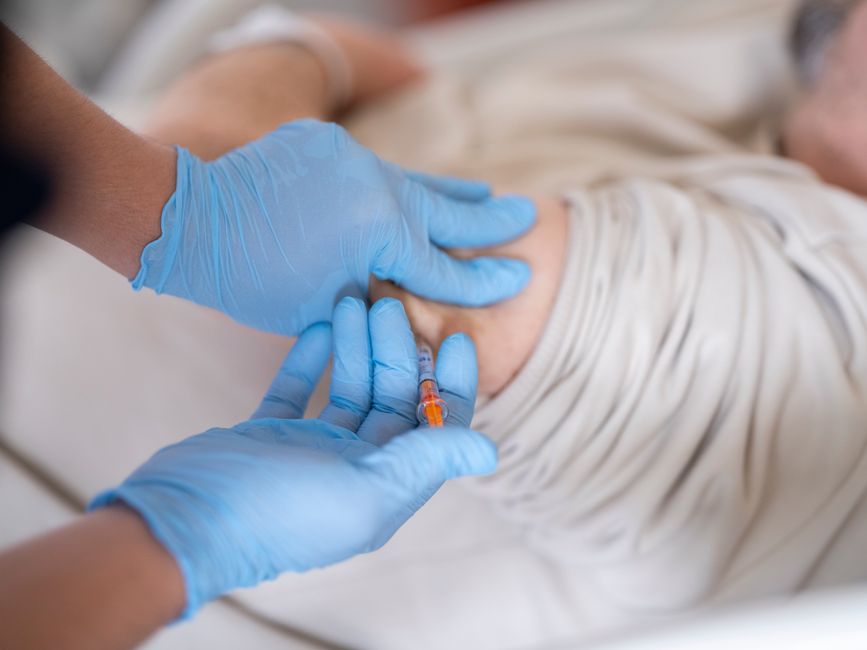
Every subcutaneous injection, meaning an injection into the fat layer just under the skin, causes a small amount of trauma to the tissue. Injecting the same small area repeatedly causes that fat to thicken and harden. That hardened patch is called lipohypertrophy.
The problem goes beyond how it looks. Hardened tissue does not absorb medication the way healthy fat does. If your semaglutide or tirzepatide dose lands in a lipohypertrophied patch, less of it reaches your bloodstream. Your appetite control and results can suffer without any obvious explanation.
Lipoatrophy, where the fat layer shrinks or dimples from repeated trauma, is less common with GLP-1 pens but can still occur. Both conditions are largely preventable with consistent rotation.
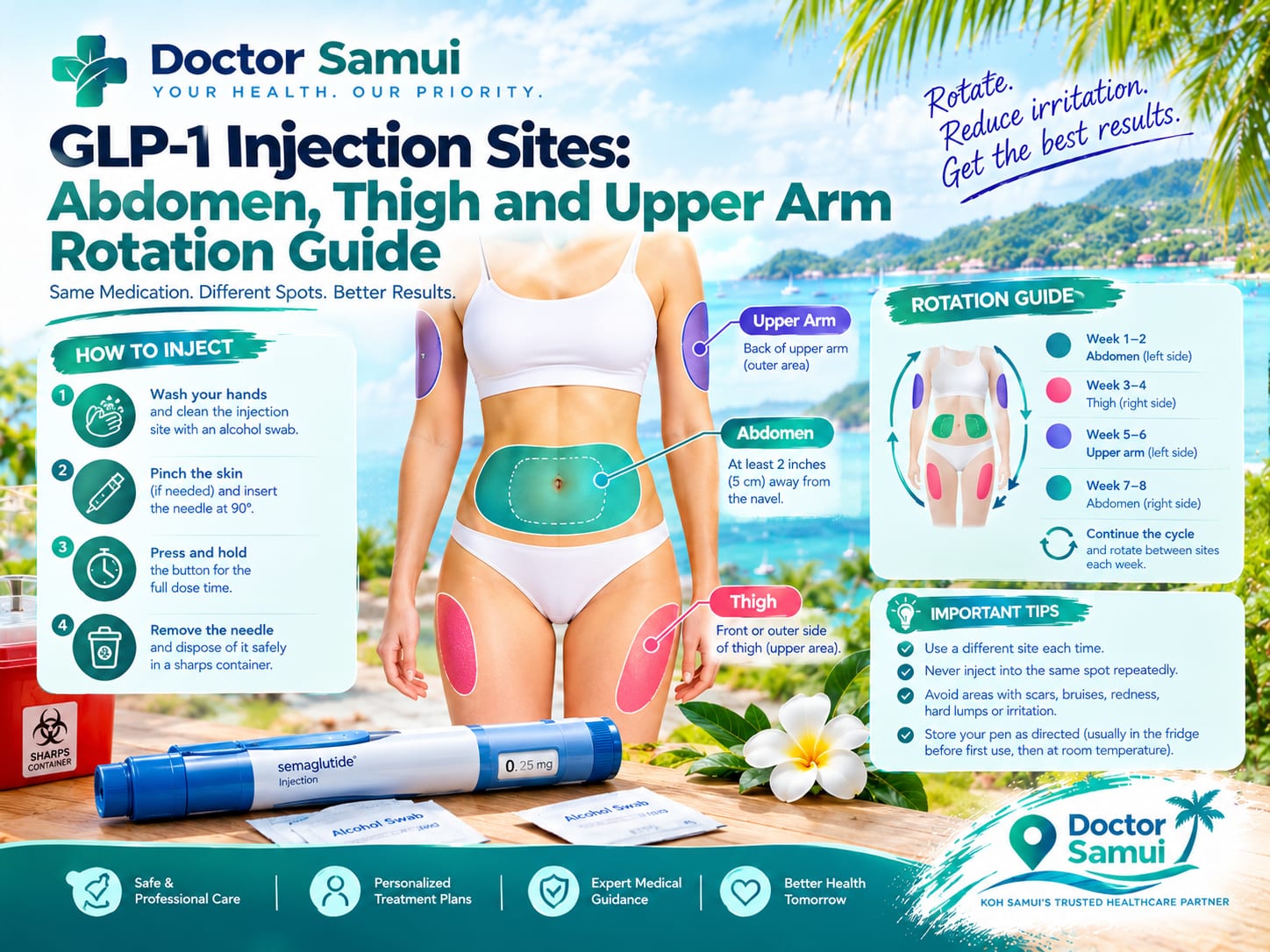
A Visual Map of Each Injection Site
Abdomen
The abdomen is the most commonly used site. Inject into the fatty tissue of your lower or mid-abdomen, staying at least 5 cm away from your belly button in all directions. Avoid the waistband area and any skin that is scarred, irritated, or recently sunburned. On Samui, where beach days are constant, sunburned abdomen skin is a real and common reason to skip this zone for a few days.
The usable area forms a broad rectangle across your lower belly. Use the full zone: left side, right side, upper portion, lower portion.
Outer Thigh
The outer thigh means the front-outer surface of your upper leg, roughly the middle third between your knee and hip. Do not inject on the inner thigh or the very front of the leg. If you have very little subcutaneous fat here, use a skin pinch: gently lift a fold of skin between two fingers and inject into it at a 45-degree angle.
Upper Arm
The outer upper arm, roughly the middle section between your shoulder and elbow, is the third approved site. Self-injecting here is harder without a mirror. Most people find it easier when a partner can help. If you are doing it alone, brace your arm against a wall. The skin pinch technique helps if the tissue is thin.

How to Build a Simple 6-Week Rotation Schedule
The goal is never to inject the same spot twice within six weeks. Map your body into six zones and use one each week.
| Week | Zone | Side |
|---|---|---|
| Week 1 | Abdomen | Left |
| Week 2 | Abdomen | Right |
| Week 3 | Outer Thigh | Left |
| Week 4 | Outer Thigh | Right |
| Week 5 | Upper Arm | Left |
| Week 6 | Upper Arm | Right |
| Week 7 | Repeat from Week 1 | , |
Within each zone, move the injection point at least 2 to 3 cm from where you last injected in that zone. If you used the upper-left abdomen last time, shift slightly lower or further to the side this time.
Track it simply: a note in your phone after every dose, writing the date, the zone, and the side. A printed body diagram you mark up works just as well. The method does not matter as long as you are not guessing six weeks later.
Step-by-Step Injection Technique
Let the pen reach room temperature before injecting. Cold medication straight from the fridge can sting more and may flow less smoothly from the pen.
Clean the skin with an alcohol wipe and let it dry fully before you inject. In Samui’s humidity, you may be sweating even indoors. Pat the area dry after wiping, wait a few seconds, and inject into dry skin. Wet skin increases infection risk at the injection point.
Insert the needle at 90 degrees for most people, or 45 degrees with a skin pinch if you are lean in that area. Press the dose button, hold for the count your pen’s instructions specify, then remove the needle. Do not rub the site afterward.
Dispose of the used needle in a sharps container. Do not recap needles or reuse them.
Injecting in Tropical Heat: Points Specific to Koh Samui
Most GLP-1 pens in use, including Ozempic and Mounjaro, should not be kept above 30°C once opened. Samui’s outdoor temperatures regularly exceed this. A pen left in a beach bag in direct sun, or in a car between errands, can degrade faster than expected. Keep yours in the coolest part of your accommodation, away from windows. Check your pen’s specific storage guidelines in the packaging insert.
Sunburned skin is off limits as an injection site. After a day snorkeling near Angthong or hiking down from Na Muang waterfall, your arms and abdomen may be red and inflamed. Wait until the skin has fully recovered before using that zone.
If you are travelling between islands or heading to Bangkok for a weekend, carry your pen in an insulated pouch. Do not leave it in checked luggage or in a hot room without air conditioning.
For detailed guidance on how to rotate injection sites safely while travelling in tropical heat, the Doctor Samui GLP-1 service page covers storage, technique, and what to bring to your first appointment. GLP-1 medications require a prescription and medical supervision; do not adjust your dose or restart after a break without speaking to a doctor first.
Signs Your Rotation Technique Needs Attention
A small, firm lump under the skin that does not go away after a week or two is the main sign of lipohypertrophy. It may be completely painless. If you notice one, stop injecting in that zone and let it rest for several weeks while you continue rotating through your other sites.
Persistent redness, warmth, or swelling at an injection site that lasts more than a day or two warrants a clinical check. Mild, brief redness right after injecting is normal. Redness that spreads, grows, or is accompanied by increasing pain is not.
If your results have plateaued without a clear dietary reason and you have been returning to the same injection spots, poor absorption may be a factor worth discussing with a doctor. The walk-in team at the Chaweng clinic can review your sites and technique and, if needed, arrange a doctor visit to your hotel or villa anywhere on the island.
On GLP-1 medication and unsure about your injection technique, site rotation, or a lump you have noticed? Doctor Samui provides GLP-1 injection support for tourists and expats across Koh Samui, including walk-in appointments at the Chaweng clinic and 24-hour hotel and villa visits. Whether you are staying in Lamai, Bophut, Maenam, or anywhere else on the island, clinical support is available. Visit doctorsamui.com/glp-1 to learn more or use the contact button to book.
Frequently Asked Questions
Dr. Ponlawat Pitsuwan
Physician, Doctor Samui
a walk-in clinic based in Chaweng, Koh Samui, with 24-hour hotel and villa visits available across the island. He sees tourists, families, and long-stay expats for GLP-1 medication support, injection technique reviews, and ongoing weight management care. His focus is straightforward, evidence-based care delivered in plain language.
References
- Davies M, et al. Semaglutide 2.4 mg once a week in adults with overweight or obesity. New England Journal of Medicine, 2021.
- Novo Nordisk. Ozempic (semaglutide) prescribing information. Novo Nordisk, 2023.
- Eli Lilly. Mounjaro (tirzepatide) KwikPen storage information. Eli Lilly UK Medical, 2023.
- Forum for Injection Technique and Recommendations Expert Panel. New insulin delivery recommendations. Mayo Clinic Proceedings, 2016.
The information in this article is for educational purposes only and does not constitute medical advice. It should not be used to self-diagnose or replace a consultation with a qualified physician. If you have concerns about your health, contact a licensed medical professional. For appointments at Doctor Samui, visit doctorsamui.com.