Clinically reviewed by Dr. Ponlawat Pitsuwan, Physician, Doctor Samui. Last reviewed: October 2026
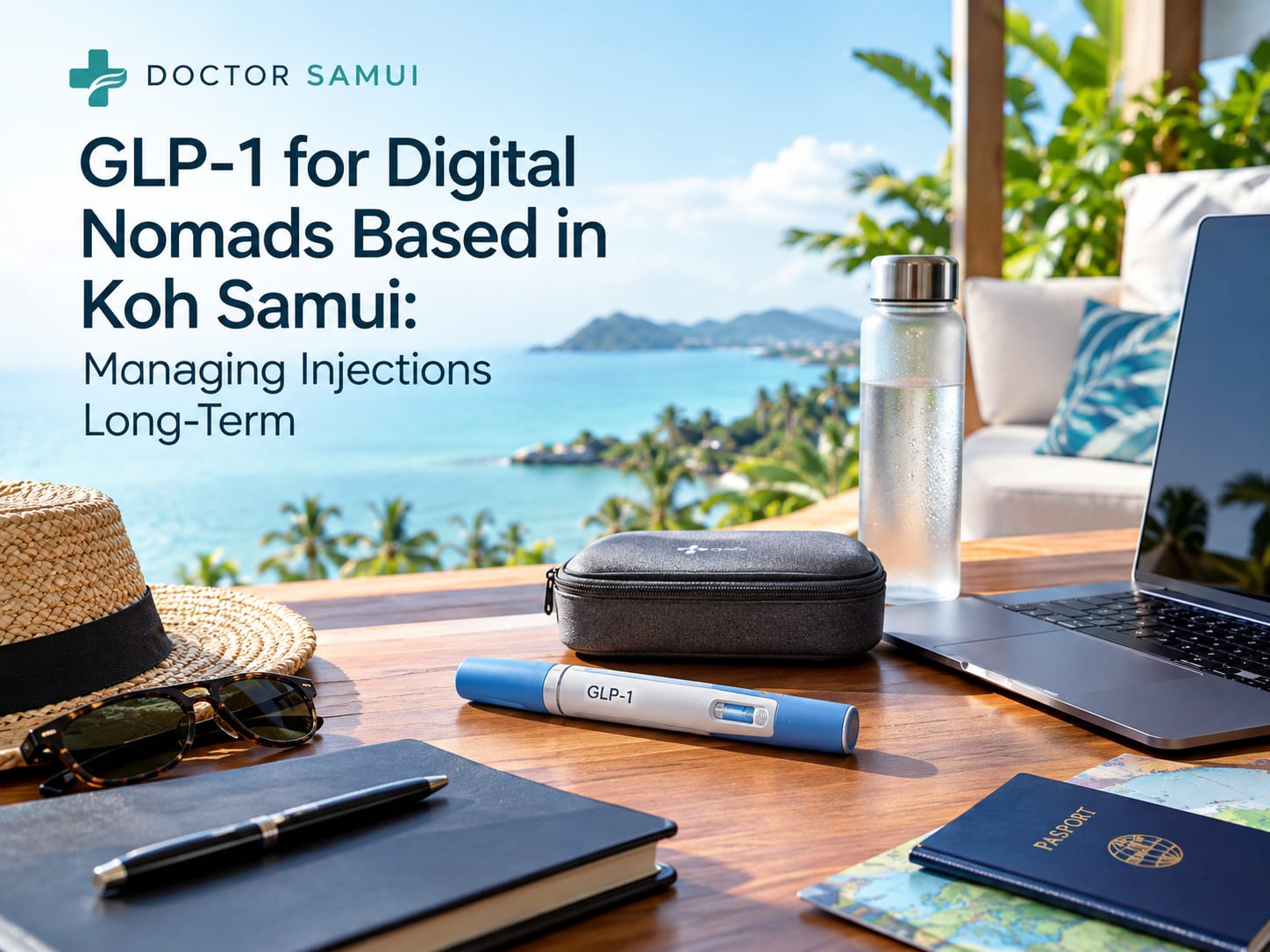
Managing GLP-1 injections long-term on Koh Samui is entirely possible, but it requires a Thai prescription under the 2026 FDA reclassification, careful storage in a tropical climate, and a local doctor who can supervise your titration schedule. Doctor Samui provides consultations, repeat prescriptions, and follow-up support for digital nomads and long-stay expats continuing semaglutide or tirzepatide treatment on the island.
You found your rhythm on Koh Samui. Co-working in Chaweng in the mornings, a beach at Mae Nam by three, a scooter and a flexible visa keeping you here longer than you planned. Your GLP-1 injection was working back home, and the last thing you want is to lose that progress because you changed countries. The good news: you do not have to. Managing your weight loss injection long-term from Samui is realistic, but island life and Thai law will catch you off guard if you are not prepared.
The biggest change came into force on 15 September 2026. Thailand reclassified injectable GLP-1 medicines, including semaglutide and tirzepatide, as specially controlled medicines. No pharmacy will dispense them without a current Thai doctor’s prescription, regardless of what you were prescribed at home. Add Koh Samui’s sustained 33 to 35°C heat, the occasional villa power cut, and a once-weekly injection schedule that does not pause for visa runs or ferry days, and you need a plan. This article covers exactly that.

What the 2026 Thai Prescription Rules Mean for You
If you arrived on Samui mid-treatment with a prescription from Germany, Australia, or the UK, that prescription does not carry legal weight at a Thai pharmacy. Injectable GLP-1s are now specially controlled medicines under Thai FDA regulations, and no pharmacist can legally dispense them on a foreign script.
This is not a barrier. It is a short step. A consultation at Doctor Samui lets us review your existing protocol, confirm your current dose, and issue a compliant Thai prescription so your treatment continues without a gap. Bring whatever documentation you have: your original prescription, medication packaging, or dose history.
Do not try to stockpile medication before arriving and skip the consultation. Supply issues happen, pens degrade in transit, and arriving mid-titration without a local doctor on record creates real problems if something goes wrong.
Which GLP-1 Medications Are Available on Koh Samui
Ozempic (semaglutide, once weekly), Wegovy (semaglutide, higher dose), and Mounjaro (tirzepatide, once weekly) are the medications most commonly requested at our clinic. Availability can fluctuate on the island, as it does across Thailand and globally, so check stock before your appointment rather than assuming a specific brand is on the shelf.
Compounded semaglutide is available through some Thai providers, but quality and dosing consistency vary. It is not a first choice for anyone mid-titration. Stick with licensed, branded pens where possible.
If your usual brand is temporarily unavailable, switching medications requires a fresh clinical review. Doses do not translate directly between semaglutide and tirzepatide products, and a pharmacist substitution is not safe here.
Storing Your GLP-1 in Koh Samui’s Heat
This is where most digital nomads run into trouble, and generic travel guides miss it entirely because they are written for Western room temperatures.
Samui’s ambient temperature sits at 32 to 35°C for much of the year. That is already above the 30°C upper storage limit for GLP-1 pens. A pen left on a desk, in a beach bag, or in your scooter’s storage compartment for a few hours can degrade silently, with no visible change to the liquid.
Keep your pen in the mini-fridge of your hotel or villa, never in the freezer. If the villa loses power during a seasonal storm, move the pen to an insulated medical travel case with a small ice pack, making sure the pen does not touch the ice directly. Each product has its own room-temperature window once opened: Ozempic can tolerate up to 56 days below 30°C after first use, Wegovy up to 28 days, and Mounjaro up to 21 days. In Samui’s climate, those windows are theoretical. Treat refrigeration as non-negotiable.
If a pen has been left in heat you cannot account for, do not use it. Come to the clinic and we can advise whether a replacement is needed.
Maintaining Your Titration Schedule Without Your Home Doctor
Titration is not just a starting dose. It is a process that continues for months and needs clinical oversight to go well.
Most digital nomads who started GLP-1 therapy elsewhere arrive at a stable dose or mid-escalation. Two patterns come up regularly: people who escalate too fast because they are self-managing without a doctor, and people who plateau at a low dose because no one is reviewing them or pushing the protocol forward. Both are problems.
Doctor Samui offers structured follow-up for long-stay patients on GLP-1 therapy. That means reviewing your appetite suppression response, managing side effects like nausea and reflux, and deciding together when a dose increase makes sense. You can be seen at our Chaweng clinic or by villa visit if you prefer.
If you have missed two or more consecutive weekly doses, do not simply resume at your last dose. Side effects can return hard after a break. Come in first and we will decide together whether a step-down and retitration is the safer approach.
Monitoring Progress Without Your Home GP
Ongoing GLP-1 use benefits from periodic blood work. Blood sugar monitoring matters for anyone with pre-diabetes or type 2 diabetes on this medication. Kidney function, liver markers, and thyroid levels can all shift over a long treatment course.
We can run a full metabolic panel at the clinic, with most standard results back within a day. If you have not had a blood review in more than three months, that is the place to start.
Weight tracking without a scale is harder on the road. For long-stay patients, I suggest photographing your medication log, noting your current dose each week, and coming in for a short review once a month. That rhythm keeps treatment on track and catches problems early, including the loss of appetite suppression that sometimes signals a dosing issue rather than medication failure.
Travelling Out of Koh Samui with Your GLP-1
Samui Airport is operated by Bangkok Airways and runs its own security procedures, but the practical rules for medically necessary injectables follow standard Thai airport logic. Carry your pen in hand luggage, in its original packaging, with a copy of your Thai prescription and a bilingual doctor’s letter from Doctor Samui. Security staff here see insulin pens regularly; a GLP-1 pen looks identical and rarely causes problems with the right paperwork.
For ferry crossings to Koh Phangan or Koh Tao, keep the pen in an insulated pouch out of direct sun. Ferry decks get extremely hot, and a thirty-minute crossing is enough to push an unprotected pen above its storage limit.
If you are doing a border run to Malaysia or Cambodia, check the destination country’s import rules for prescription injectables before you travel. A letter on clinic letterhead helps at most borders, and Thailand’s export rules are straightforward with a valid prescription.
Safe Sharps Disposal on Koh Samui
Used needles from GLP-1 pens should never go into a hotel bin, a villa waste basket, or a roadside rubbish bag. In a tropical environment with open bins, regular waste-picker contact, and limited medical waste infrastructure, a loose needle is a genuine public health risk.
Buy a portable sharps container at a pharmacy in Chaweng. The Boots near Central Festival stocks them. When it is full, bring it to our clinic for safe disposal. We handle this as part of any follow-up visit, and it takes two minutes. Do not leave this until the last week of your stay.
If you are a digital nomad or long-stay expat managing GLP-1 injections on Koh Samui, Doctor Samui can help. We offer first consultations, Thai prescription issuance under the 2026 regulations, titration reviews, blood work, and sharps disposal guidance at our Chaweng walk-in clinic. We also do 24/7 hotel and villa visits across the island. Visit doctorsamui.com/glp-1/ to learn more about our GLP-1 programme for digital nomads and long-stay residents.
Frequently Asked Questions
Dr. Ponlawat Pitsuwan
Physician, Doctor Samui
a walk-in clinic based in Chaweng, Koh Samui, with 24/7 hotel and villa visits across the island. He sees tourists, families, and long-stay expats for GLP-1 consultations, titration management, repeat prescriptions, and metabolic health monitoring. His focus is straightforward, evidence-based care delivered in plain language.