
Clinically reviewed by Dr. Ponlawat Pitsuwan, Physician, Doctor Samui. Last reviewed: October 2026
Koh Samui has no significant malaria risk. CDC, NaTHNaC, and WHO all agree: antimalarial tablets are not recommended for children visiting the island. The mosquito threat families actually face here is dengue fever, which is real, seasonal, and preventable with the right repellent and bite avoidance habits. If your child develops a fever after a mosquito bite on Samui, get them seen the same day.
You have booked the villa, packed the reef shoes, and triple-checked the sunscreen. Then someone asks whether your kids need malaria tablets for Koh Samui, and suddenly you are down a rabbit hole of conflicting travel forums at midnight. Here is the short answer: no, they do not. Koh Samui sits 33 kilometres offshore from the Thai mainland and is not a malaria zone. No antimalarial prophylaxis is recommended for children visiting the island.
What does matter is dengue fever. It circulates here, it spikes after the rainy season, and children aged 5 to 14 carry the highest infection rates. Knowing how to protect your kids from mosquito bites on Samui, and knowing when to get a fever checked fast, is what this article is about.

Understanding Malaria Risk in Thailand — Why Koh Samui Is Different
Thailand does have areas where malaria is a genuine concern. The forested border zones near Myanmar, Cambodia, and Malaysia carry real transmission risk. Drug-resistant malaria strains are also documented in those border regions.
Koh Samui is geographically separate from all of that. It is an island in the Gulf of Thailand, not a jungle border zone. The mosquito that carries malaria needs specific forested, rural conditions to survive. Those conditions do not exist on a resort island with beach clubs and coconut palms.
The CDC Thailand malaria map places Koh Samui in the no-risk category. NaTHNaC agrees. This is consistent, well-established guidance. If your family is staying on Samui and not making multi-day treks into border provinces, malaria tablets are not needed.
Do Children Need Malaria Tablets for Koh Samui?
No. For the vast majority of children visiting Koh Samui, preventative antimalarial tablets are not indicated. This applies whether your child is two years old or twelve.
There is one narrow exception worth knowing. For immunocompromised children or very young infants with complex medical histories, a doctor may consider prophylaxis even in low-risk areas. This is genuinely rare and situation-specific. If your child has a weakened immune system, speak to a doctor before you fly. At our Chaweng clinic, we can review your child’s specific situation and give you a clear answer based on their health, not a generic leaflet.
Standard antimalarial drugs used for Thailand’s higher-risk border regions are not relevant for a typical Samui family holiday. But if your trip extends into mainland jungle areas, that is worth a separate pre-travel conversation.
The Real Mosquito Threat on Koh Samui: Dengue, Not Malaria
This is the part most travel guides gloss over, and getting it wrong matters. Dengue fever is the mosquito-borne illness your child is actually at risk of on Koh Samui. It is caused by a virus carried by the Aedes aegypti mosquito, which behaves very differently from the mosquito that carries malaria.
Aedes aegypti bites during the day. Peak activity is around dawn and dusk, but it feeds throughout daylight hours. Your kids can get bitten at the beach, at the Na Muang waterfall, by the pool, and at the outdoor restaurant at lunch. The standard "apply repellent at sunset" habit does not cover dengue.
Cases peak during and just after the rainy season, roughly June through October, but dengue circulates year-round on Samui. Symptoms typically appear 4 to 10 days after a bite: high fever, severe headache, pain behind the eyes, and joint or muscle aches. A dengue vaccine called Qdenga is now available for children from age 4. For long-stay families and expats living on Samui, it is worth raising at your next clinic visit. Doctor Samui’s family health service can advise on whether Qdenga suits your child based on their age and exposure history.
Safe Mosquito Repellents for Children on Koh Samui
Beach wisdom gets this one wrong. DEET-free repellent bracelets are sold in resort shops all over the island. They do not provide sufficient protection on their own and are not clinically recommended as standalone cover.
DEET remains the most studied repellent available. Children under 2 months should not use it at all. For children over 2 months, concentrations up to 30% are considered safe when applied correctly to exposed skin. Keep it away from hands, eyes, and mouth, and apply it yourself rather than letting young children self-apply.
Picaridin is a gentler, odourless alternative with strong evidence behind it and is well suited to young children. Many parents prefer it because it is less likely to irritate sensitive skin. Oil of lemon eucalyptus is a plant-based option, but it should not be used on children under 3 years. Those three age limits — DEET from 2 months, picaridin from infancy, OLE from age 3 — are the key numbers to check before you reach for the bottle.
Practical Bite Avoidance for Families on Koh Samui
Repellent is the foundation, but it is not the whole picture. Dengue mosquitoes breed in small pools of standing water: plant pots, uncovered buckets, and drainage areas around villa gardens. If you are staying in a private villa, do a quick check and ask staff to empty anything collecting rainwater.
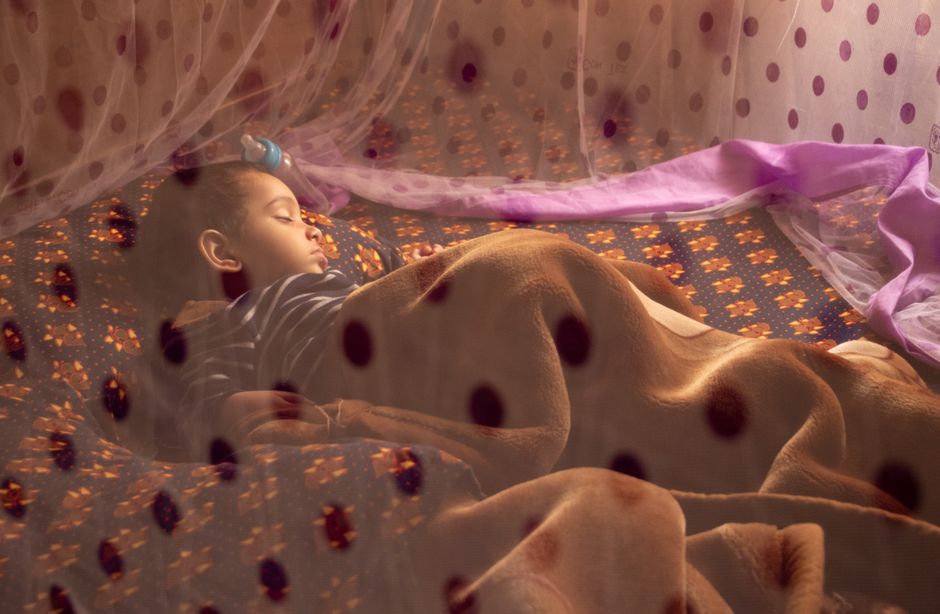
On snorkeling day trips out of Chaweng or Lamai, on the trails up to Na Muang falls, and on jungle ATV tours, your children are in higher-exposure environments during peak mosquito hours. Light long-sleeved tops and trousers in the early morning and late afternoon add a simple physical layer on top of repellent. For naps and overnight sleep, use a mosquito net for infants and toddlers, especially in open-air or older accommodation without sealed window screens.
Air-conditioned rooms reduce exposure significantly. If your accommodation has gaps in screens or doors that do not close fully, flag it with the host or property manager.
What Long-Stay Families and Expats on Koh Samui Should Know
If your family lives here or visits for months at a time, the risk calculation shifts. Longer exposure means more potential bites over time. A second dengue infection can cause a more severe form of the illness, so children who have already had dengue carry higher risk if a different dengue strain finds them again.
The Qdenga vaccine requires two doses given three months apart. For children living on Samui from age 4, starting that schedule is one of the most practical health decisions you can make. We can check your child’s eligibility at the Doctor Samui Chaweng clinic, review any previous dengue exposure, and get the first dose scheduled the same day.
Annual health reviews for children living on Samui are also worth building into the routine. Our family health service covers vaccinations, growth checks, and general health assessments for resident families of all ages.
When to See a Doctor: Fever After a Mosquito Bite in a Child
Do not wait and see with a high fever in a child on a tropical island. If your child develops a temperature of 38°C or above within two weeks of being on Samui, they need a clinical assessment the same day.
Dengue in young children can escalate quickly. Severe dengue causes a drop in platelets and, in rare cases, serious complications. Catching it early makes management significantly easier. A blood test can check platelet count and confirm the picture within a few hours.
Doctor Samui offers walk-in consultations at our Chaweng clinic seven days a week, and 24/7 hotel and villa visits across the island, including Bophut, Maenam, Lamai, Choeng Mon, and Hua Thanon. You do not need to travel to a hospital with a sick child. We come to you. Our child travel health consultations cover fever assessment, dengue testing, and same-day results.
If your child has a fever, has been bitten by mosquitoes, or you want to discuss dengue protection or the Qdenga vaccine for your family, Doctor Samui can help. Walk in to our Chaweng clinic or book a 24/7 hotel or villa visit anywhere on the island. Consultations are available in English, German, and Hebrew. Same-day appointments for children of all ages.
Frequently Asked Questions
Dr. Ponlawat Pitsuwan
Physician, Doctor Samui
a walk-in clinic based in Chaweng, Koh Samui, with 24/7 hotel and villa visits available across the island. He sees tourists, families, and long-stay expats for child travel health, fever assessment, dengue management, vaccinations including Qdenga, and general family care. His approach is straightforward, evidence-based, and delivered in plain language.
