Clinically reviewed by Dr. Ponlawat Pitsuwan, Physician, Doctor Samui. Last reviewed: September 2026
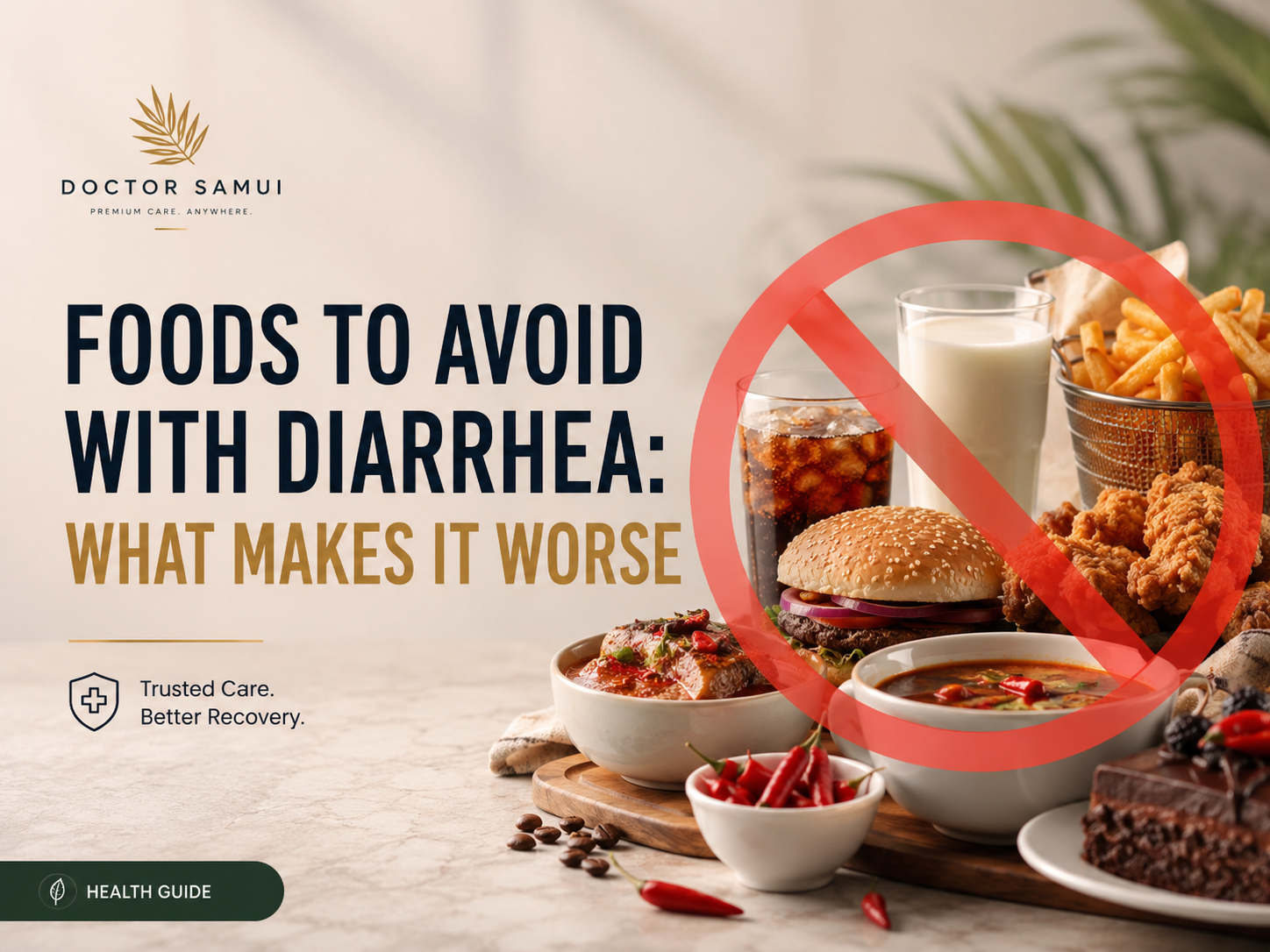
The worst foods to eat with diarrhea are spicy dishes, dairy products, fried or fatty food, alcohol, caffeine, and high-sugar drinks. On Koh Samui, that list maps directly onto some of the most tempting items on every restaurant menu: green curry, Tom Yum, cheese pizza, Beer Chang, and fresh-squeezed juice. Eating any of these while your gut is already inflamed pushes your body to lose more fluid faster. In tropical heat, that happens quicker than most people expect.
You ordered the green curry at a beachside restaurant in Chaweng last night and by 3am you were up every hour. Now it is morning, you are sweaty and drained, and someone at the next table just ordered a fresh papaya salad that smells incredible. This is the moment the wrong food choice can turn a rough night into a genuinely miserable few days.
What you eat in the next 24 hours matters more than most people realise. Spicy, rich, and fermented flavours are everywhere on this island, the heat is relentless, and the drinks menus are long. The same pattern appears constantly at our Chaweng clinic: someone who nearly recovered, then ate something that set them back by two days. This article tells you exactly what to avoid, what is safe, and when food choices alone are not enough.
Why the Wrong Foods Hit Harder Here Than at Home
Koh Samui’s heat means your body is already losing fluid through sweat before diarrhea even starts. Add loose stools every hour or two and you are losing fluid from two directions at once. Eating something that speeds up gut movement, like caffeine or spicy food, makes it three.
Your gut already has an overactive reflex when you have diarrhea. Certain foods supercharge that reflex and send you straight back to the bathroom within minutes of eating. Each of those trips costs you more fluid than it would at home in a cooler climate.
This is why the same spicy noodles that gave you mild discomfort back home can leave you genuinely dehydrated on a Thai island. The baseline conditions here are more demanding on your body.
The Worst Foods to Eat With Diarrhea on Koh Samui
Spicy Food
Capsaicin, the compound that makes chili hot, directly irritates the gut lining and speeds up bowel contractions. Most people know to avoid spicy food when sick, but they underestimate how much chili is hidden in dishes that do not taste especially hot, like Thai stir-fries, soups, and dipping sauces.
If a dish has chili flakes, fresh chili, or sriracha anywhere near it, skip it until you have had a full day without symptoms.
Dairy Products
This one catches people out. A gut infection temporarily reduces your production of lactase, the enzyme you need to digest milk and dairy. Even if dairy has never bothered you before, eating it while you are sick can cause bloating, cramps, and more diarrhea. This sensitivity can persist for up to a month after an infection clears. Avoid milk, cheese, yogurt, cream, and milk-based sauces while you are symptomatic, and reintroduce them slowly afterward.
Fried and Fatty Food
Fat triggers strong gut contractions when your gut is already irritated, rushing food through before it should. French fries, fried chicken, buttery food, and heavily oiled dishes all fall into this category. The full English breakfast at your hotel buffet is not your friend right now.
High-Sugar Foods and Fruit Juice
Large amounts of fructose, the sugar found in fruit juice and many processed snacks, are poorly absorbed when the gut is under stress. This draws water into the intestine and makes stools looser. A large glass of mango juice or a bottle of sweetened soda is enough to undo an hour of careful rehydration. Artificial sweeteners, particularly sorbitol found in sugar-free gum and some diet drinks, have the same effect.

Thai-Specific Foods That Make Diarrhea Worse
This is where generic advice falls short. Most health websites tell you to avoid spicy food. None of them tell you that Tom Yum contains lime juice, fish sauce, galangal, and two or three fresh chilies per bowl, making it one of the worst possible choices for an inflamed gut. Green and red curries are cooked in heavy coconut milk, which is high in fat, and loaded with chili paste. Papaya salad, som tam, is fermented, spicy, and acidic all at once.
Pre-cut fruit from market stalls and beach vendors carries an additional risk beyond gut irritation. When your gut barrier is already compromised, bacterial contamination from poor handling or storage can make things significantly worse. Coconut milk-based desserts and smoothies thickened with dairy are worth avoiding too.
If you are eating out while recovering, plain jasmine white rice, khao plaao, is available at almost every restaurant on the island and is one of the safest things you can order.
Drinks That Make Diarrhea Worse
Alcohol
Alcohol causes your kidneys to excrete more water than you are drinking in. When you are already losing fluid through diarrhea, even one or two beers can tip you into real dehydration faster than you would expect. The beach bars are hard to resist, but alcohol combined with tropical heat and diarrhea is a combination your body cannot easily compensate for. Avoid alcohol completely until you have been symptom-free for at least 24 hours.
Coffee and Caffeine
Caffeine stimulates gut movement. It is practically designed to make you go to the bathroom, which is the last thing you need right now. This includes coffee, strong black tea, energy drinks, and pre-workout drinks. If you need something hot, weak herbal tea or plain warm water is a better option.
Sugary and Carbonated Drinks
High-fructose sodas, commercial fruit juices, and carbonated drinks worsen diarrhea by drawing water into the gut and increasing gas. Coconut water, widely available on Koh Samui, is a reasonable alternative as it provides some natural electrolytes. It is not a substitute for oral rehydration salts if you are significantly dehydrated, but it is far better than a sweetened soda.
What to Eat Instead
The BRAT diet, bananas, plain rice, applesauce, and plain toast, remains sound guidance for a reason. All four are low in fibre, easy to digest, and help firm up stools. On Koh Samui, plain steamed jasmine rice and ripe bananas are available absolutely everywhere.
Other safe options include boiled eggs, plain congee (jok, a rice porridge found at any morning food stall), boiled or baked potato without butter, and plain crackers. Sip oral rehydration salts steadily throughout the day to replace the electrolytes you are losing. Small portions every few hours beat one large meal. Your gut needs rest, not a challenge.
Quick Reference: Worst Foods vs Safer Swaps on Koh Samui
| Worst Foods to Eat With Diarrhea | Safer Swap Available on Koh Samui |
|---|---|
| Green curry, Tom Yum, papaya salad | Plain jasmine rice (khao plaao) |
| Fried food, oily stir-fry | Boiled egg, plain congee (jok) |
| Milk, cheese, yogurt, cream | Coconut water (natural, unsweetened) |
| Beer, wine, spirits | Oral rehydration salts in water |
| Coffee, energy drinks | Weak herbal tea, plain warm water |
| Mango juice, sweetened soda | Plain water, diluted ORS |
| Pre-cut market fruit | Ripe banana (peeled fresh) |
| Sugar-free gum, diet drinks (sorbitol) | Plain crackers, plain boiled potato |
When Food Avoidance Is Not Enough
Changing what you eat handles a lot of straightforward diarrhea cases. But on Koh Samui, bacterial and parasitic infections are a real cause, not just a theoretical one. Plain food choices will not clear a bacterial infection. You need antibiotics for that, and a stool or blood test to know what you are dealing with.
See a doctor if your diarrhea has lasted more than 48 hours, if there is blood or mucus in your stools, if your temperature is above 38.5°C, if you cannot keep fluids down, or if you feel dizzy with a dry mouth and very dark urine. These are signs of significant dehydration or infection that need clinical assessment, not more plain rice.
If you are travelling with children, act sooner than 48 hours. Babies and toddlers dehydrate far faster than adults in this heat. Do not wait it out with a young child who is vomiting and has diarrhea.
Doctor Samui offers walk-in consultations at the Chaweng clinic and 24/7 hotel and villa visits across the island, including Lamai, Bophut, Maenam, Choeng Mon, and Angthong. IV rehydration therapy is available at the clinic and at your accommodation when oral fluids are not staying down. Full details are on our diarrhea treatment page.
Diarrhea on Koh Samui that is not improving after 24 to 48 hours, or that comes with fever, blood in the stool, or an inability to keep fluids down, needs medical assessment, not just a change of diet. Doctor Samui’s walk-in clinic in Chaweng is open every day, and we provide 24/7 hotel and villa visits across the island. IV rehydration therapy is available at the clinic and at your accommodation. If you are not sure whether what you have is simple food upset or something bacterial, come in or call us and we will find out.