Clinically reviewed by Dr. Ponlawat Pitsuwan, Physician, Doctor Samui. Last reviewed: September 2026
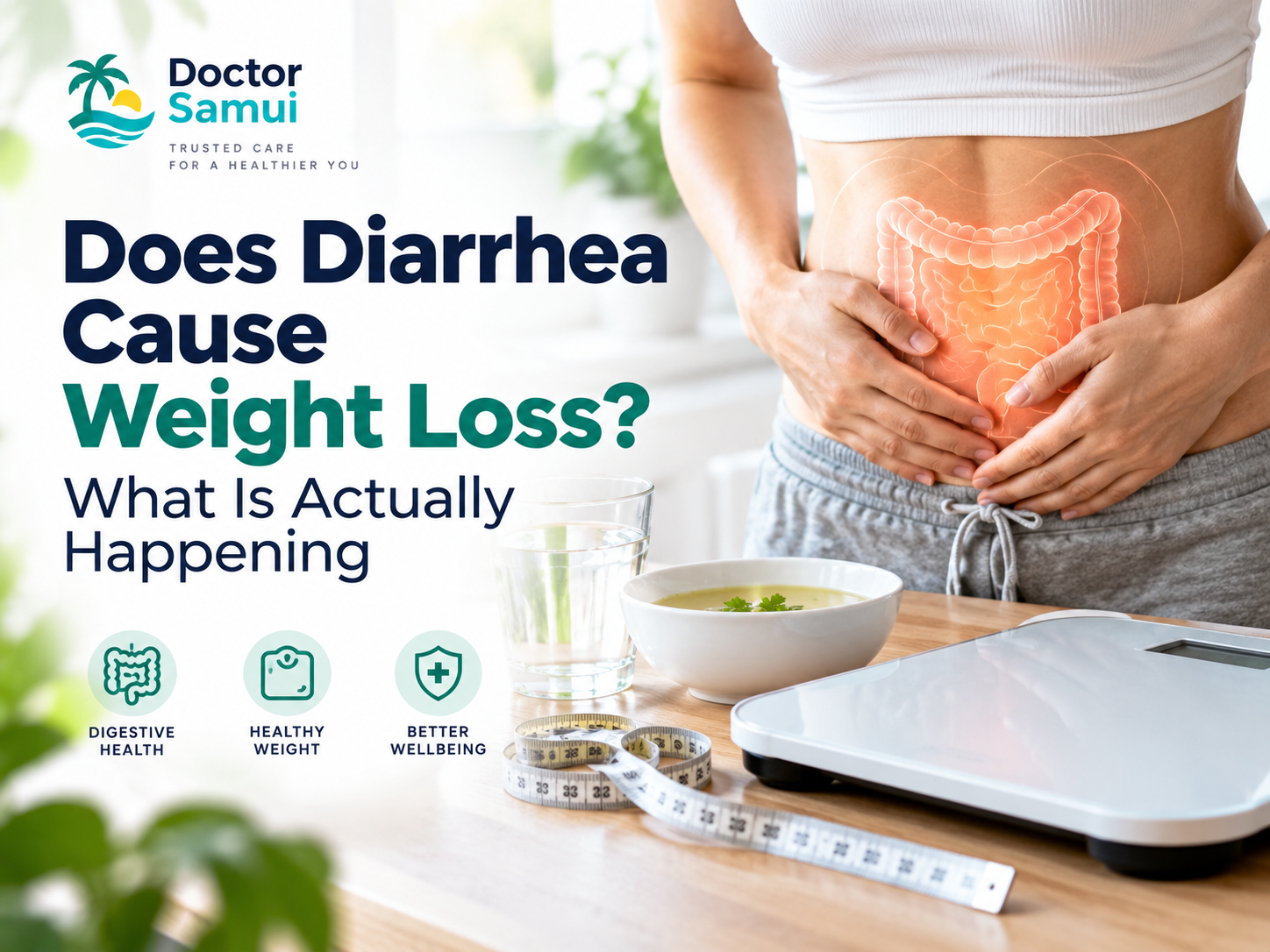
Yes, diarrhea causes weight loss, but almost all of it is water and electrolytes, not fat. A single acute episode can drop your scale weight by one to two kilograms overnight. That weight comes back within a day or two once you rehydrate properly. Diarrhea that runs past a week, or keeps coming back, is a different story and needs a doctor.
You spent the morning snorkeling off Chaweng, grabbed lunch at a beachside spot, and by evening you are running to the bathroom every hour. By morning, your shorts feel looser and the scale is down two kilograms. That number is alarming, especially when you are far from home with a week of holiday still ahead.
Yes, diarrhea does cause weight loss, but the kind of weight loss matters enormously. Most of what you lose in an acute bout is fluid, not tissue. Your body is not burning fat. It is losing water, salts, and stored carbohydrate at a rate it cannot replace fast enough. Knowing which kind of loss you are dealing with tells you whether you need rest and oral rehydration salts, or whether you need to walk into the clinic today.

Water Weight vs Real Weight Loss From Diarrhea
Every loose stool takes water and electrolytes with it. Your body also burns through glycogen, the carbohydrate stored in your liver and muscles, when you are not eating. Each gram of glycogen holds around three grams of water. When glycogen drops, water follows, and the scale falls fast.
None of that is fat. Fat loss requires a sustained caloric deficit over days and weeks. One night of food poisoning does not touch your fat stores in any meaningful way. The two kilograms on the scale the morning after a bad stomach is almost entirely fluid.
Fluid weight comes back quickly. Eat and drink again, replenish glycogen, and most people return to their normal weight within one to two days. The misleading part is that the scale can drop sharply even in mild illness, which causes unnecessary panic, or false reassurance when a check-up is actually needed.
Three Ways Diarrhea Actually Affects Your Weight
Fluid loss — the immediate drop
This is what happens in acute traveler’s diarrhea or food poisoning. Your gut moves fluid out faster than you can replace it. The scale drops, but this is temporary. Oral rehydration salts, rest, and small frequent sips of fluid reverse it within 24 to 48 hours for most healthy adults. In Koh Samui’s heat, you lose fluid faster than you would at home, so you need to replace it more aggressively.
Reduced intake — the secondary loss
When your stomach is unsettled, you stop eating. Even if you are keeping fluids down, you are taking in far fewer calories than your body needs. After two or three days, your body starts drawing on stored energy. You may lose a small amount of true tissue weight, though it is still mostly carbohydrate stores and lean mass rather than fat. Appetite usually recovers once diarrhea resolves, and weight follows within a few days.
Malabsorption — the longer-term problem
This is the mechanism that causes real, lasting weight loss. When the gut lining is damaged or chronically inflamed, it cannot absorb fat, protein, or key nutrients properly. You eat, but your body does not take it in. Fat passes through in the stool, producing stools that look pale, greasy, and float. Muscle mass drops and energy levels fall. This does not happen from a single episode of traveler’s diarrhea. It happens with infections left untreated for weeks, with parasites like giardia, or with underlying gut disease that illness has unmasked.

Why Diarrhea and Weight Loss Hit Harder on Koh Samui
This is the part most general health websites miss entirely. Koh Samui’s conditions stack the odds against you in ways a temperate climate does not.
Temperatures here regularly exceed 33 to 35 degrees Celsius. When you are losing fluid through diarrhea and sweating at the same time, dehydration builds faster than most people expect. Tourists who spent the morning hiking Na Muang waterfall or diving near Angthong Marine Park arrive at our Chaweng clinic already significantly depleted, not because their illness is severe, but because the heat pulled the other half of their fluid out before they noticed.
Unfamiliar food, different gut bacteria, and pathogens your immune system has never encountered all raise the risk of a harder-hitting infection. Salmonella, Campylobacter, and giardia are all common here. The gut bacteria you bring from home do not handle these the same way a local does. That is not a reason to avoid island food, but it is a reason to take diarrhea more seriously than you might at home, and to act earlier.
If you are travelling with children, the timeline compresses further. A toddler who has had loose stools for more than 24 hours on a hot island day needs clinical review the same day, not a wait-and-see approach.
Warning Signs — When to See a Doctor Today
Most holiday stomach upsets resolve in 24 to 48 hours with rest and fluids. Some do not, and waiting too long in a hot climate turns a manageable problem into a serious one.
Come in to the clinic, or call for a hotel visit, if you have more than six loose stools in 24 hours, fever above 38.5 degrees Celsius, blood in your stool, dizziness when you stand, or you cannot keep any fluid down. If your child has sunken eyes, a dry mouth, and has not urinated in several hours, that is the same level of urgency.
Confusion, a rapid heart rate, or no urine for six or more hours are signs that dehydration has become severe. That needs same-day IV fluid replacement, not oral rehydration salts at the hotel. Unexplained weight loss that continues after diarrhea has stopped is also a reason to get checked.
How Long Until Your Weight Returns to Normal
For acute traveler’s diarrhea, most people return to their normal weight within two to four days once they are eating and drinking normally. Fluid returns first, within 24 to 48 hours. Appetite takes another day or two after that.
If your weight has not returned to normal within a week of diarrhea resolving, or if you are still losing weight after the diarrhea has stopped, that needs investigation. A stool test checks for persistent infection. A blood test looks at nutritional markers and can flag signs of malabsorption, including low protein levels. Children recover fluid weight quickly when rehydration is managed well, but they have less reserve to draw on, so do not wait a week to review a child who is not regaining weight.
What Happens at the Clinic
When a patient comes in with diarrhea and weight loss, the first assessment is hydration status. Can they keep fluids down? How many stools in the past 24 hours? Any blood or fever? Those answers tell us whether oral rehydration at the hotel is enough, or whether IV fluids are the right first step.
For moderate to severe dehydration, our diarrhea treatment service delivers IV rehydration that works faster than anything you can drink, and restores electrolytes precisely. Most patients feel significantly better within an hour of starting a drip.
If the illness has lasted more than two to three days, or if there is blood in the stool or fever, a stool sample goes for testing. Results usually come back within 24 to 48 hours. Bacterial infections are treated with antibiotics when confirmed. Giardia is treated with a specific antibiotic course, and symptoms resolve within a week for most people.
We also advise on refeeding: what to eat, when to reintroduce solid food, and how to support gut recovery. Reducing fat and raw food for a few days after a gut infection helps recovery move faster.
If you or your child has had diarrhea for more than 48 hours, cannot keep fluids down, or you have lost weight and are not recovering, come in to Doctor Samui’s walk-in clinic in Chaweng or call us for a hotel or villa visit across the island. We provide IV rehydration, stool testing, and same-day diarrhea treatment for tourists, families, and long-stay expacts across Koh Samui, 24 hours a day. You do not need to manage this alone in your hotel room.
Frequently Asked Questions
Dr. Ponlawat Pitsuwan
Physician, Doctor Samui
a walk-in clinic based in Chaweng, Koh Samui, with 24/7 hotel and villa visits across the island. He sees tourists, families, and long-stay expats for acute illness including food poisoning, traveler’s diarrhea, dehydration, and gut infections common to tropical travel. His focus is straightforward, evidence-based care delivered in plain language.