Clinically reviewed by Dr. Ponlawat Pitsuwan, Physician, Doctor Samui. Last reviewed: September 2026
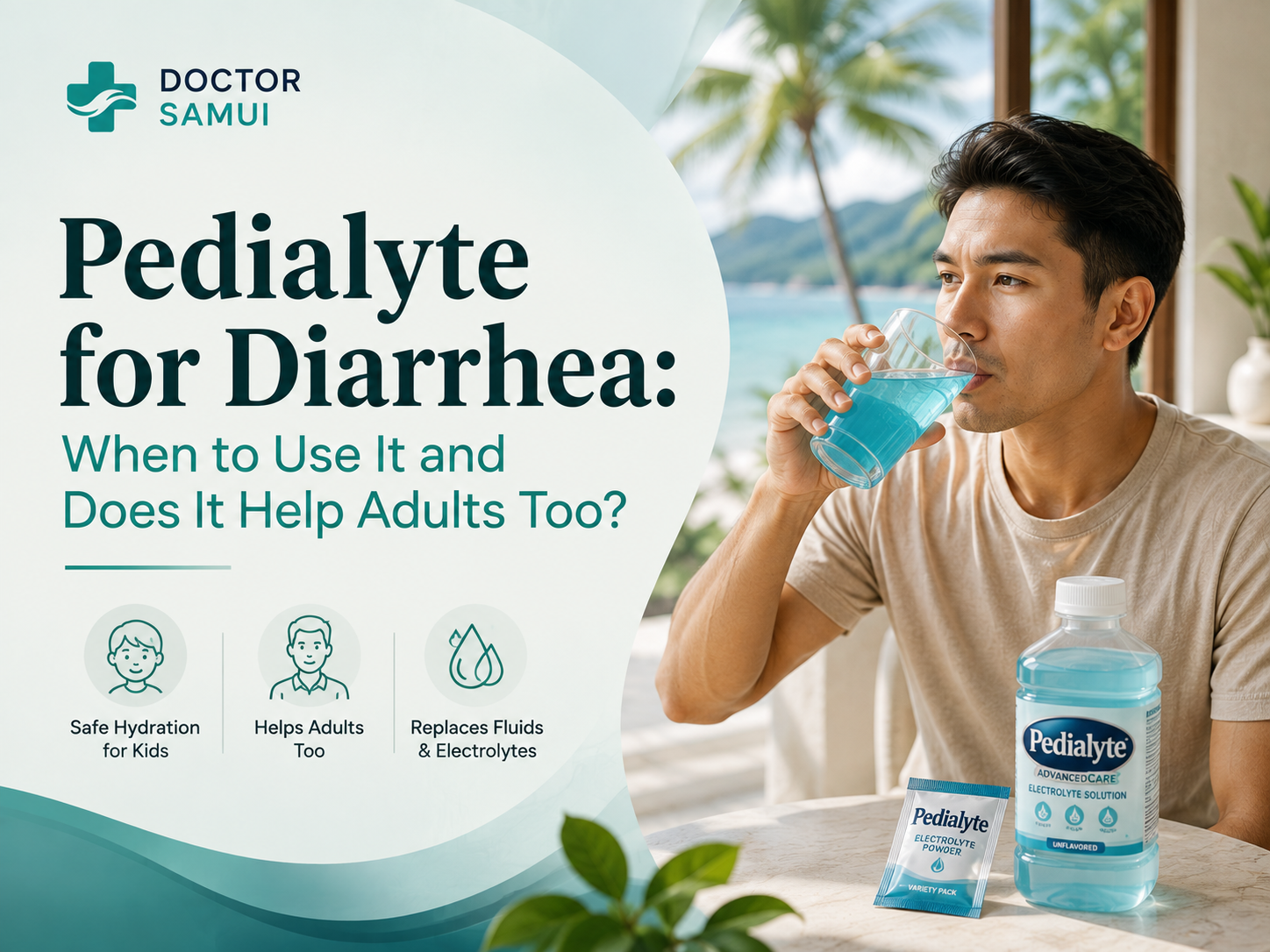
Pedialyte works for adults with diarrhea, not just children. It replaces the sodium, potassium, and fluids your gut loses with each loose stool. It works better than water or sports drinks because of its specific sodium-to-glucose balance. If you cannot keep it down, have blood in your stool, or feel dizzy standing up, oral rehydration is no longer enough and you need a doctor.
You felt fine at lunch on the beach road. By evening, after the heat, the reef snorkel, and the plate of fried rice from the night market, you are running to the bathroom every hour. This is the situation we see most often at our Chaweng clinic, especially on day two or three of a trip when visitors have pushed through the humidity and eaten adventurously. If you caught it early and can still keep fluids down, Pedialyte or a generic ORS sachet is exactly the right first step.
What Pedialyte does not do is stop the diarrhea. It keeps you from getting dangerously dehydrated while your gut recovers. In Koh Samui’s heat, even mild diarrhea can tip you into dehydration faster than you would expect at home. Knowing how to use it correctly, and when to stop and get help, is what this article covers.
Why Pedialyte Works When Water Alone Does Not
Plain water does not get absorbed the way most people assume during a diarrheal illness. Your gut is moving contents through too fast. Water passes through without pulling the electrolytes your body needs back into your system.
Pedialyte works because of the balance between sodium and glucose. When both are present in the right amounts, they cross the gut wall together, pulling water in with them. The formula is calibrated so it does not draw extra fluid into your intestine the way high-sugar drinks can.
That last point is where beach wisdom gets it wrong. Sports drinks like Gatorade have too much sugar and too little sodium for illness-related fluid loss. The sugar can actually make diarrhea worse. Pedialyte and WHO-formula ORS sachets are designed specifically to avoid this problem.
Pedialyte vs ORS Sachets in Koh Samui: Are They the Same?
Pedialyte is not easy to find on Koh Samui. Some international pharmacies stock it, but availability is not guaranteed. The practical alternative is a WHO-formula ORS sachet, which you can buy at almost every 7-Eleven, Boots, or pharmacy on the island.
These sachets do the same clinical job as Pedialyte for mild to moderate dehydration from diarrhea. You dissolve one sachet in one litre of clean bottled water and sip it throughout the day. Do not add anything else to the solution and do not use tap water to mix it.
The only real difference is convenience. Pedialyte is ready to drink. ORS sachets need mixing. In a hotel room on Koh Samui, that is a minor issue. If Pedialyte is what you have, use it. If not, the sachet from 7-Eleven works just as well.
Why Dehydration Hits Harder in Koh Samui’s Heat
In a cooler climate, diarrhea alone is the problem. Here, you are already sweating heavily in 30-plus degree heat before the diarrhea even starts. Your baseline fluid loss is higher than at home before anything goes wrong.
Standard rehydration advice is written for average conditions. In Koh Samui’s humidity, the threshold for dangerous dehydration is lower and it arrives faster, especially in children and older adults. Start ORS or Pedialyte at the first loose stool. Do not wait until you feel thirsty. In tropical heat, thirst is a late sign.
If you spent the morning on a boat trip out to Angthong or hiking the trail at Na Muang waterfall before the diarrhea started, you may already have a fluid deficit. That is when mild gastroenteritis tips quickly into something that needs IV fluids rather than sips of ORS at the hotel.
Dosing Diarrhea and Pedialyte for Adults vs Children
For adults, the general approach is to replace what you lose. After each loose stool, drink roughly 200 to 400ml of Pedialyte or ORS solution. Sip slowly rather than drinking a large amount at once. Too much too fast can trigger vomiting, which sets you back further.
For children under five, the dose is smaller. The WHO guide is 50 to 100ml per kilogram over four hours for mild to moderate dehydration. In practice, offer small sips constantly rather than trying to hit a number. Frequent small sips every few minutes works better than scheduled doses with a sick child.
If your child is vomiting and cannot keep even small sips down, oral rehydration has stopped working. That is when we step in, either at the clinic or with a hotel visit, because children can deteriorate faster than adults in this situation.
Common Causes of Diarrhea for Tourists on the Island
What we see most often is bacterial gastroenteritis from food. E. coli is the most common cause of traveler’s diarrhea, and Koh Samui is no exception. Salmonella shows up after undercooked chicken or eggs. Norovirus spreads fast through shared spaces like resort pools and buffets.
Less commonly, we see parasitic infections like Giardia, which tends to cause a longer, grumbling illness with bloating rather than acute severe diarrhea. Beach stalls, ice in drinks, raw shellfish, and salads washed in tap water are the most common sources on the island.
The cause matters because it changes the treatment. Viral gastroenteritis and mild bacterial diarrhea usually clear on their own with rehydration. Bacterial infections with fever or bloody stool often need antibiotics. Parasitic infections need specific antiparasitic treatment. Pedialyte manages the fluid side. It does not treat the infection itself.
When Diarrhea and Pedialyte Are Not Enough: Red Flags
This is the part most people skip when they are searching at midnight in a hotel room. Oral rehydration works for mild to moderate illness. There are specific signs that mean it has stopped being enough.
See a doctor the same day if you have blood or dark mucus in your stool, a fever above 38.5°C, diarrhea continuing beyond 48 hours without improvement, or if you cannot keep even small sips down. Dizziness when you stand up, a racing heart, or confusion are signs of significant dehydration that need IV treatment.
For children, the threshold is lower. A baby or toddler who is not producing tears when crying, has a dry mouth, or has not had a wet nappy in more than six hours needs clinical assessment. Do not wait overnight with a young child showing these signs.
Getting Diarrhea Treatment Fast on Koh Samui
At Doctor Samui’s Chaweng clinic, a diarrhea assessment covers your hydration status, temperature, and abdomen. If needed, we run a stool test to identify the cause. If you need antibiotics, we prescribe the right one based on what we find. You can read more about what to expect on our diarrhea treatment page.
If you cannot make it to the clinic, our doctors do 24/7 hotel and villa visits across Chaweng, Lamai, Bophut, Maenam, Choeng Mon, and the rest of the island. For moderate to severe dehydration, we bring IV fluids to you. An IV drip replaces fluid and electrolytes far faster than drinking ORS when you are already significantly depleted.
If you are unsure whether you need to be seen, call us. We will ask a few questions and tell you honestly whether a visit is needed or whether staying on ORS for a few more hours is the right call.
Diarrhea or dehydration on Koh Samui? Doctor Samui’s Chaweng clinic is open for walk-ins, and our doctors do 24/7 hotel and villa visits across the island. If you have bloody stool, a high fever, or cannot keep fluids down, we can assess you, run a stool test, prescribe antibiotics if needed, and deliver IV rehydration at your accommodation. Do not tough it out alone. Get in touch and we will tell you what you need.
Is Pedialyte good for adults with diarrhea, or is it just for children?
Pedialyte is safe and effective for adults. There are no age restrictions on its use. Its sodium-glucose balance is better suited to illness-related dehydration than sports drinks, which have too much sugar and too little sodium. Adults should sip it gradually and aim to replace fluid after each loose stool rather than drinking large amounts at once.
Can I use ORS sachets from 7-Eleven in Koh Samui instead of Pedialyte?
Yes. WHO-formula ORS sachets sold at Thai pharmacies and 7-Eleven stores work the same way as Pedialyte. Dissolve one sachet in one litre of clean bottled water and sip throughout the day. Pedialyte can be hard to find on Koh Samui, so ORS sachets are the practical first choice for most tourists on the island.
How much Pedialyte or ORS should I drink when I have diarrhea?
For adults, aim to replace roughly 200 to 400ml after each loose stool. Sip slowly rather than drinking a large volume at once, which can cause vomiting. In Koh Samui’s heat, your baseline fluid needs are higher than at home, so err toward drinking more rather than less. If you cannot keep any fluids down, stop trying at home and get a doctor involved.
Does Pedialyte actually stop diarrhea, or does it just keep you hydrated?
Pedialyte does not stop diarrhea. It replaces what you are losing so you do not become dangerously dehydrated while your gut recovers. If the underlying cause is bacterial, you may need antibiotics to clear it. If it is viral, it usually passes on its own in one to three days with good hydration.
When should I stop rehydrating at home and see a doctor on Koh Samui?
Stop and get help if you have blood in your stool, a fever above 38.5°C, diarrhea lasting more than 48 hours, dizziness on standing, a fast heartbeat, or if you cannot keep fluids down at all. For young children, do not wait that long. Doctor Samui offers walk-in care at the Chaweng clinic and 24/7 hotel visits across the island.
Should I eat anything while using Pedialyte for diarrhea?
Yes, if you can tolerate food. Bland foods like rice, banana, toast, and boiled chicken are easy on an inflamed gut. The old advice to fast completely is no longer recommended. Avoid dairy, fatty food, and spicy food until your stool has been normal for at least 24 hours.
Dr. Ponlawat Pitsuwan
Physician, Doctor Samui
a walk-in clinic based in Chaweng, Koh Samui, with 24/7 hotel and villa visits across the island. He sees tourists, families, and long-stay expats for traveler’s diarrhea, food poisoning, dehydration, and gastroenteritis. His focus is straightforward, evidence-based care delivered in plain language.