Clinically reviewed by Dr. Ponlawat Pitsuwan, Physician, Doctor Samui. Last reviewed: September 2026
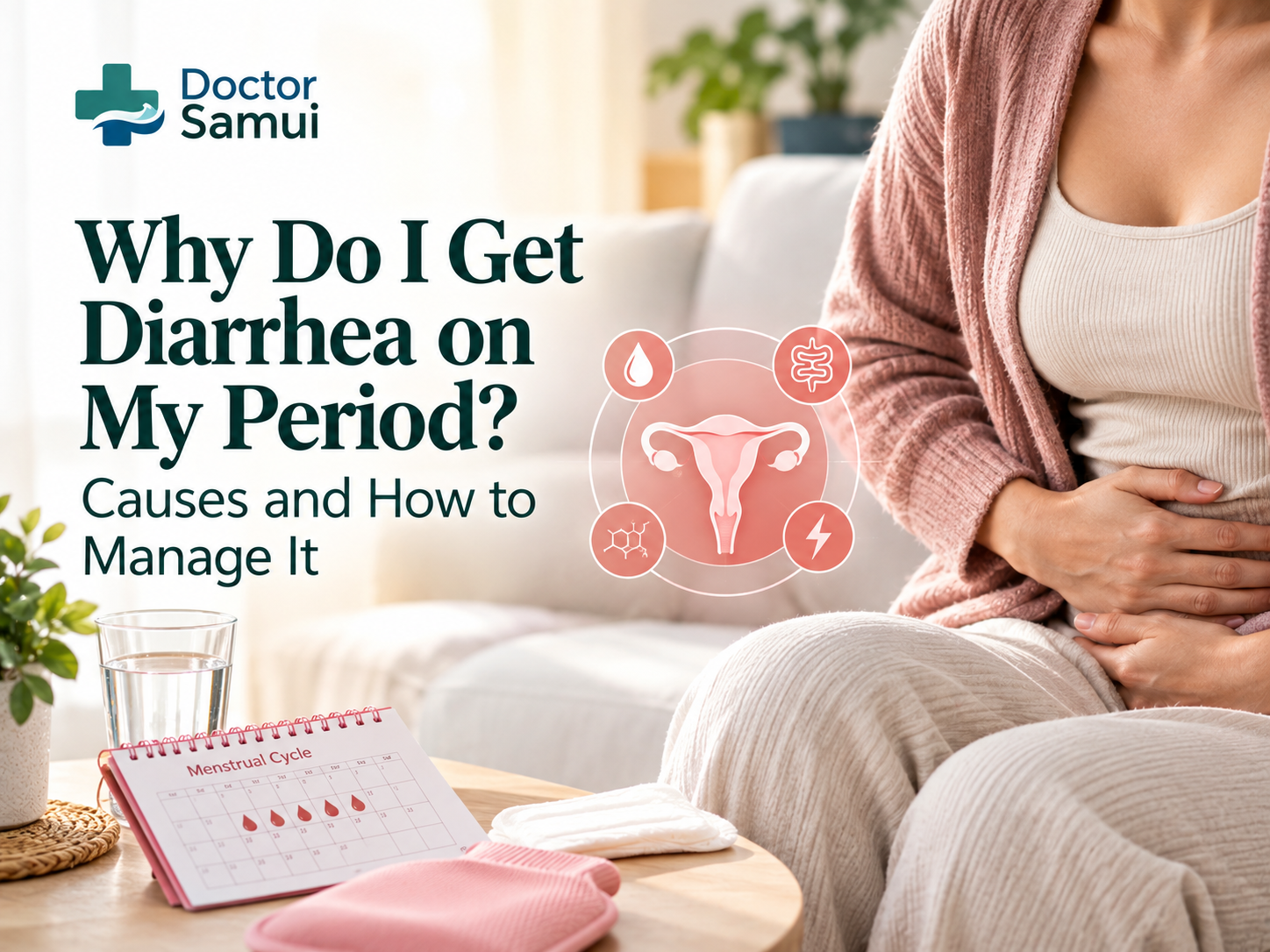
Diarrhea during your period is caused by prostaglandins, chemicals your uterus releases to trigger contractions. These same chemicals stimulate your bowel, causing loose stools, urgency, and cramping in your gut. It usually starts one to two days before your period and resolves within the first few days. In Koh Samui’s heat, dehydration from period diarrhea can hit faster than you expect.
You are two days into a trip to Koh Samui. Your period just arrived, and so has the diarrhea. You have been eating carefully, skipping tap water, doing everything right. But now you are doubled over in your hotel bathroom wondering whether it was the pad Thai last night or something else entirely. The answer, more often than not, is your hormones.
Period diarrhea is real, it is common, and it is not in your head. It shows up regularly in women who have spent the day snorkeling near Chaweng or hiking up to the waterfalls at Na Muang. When you add tropical heat and outdoor activity to the fluid loss that diarrhea already causes, things can deteriorate faster than they would at home. This article explains what is happening, what helps, and when to get checked.

Why Your Period Causes Diarrhea
Your uterus releases chemicals called prostaglandins just before and during your period. These trigger the uterine contractions that cause cramps. Prostaglandins do not stay confined to your uterus. They spill into your gut, speed up bowel movement, and cause loose stools, urgency, and sometimes full diarrhea.
The more prostaglandins your body produces, the worse both your cramps and your gut symptoms tend to be. Some women get mild loose stools. Others spend the first day of their period barely leaving the bathroom. Both are on the same hormonal spectrum.
Progesterone, which slows your bowel during the second half of your cycle, drops sharply just before your period arrives. When that brake is removed, your gut speeds up. That is why many women notice looser stools or urgency even before their period actually starts.
Is It Your Period or Something You Ate in Koh Samui?
This is the question that comes up most often. You are on holiday, you have eaten from beach restaurants and night markets, and now you have diarrhea. It could be your period. It could be traveller’s diarrhea. It could genuinely be both at once.
Period diarrhea almost never comes with fever or vomiting. It starts right when your period arrives, or one to two days before, and it settles on its own within two to three days as prostaglandin levels fall. If the timing lines up with your cycle, that is a strong sign this is hormonal.
Traveller’s diarrhea from contaminated food usually brings nausea, vomiting, or fever alongside it. It has no connection to your cycle timing and can start at any point during your trip. If you have both fever and diarrhea, treat it as an infection until a doctor says otherwise.
If you cannot tell which it is, a same-day assessment at our Chaweng clinic can rule out infection quickly. We run a stool test if there is any doubt about what is driving your symptoms. You can read more about how we manage diarrhea treatment in Koh Samui on our dedicated page.

Why Koh Samui Makes Period Diarrhea Harder
Anywhere else, you might manage period diarrhea with a hot water bottle and a quiet day indoors. On Koh Samui, the conditions work against you.
The heat here regularly sits above 32 degrees Celsius. Diarrhea causes rapid fluid and electrolyte loss, and tropical heat accelerates that further. Add a beach day, a snorkeling trip out to Angthong, or a walk around Fisherman’s Village in Bophut, and you are losing fluid from two directions at once. Dehydration sets in faster here than it does in cooler climates, and it can make cramps feel significantly worse.
Spicy food, which is genuinely excellent on this island, also stimulates gut movement. On top of prostaglandin activity, a fiery som tum or green curry can push things over the edge. During the first couple of days of your period, eating milder options is a sensible call.
What Actually Helps With Period Diarrhea
Start with oral rehydration salts. Plain water is not enough when you are losing electrolytes through diarrhea and sweat at the same time. ORS sachets are available from any pharmacy on the island and are the most effective first step.
Ibuprofen, if you can take it, works better than most people realise for this specific problem. It blocks prostaglandin production, which reduces both your cramps and the bowel overactivity causing your diarrhea. Starting it at the very first sign of your period, rather than waiting until symptoms are already bad, makes a real difference. Do not take it if you have a history of stomach ulcers, kidney problems, or asthma without speaking to a doctor first.
Loperamide, sold as Imodium, can slow diarrhea in the short term and is safe to use when you are confident the cause is hormonal rather than infectious. If there is any chance your diarrhea is from contaminated food or water, hold off on loperamide until you have been assessed. Slowing an infected gut can make things worse.
Eat lightly for the first day or two. Plain rice, bananas, toast, and boiled foods are easy on your bowel. Avoid alcohol, caffeine, and spicy food until your symptoms settle.
When Period Diarrhea Feels Scary
Severe cramping combined with diarrhea can trigger a vasovagal response. This is when intense pain or gut pressure causes your heart rate and blood pressure to drop, sometimes enough to make you faint or come very close to it. It is frightening if it happens in a hotel room or a beach restaurant, but it is not a heart problem.
If you feel suddenly dizzy, go pale, or lose consciousness during intense period cramps, lie flat, raise your legs if you can, and call for help. This is one of the situations where a hotel doctor visit makes more sense than trying to get yourself to a clinic.
Could It Be More Than Your Period?
If your gut symptoms follow this pattern every single cycle and are getting worse over time, that is worth taking seriously. Bowel endometriosis causes cyclical gut symptoms including diarrhea, painful bowel movements, and cramping that mirrors your menstrual cycle. It is frequently misdiagnosed as irritable bowel syndrome (IBS), sometimes for years.
Symptoms that suggest something beyond normal period diarrhea include gut problems every cycle without exception, pain during sex, pelvic pain between periods, pain specifically during bowel movements, or symptoms severe enough to stop you functioning. If this sounds familiar, you need a proper assessment, not just period management advice.
Our clinic can assess your symptoms, document your history, and provide a referral letter and written medical summary to take home. For long-stay expats on Samui, this is often the practical starting point before pursuing specialist investigation.
When to See a Doctor in Koh Samui for Period Diarrhea
See a doctor if diarrhea lasts more than three days. Also come in if you notice blood in your stool, a fever above 38 degrees, signs of dehydration such as dizziness or dark urine, or if you faint or nearly faint from cramping. Come in if you are simply not sure whether this is hormonal or an infection.
For women who are too unwell to travel, Doctor Samui provides 24/7 hotel and villa visits across the island, including Chaweng, Lamai, Bophut, Maenam, and Choeng Mon. IV rehydration is available on request when oral fluids are not staying down.
Dealing with diarrhea during your period on Koh Samui, or not sure if it is your period or something you ate? Doctor Samui’s walk-in clinic in Chaweng is open every day and can assess you quickly, run a stool test if needed, and provide IV rehydration if you are dehydrated. If you are too unwell to travel, we offer 24/7 hotel and villa visits across the island. Contact us to book a same-day appointment or request a visit to your accommodation.
Frequently Asked Questions
Dr. Ponlawat Pitsuwan
Physician, Doctor Samui
a walk-in clinic based in Chaweng, Koh Samui, with 24/7 hotel and villa visits available across the island. He sees tourists, families, and long-stay expats for gastrointestinal illness, menstrual health concerns, dehydration, and general acute care. His approach is straightforward, evidence-based care delivered in plain language.