Clinically reviewed by Dr. Ponlawat Pitsuwan, Physician, Doctor Samui. Last reviewed: September 2026
Black diarrhea can be harmless if you recently ate dark foods, took iron supplements, or used bismuth-based antacids like Pepto-Bismol. But tarry, foul-smelling, or liquid black stool with no obvious food cause is a serious warning sign of bleeding in your upper digestive tract. Add dizziness, vomiting blood, or a racing heart, and this is a medical emergency. Do not wait to see if it passes.
You are three days into your Koh Samui trip. Yesterday it was pad see ew at the night market, a couple of Changs on the beach, and ibuprofen for the shoulder you knocked on a kayak near Chaweng. This morning the toilet tells a different story. Black, loose, wrong. Your first thought is the food. It might be. But it might not be, and the difference matters a great deal.
Black diarrhea is one of those symptoms where the cause can be completely harmless or genuinely dangerous. The two can look almost identical at first glance. Getting that distinction right is what this article is for.

Is It Really Black Diarrhea or Just Dark Stool?
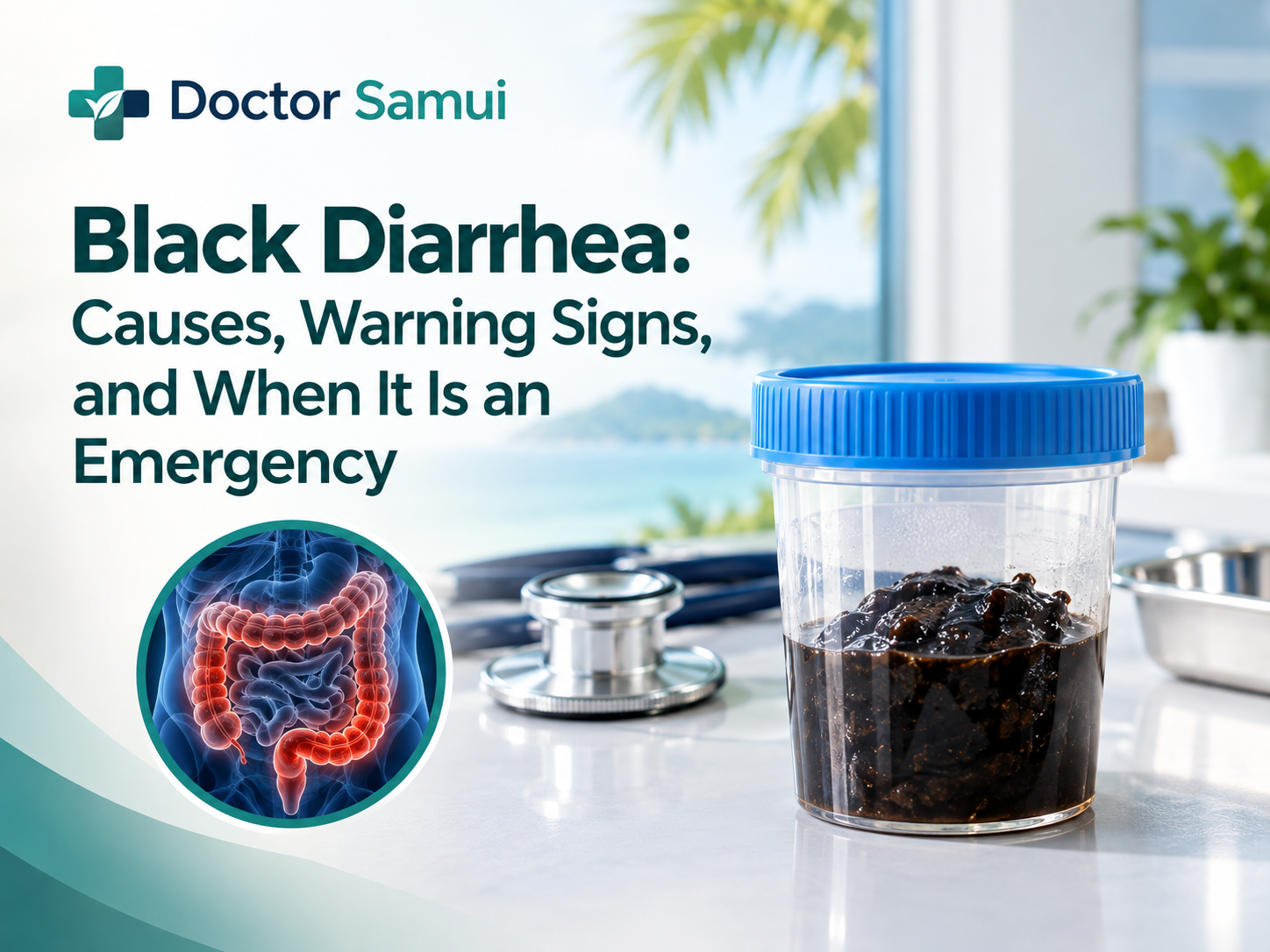
This matters more than most people realise. Melena, the medical term for black stool caused by digested blood, is typically formed, very dark, tar-like, and has a strong unpleasant smell. Black diarrhea, meaning loose or liquid black stool, can sometimes mean faster or more active bleeding. The blood has not had enough time to fully digest. That can mean the bleed is larger or differently located than classic melena suggests.
If your stool is liquid and black and you cannot point to a food or medication trigger from the last 24 to 48 hours, take that seriously.
Harmless Causes of Black Stool
Before you panic, run through a quick mental checklist. Did you eat dark foods in the last day or two? Squid ink dishes, black rice, dark berries, activated charcoal drinks, or large amounts of nori can all turn stool very dark. Iron supplements do this reliably. So does bismuth subsalicylate, the active ingredient in Pepto-Bismol.
Black stool from food or supplements usually has clear giveaways. The consistency is normal, not tar-like or sticky. There is no strong or unusual smell. And you can trace it directly to something you ate or took. If all three apply, monitor and wait. If you are not sure, get checked.

Medical Causes of Black Diarrhea and Upper GI Bleeding
When black stool has no food or supplement explanation, the most likely cause is bleeding somewhere in the upper digestive tract. That means the stomach, the lower oesophagus, or the first part of the small intestine. Blood digested over that distance turns black before it exits.
Peptic ulcers are the most common cause. Gastritis, which is inflammation of the stomach lining, is another. Both are made significantly worse by NSAIDs like ibuprofen, especially taken daily, on an empty stomach, or alongside alcohol.
This is a pattern we see regularly at our Chaweng clinic. Tourists pick up ibuprofen over the counter at a Thai pharmacy for sore muscles, sunburn, or a reef scrape from a snorkelling trip near Lamai. They take it every day for a week, sometimes with beer, sometimes without food. That is exactly how drug-induced ulcers develop. NSAID-related upper GI bleeding is not rare, and Koh Samui’s environment makes it more common than most visitors expect.
Emergency Warning Signs to Know
Not every case of black stool needs a 2am emergency call. But some absolutely do.
See a doctor the same day if the stool is black and you cannot explain it by food or medication, even if you feel otherwise well. Do not wait until tomorrow.
Go to a clinic or call for a doctor now if you feel lightheaded when you stand up, your heart is racing, you have significant stomach pain, or you feel weak and pale. That combination suggests meaningful blood loss. A fast heart rate and dizziness on standing are both signs your body is working harder than it should.
Call emergency services or get to a hospital immediately if you are vomiting blood or dark material that looks like coffee grounds, if you fainted or nearly fainted, if your skin is cold and clammy, or if the black stool is large in volume and ongoing. This can indicate a life-threatening drop in blood volume that needs hospital-level care fast.
Why Black Diarrhea Is Riskier on a Samui Holiday
Tropical heat is the factor nobody talks about. When you are losing blood and also sweating heavily in 33-degree humidity, dehydration compounds fast. A bleed that might be manageable in a cooler climate becomes more dangerous here because your body is already working hard to keep blood pressure stable.
Add the distance from your usual doctor, possible language barriers at unfamiliar hospitals, and the fact that Thai pharmacies sell ibuprofen and aspirin freely without the warnings a doctor at home would give you. Many tourists have been self-medicating for days before black stool appears.
Alcohol is another multiplier. It irritates the stomach lining, raises acid production, and strips away some of the protective layer that buffers against ulcers. Combined with daily NSAIDs, the risk is real and specific to how most people holiday here.
What to Do Before You See a Doctor
Stop NSAIDs immediately. Ibuprofen, aspirin, naproxen, and similar drugs should not be used again until a doctor clears you. Stop alcohol too. Do not take loperamide, sold as Imodium, if you suspect bleeding. It can slow things down and mask a worsening situation.
If you can tolerate fluids, sip oral rehydration salts slowly. They are available at almost every 7-Eleven on the island. If you feel dizzy, lie down and stay there.
Do not eat a large meal before being assessed. And do not wait overnight hoping it will resolve. Black stool that cannot be explained by food or supplements needs a same-day clinical review.
How a Doctor Assesses Black Diarrhea on Koh Samui
At Doctor Samui’s walk-in clinic in Chaweng, a review for black stool covers your full symptom history, what you have eaten and taken recently, and a physical check including blood pressure lying and standing, heart rate, and abdominal examination. Point-of-care blood tests can check for anaemia and give a picture of how much blood loss may have occurred. A fecal occult blood test, which detects hidden blood in stool even when it is not visible, is also available on-site.
If the picture suggests significant upper GI bleeding, we arrange immediate transfer to a hospital with endoscopy capability. For lower-urgency cases, we can begin management on the spot: stopping harmful medications, prescribing acid-reducing treatment, and monitoring closely. More detail on our approach to diarrhea assessment and treatment in Koh Samui is available on our clinic site.
Our team also does 24/7 hotel and villa visits across the island. If you are too dizzy or unwell to travel, a doctor can come to you, assess on-site, give IV fluids if needed, and arrange transfer if the situation calls for it.
Black stool with no clear food cause needs same-day clinical assessment, not a wait-and-see approach. Doctor Samui’s walk-in clinic is based in Chaweng, open seven days a week, with 24/7 doctor visits to hotels and villas across Koh Samui. If you feel dizzy, weak, or unwell alongside the black stool, call rather than making your way in. We can come to you, run point-of-care blood tests on-site, give IV fluids if needed, and arrange hospital transfer if the situation requires it.
Frequently Asked Questions
Dr. Ponlawat Pitsuwan
Physician, Doctor Samui
a walk-in clinic based in Chaweng, Koh Samui, with 24/7 hotel and villa visits across the island. He sees tourists, families, and long-stay expats for gastrointestinal illness, holiday-related injuries, and emergency assessment including suspected GI bleeding. His focus is straightforward, evidence-based care delivered in plain language.