
Clinically reviewed by Dr. Ponlawat Pitsuwan, Physician, Doctor Samui.
Last reviewed: September 2026
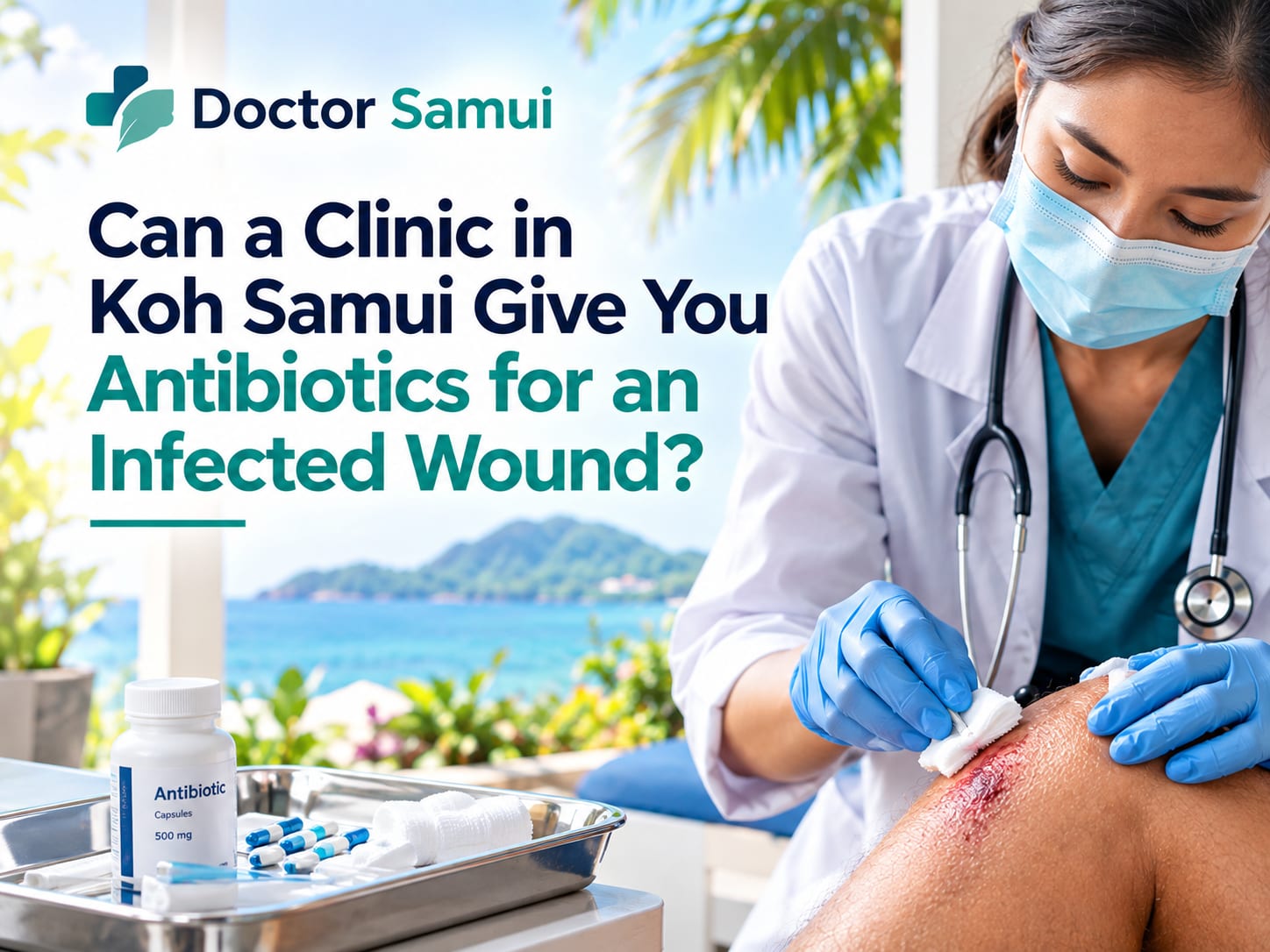
Yes. Licensed private clinics in Koh Samui can prescribe oral antibiotics after a proper clinical assessment. You do not need a hospital for most infected wounds. At Doctor Samui’s Chaweng clinic, we examine the wound, clean it, prescribe the right antibiotic for the type of infection, and can come to your hotel or villa if you cannot get to us.
You scraped your shin on the reef off Chaweng two days ago. It looked fine that evening. Now it is red, warm, and swollen in a way that was not there yesterday morning, and the edges are starting to look angry. This is the wound we see constantly at our clinic, and it almost always needs antibiotics. The good news: you do not need a hospital. A walk-in visit or a doctor at your door tonight will sort this out.
Koh Samui’s heat and humidity push wounds toward infection faster than most tourists expect. A scrape that would close on its own back home can turn into a real problem here within 24 to 48 hours. The bacteria in seawater, reef surfaces, and island soil are not what your immune system is used to, and the tropical climate gives them a head start. Get it assessed the same day you notice the signs. Do not wait to see if it improves on its own.

Why Wounds Infect So Fast in Koh Samui’s Climate
Heat and humidity are not just uncomfortable. They are the two conditions bacteria need most to multiply quickly. In a cooler country, your skin has time to start healing before bacteria can establish a foothold. Here, that window is much shorter.
Koh Samui’s seawater and reef surfaces carry organisms you will not encounter at home. Vibrio vulnificus, found in warm tropical seawater, can cause infections that progress to serious tissue damage fast. Staph and Strep bacteria thrive on warm, moist skin. Marine wounds, road rash with embedded grit, and waterfall scrapes all introduce different bacteria into different layers of tissue.
Many patients arrive having covered their wound with a plaster for two days in 32-degree heat. A sealed, sweaty wound is exactly where you do not want an infection starting. Moist wound care works, but only when the wound is properly cleaned first. If that step did not happen, sealing it up locks the problem in.
Common Wound Types That Get Infected on Koh Samui
Coral cuts are the ones we treat most often. Coral leaves irregular edges, fragments of organic material in the wound, and a bacterial load the skin cannot manage without help. Even a glancing contact on a reef while snorkeling near Chaweng or out toward Angthong Marine Park can produce a wound that looks minor but is already carrying marine bacteria.
Scooter road rash on the ring road is the other constant. The asphalt here is not clean. Road rash scrapes bacteria and debris into the skin across a wide surface area. These wounds need thorough irrigation and removal of embedded material before dressing. Skipping that step is why so many road rash injuries become cellulitis within a day or two. Cellulitis is a spreading bacterial skin infection that goes deeper than the wound surface.
Waterfall scrapes at Na Muang or Hin Lad, sea urchin punctures, dog bites, and monkey bites from the viewpoints around the island all carry their own infection risks. Animal bites also raise the question of rabies, which is a separate issue but one you should not ignore. If you were bitten or scratched by an animal on Samui, read about rabies assessment and post-exposure care at Doctor Samui.

Signs Your Wound Has Become Infected
Redness spreading beyond the wound edge is the most reliable sign. The skin around a cut should not be getting redder over time. If it is, infection is moving into surrounding tissue, not just the wound itself.
Warmth, swelling, and pain that increases rather than decreases after the first day are all warning signs. A healing wound hurts less each day. An infected wound hurts more. Pus, yellow or green discharge, or an odor that was not there before are clear signs the wound is not managing itself.
Fever, chills, or feeling generally unwell alongside a wound changes things. That combination suggests infection may be moving beyond the skin. See a doctor today, not tomorrow.
Which Antibiotics Are Typically Prescribed for Infected Wounds Here
The right antibiotic depends on the wound type, the likely source, and the patient’s allergy history. A coral cut and a road rash do not get the same drug.
For typical skin infections from road rash or general scrapes, Cephalexin is commonly used. It covers the Staph and Strep bacteria most often responsible. For marine wounds, including coral cuts and sea urchin injuries, Doxycycline is frequently the better choice because it covers Vibrio and other marine organisms that Cephalexin does not reach. Co-amoxiclav is another option when the wound source is mixed or unclear.
Animal bites, including dog and monkey bites, usually need Co-amoxiclav alongside rabies exposure assessment. Duration matters too. Stopping early because you feel better is how resistant infections develop. Finish the course.
Why Buying Antibiotics from a Pharmacy Without Seeing a Doctor Is a Bad Idea
Many tourists try this first. Pharmacies in Thailand have historically dispensed antibiotics without a prescription, and it is tempting to skip the clinic when you are on holiday. For infected wounds, this approach regularly backfires.
The wrong antibiotic will not clear a tropical wound infection. Amoxicillin alone will not touch Vibrio. Choosing a drug without knowing the wound depth, source, or your allergy history is a guess. A bad guess can mean a worsening infection, a course that drives resistance without curing anything, or an allergic reaction with no doctor nearby.
The correct path is a short wound assessment, then the right drug at the right dose for the right duration. That is what a clinic visit gives you. You can read more about what a clinic can prescribe for a wound on this page.
What Doctor Samui Provides Alongside the Antibiotic Prescription
Antibiotics are only part of infected wound treatment. We clean and irrigate the wound properly, remove embedded debris, assess whether it needs closure or is better left open to drain, and apply a sterile dressing.
We also check your tetanus status. Most tourists cannot tell us when their last booster was. If you are not up to date, we give it on the same visit. We provide a medical report and insurance documentation, which most travel insurers require for reimbursement. You can see the full scope of infected wound treatment at Doctor Samui here.
Follow-up dressing changes are available at the clinic or at your accommodation. Infected wounds in this climate need checking every one to two days. We arrange that before you leave.
What If You Cannot Get to the Clinic?
Do not let location or mobility stop you from getting this treated. Doctor Samui runs 24/7 hotel and villa visits across Koh Samui, including Chaweng, Lamai, Bophut, Maenam, Choeng Mon, and Hua Thanon. A doctor comes to you with a sterile wound kit, assesses the infection, prescribes antibiotics, cleans and dresses the wound on-site, and documents everything for your insurer.
This matters for tourists in remote villas, families with young children who cannot easily travel at night, or anyone too unwell to sit in a vehicle. You can book a wound assessment and dressing at your hotel or villa here. For most patients with early-stage infections, same-night treatment is the difference between one course of oral antibiotics and a hospital admission a few days later.
When an Infected Wound Needs a Hospital Instead of a Clinic
Most infected wounds on Koh Samui do not need a hospital. But some do, and we will always tell a patient clearly when that point has been reached.
Red flags that mean hospital admission: redness spreading rapidly up a limb, red streaks tracking away from the wound, fever above 38.5 degrees alongside a wound, confusion or feeling severely unwell, or an abscess needing surgical drainage. These suggest infection has entered the bloodstream or is moving toward sepsis. Sepsis is when infection spreads system-wide and becomes life-threatening without intravenous treatment.
We assess for all of these signs at every wound consultation and refer directly when needed. You will not be sent home when the situation calls for escalation.
If your wound is red, swollen, warm to the touch, or not improving, do not wait. Doctor Samui’s walk-in clinic in Chaweng provides same-day wound assessment, proper cleaning and sterile dressing, antibiotic prescriptions matched to your wound type, tetanus boosters, and travel insurance documentation. We visit hotels and villas across Koh Samui 24 hours a day, seven days a week. Contact us to arrange a clinic visit or a doctor to come to you tonight.
Can a walk-in clinic in Koh Samui actually prescribe antibiotics, or do I need to go to a hospital?
Yes. Licensed private clinics in Koh Samui can legally prescribe oral antibiotics after examining your wound. For most infected wounds, a walk-in clinic is faster, cheaper, and clinically appropriate. Hospital admission is only needed when the infection has spread systemically or when intravenous antibiotics are required, and Doctor Samui will tell you clearly if that is the case.
Why is my wound getting worse in Koh Samui when it seemed fine at first?
Koh Samui’s heat and humidity let bacteria multiply far faster than in a cooler climate. The bacteria in local seawater, reef surfaces, and island soil are also not what your immune system has encountered before. A wound that would close uneventfully at home can progress to a spreading skin infection here within 24 to 48 hours. Get it assessed today, not tomorrow.
Can I just buy antibiotics from a pharmacy in Koh Samui without seeing a doctor?
Technically possible at some pharmacies, but clinically risky for infected wounds. The wrong antibiotic will not clear a tropical infection, and choosing without knowing your wound source, depth, and allergy history is a genuine gamble. A proper clinical assessment takes minutes and means you get the right drug at the right dose.
I am at my hotel in Chaweng and my coral cut from yesterday looks infected. Do I have to come to the clinic?
No. Doctor Samui visits hotels and villas across Koh Samui around the clock. A doctor will come to your room with a sterile kit, clean and dress the wound, prescribe antibiotics if needed, and arrange follow-up. It is the same clinical service as a walk-in visit, at your door.
How do I know if my infected wound needs intravenous antibiotics rather than oral antibiotics?
The signs that oral antibiotics may not be enough include redness spreading rapidly up the limb, red streaks tracking from the wound, a fever above 38.5 degrees, or feeling systemically unwell with chills or confusion. If you have any of these alongside a wound, contact us immediately. We assess for these signs at every wound consultation and refer to hospital when intravenous treatment is needed.
I scraped my leg on a waterfall rock at Na Muang three days ago and it is now red and puffy. Is that definitely infected?
Increasing redness and swelling three days after a waterfall scrape on Koh Samui is infection until proven otherwise. Waterfall rocks carry soil bacteria, and three days in tropical humidity is enough time for a real infection to establish. Come in or book a hotel visit today so we can assess it and start treatment if needed.
Dr. Ponlawat Pitsuwan
Physician, Doctor Samui
a walk-in clinic based in Chaweng, Koh Samui, with 24/7 hotel and villa visits across the island. He sees tourists, families, and long-stay expats for infected wounds, tropical skin infections, coral and reef injuries, road rash, and animal bites. His focus is straightforward, evidence-based care delivered in plain language.
