
Clinically reviewed by Dr. Ponlawat Pitsuwan, Physician, Doctor Samui.
Last reviewed: November 2026
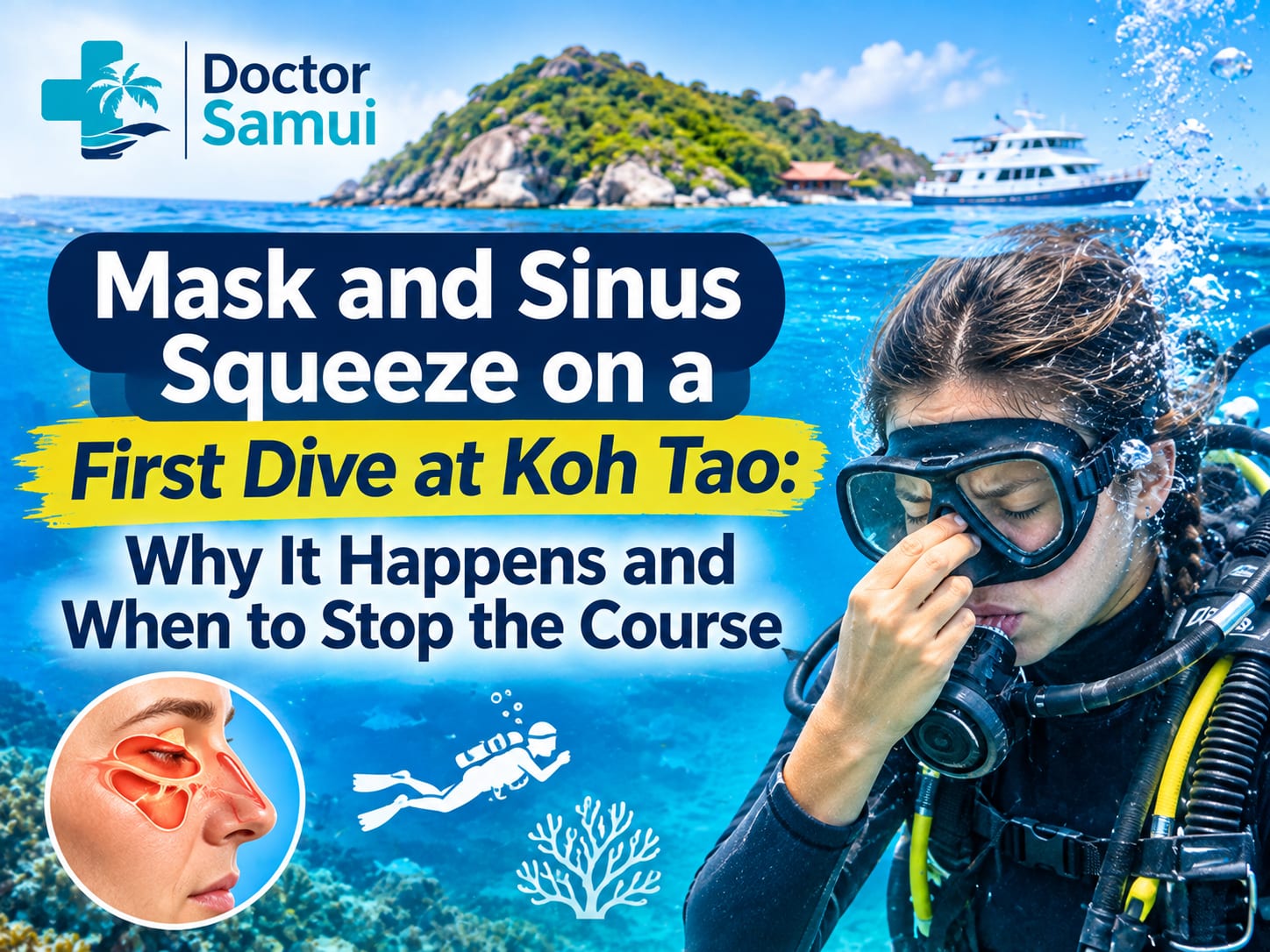
Mask squeeze happens when the air space inside your mask is not equalised on descent, creating suction against your face. Sinus squeeze is a related pressure injury inside the sinus cavities. Both are common on a first open-water dive and most cases are mild. A bloody nose, bruising around the eyes, or facial pain after a first Koh Tao dive does not automatically end your course, but specific red flags mean you should stop and get checked before diving again.
You surface after your first open-water dive off Koh Tao, pull your mask off, and notice blood on your upper lip. Your buddy points out that your eyes look bruised. The water was warm, the descent felt rushed, and nobody warned you this could happen. This is mask squeeze, and it is one of the most common pressure injuries on a first confined-water or shore dive.
Most cases are genuinely mild and do not end the course. The important thing is knowing which symptoms tell you to keep going and which ones tell you to stop. That decision matters more than it looks, especially when the next ferry back to Koh Samui is already in your plans.

What Mask Squeeze and Sinus Squeeze Feel Like on a First Open-Water Dive
A Bloody Nose, Bruising Around the Eyes, and Facial Pain on Ascent
Mask squeeze causes a suction effect across the whole face covered by your mask skirt. The most visible signs are red or purple bruising around the eyes, bloodshot eyes from small burst blood vessels on the surface of the eye, and a nosebleed that starts during the dive or right after you surface.
The bruising around the eyes looks alarming and can resemble a black eye. It is caused by tiny blood vessels rupturing under low pressure, not by physical impact. This bruising typically fades over one to two weeks without treatment.
Sinus squeeze feels different. You feel pressure or sharp pain behind your cheekbones, forehead, or between your eyes, usually on descent or ascent. Some divers get a sudden gush of blood from one nostril. The pain can linger for hours after the dive ends.
Why It Is So Common on the First Koh Tao Pool or Shore Dive
Koh Tao is one of the most popular open-water certification destinations in the Gulf of Thailand. That volume means first dives happen constantly, often back to back, with students who flew in that same morning and whose sinuses are already under mild pressure from the flight.
Many students arrive already slightly stuffy from air-conditioning, travel fatigue, or mild allergies. When the soft lining inside your sinuses is swollen, air cannot move freely through the sinus openings on descent. The first few metres of depth are where most squeeze injuries happen, and students learning depth control descend unevenly.
Mask fit is a factor too. Pool masks issued in bulk by dive centres are rarely a perfect fit for every face shape. A mask that seats unevenly will not equalise smoothly even when you breathe out through your nose correctly.
When You Can Adjust and Continue, and When the Course Should Pause
A mild squeeze with a small nosebleed that stops within a few minutes, minor surface redness in the eyes, and no ongoing facial pain is generally manageable. Tell your instructor exactly what you felt and when. That record matters if you need a clinical review later.
Continuing the course is often reasonable after a mild squeeze if you feel well, the bleeding has fully stopped, and you have no facial pain at rest. Slowing your descent rate and breathing out through your nose into the mask early in the descent reduces the risk of it happening again.
Stop the course and get a clinical assessment if any of these apply: the nosebleed is heavy or does not stop within a few minutes; you have pain behind or inside the eye rather than just surface redness; your vision is blurred or changed in any way; the facial pain is getting worse rather than better.
One specific warning: some divers use a nasal decongestant spray such as oxymetazoline to push through congestion before a dive. This can mask a sinus problem without fixing it. Rebound congestion after the spray wears off mid-dive can cause a reverse block on ascent, where expanding gas cannot vent through a blocked sinus, which is more dangerous than the original squeeze. If you used a decongestant to feel comfortable enough to dive, get a clinical review before going back in.
How This Differs From Ear Pain and Blocked Ears After the Dive
These injuries feel similar to first-time divers, but they are separate problems with different causes and different follow-up paths.
Ear pain during descent is almost always a failure to equalise the middle ear through the Eustachian tube. The pain is inside the ear, often sharp, and sometimes accompanied by muffled hearing after the dive. This is ear barotrauma and has nothing to do with the mask. If you have both ear pain and facial bruising after the same dive, you may have both injuries, which is worth flagging to a doctor. The ear pain clinic at Doctor Samui handles post-dive ear symptoms for divers who come through Koh Samui.
Blocked ears after the dive, with no pain during descent, is often a different issue: fluid in the middle ear or swimmer’s ear from water exposure. Neither is mask squeeze. If your ears feel full or muffled hours after surfacing from a Koh Tao dive, that warrants its own assessment.
Getting Checked on Samui If You Already Took the Boat Back
A lot of divers finish their Koh Tao dives, board the ferry, and arrive in Koh Samui before they decide the symptoms are worth checking. That is a reasonable sequence. Mild mask squeeze does not require emergency care on Koh Tao itself, and most cases look worse than they are.
What matters is getting a proper review before you fly. Flying with blocked sinuses after a sinus squeeze risks a reverse squeeze inside the aircraft, where trapped air expands as cabin pressure drops but cannot vent through a blocked sinus, causing pain or further injury. This is painful and can cause sinus damage. If you have any residual facial pain, ongoing nasal congestion, or a worsening headache after your Koh Tao dives, get checked before your departure date. Doctor Samui offers fit-to-fly assessments and can advise on when it is safe to board.
A secondary sinus infection can develop days after a dive squeeze if the sinus lining was exposed to seawater. Signs of infection include fever, discoloured nasal discharge, and facial pain that returns after initially improving. This is not squeeze anymore: it is a clinical infection that needs antibiotic treatment. Doctor Samui’s sinus infection service covers assessment and treatment for post-dive sinus problems.
If your bruising or eye symptoms are progressing rather than fading, or if any vision change occurred, come in for a review. Return-to-dive clearance, confirming your fitness to continue diving after a pressure injury, is something Doctor Samui can provide before you re-join the course or book your next dive trip. Doctor Samui has 24-hour hotel and villa visits across the island if you are not near Chaweng.
Had a rough first dive at Koh Tao? If you have a bloody nose, bruised eyes, facial pain, or ear symptoms after surfacing, Doctor Samui can assess you the same day. Walk into the Chaweng clinic or request a hotel visit anywhere on Koh Samui, available 24 hours a day. Doctor Samui also provides fit-to-fly assessments and return-to-dive clearance for divers with pressure injuries before they continue their course or board their flight home. Contact Doctor Samui to book.
FAQ
Dr. Ponlawat Pitsuwan
Physician, Doctor Samui
a walk-in clinic based in Chaweng, Koh Samui, with 24-hour hotel and villa visits across the island. He sees tourists, families, and long-stay expats for dive-related injuries and pressure barotrauma, including post-dive assessments, sinus and ear pain, and fit-to-fly and return-to-dive clearance. His focus is straightforward, evidence-based care in plain language.
References
- Edmonds C, et al. Barotrauma of the sinuses. In: Diving and Subaquatic Medicine. Taylor & Francis, 2016.
- Divers Alert Network (DAN). Mask Squeeze (Facial Barotrauma). DAN Health Resources.
- Divers Alert Network (DAN). Sinus Barotrauma. DAN Health Resources.
- Presswood G, et al. Facial Barotrauma. StatPearls. NCBI Bookshelf, 2024.
- Becker GD, et al. Sinus barotrauma in diving. Laryngoscope, 1993; PMC review: Sinus barotrauma in clinical practice. PMC5662535.
The information in this article is for educational purposes only and does not constitute medical advice. It should not be used to self-diagnose or replace a consultation with a qualified physician. If you have concerns about your health, contact a licensed medical professional. For appointments at Doctor Samui, visit doctorsamui.com.
