
Clinically reviewed by Dr. Ponlawat Pitsuwan, Physician, Doctor Samui.
Last reviewed: November 2026
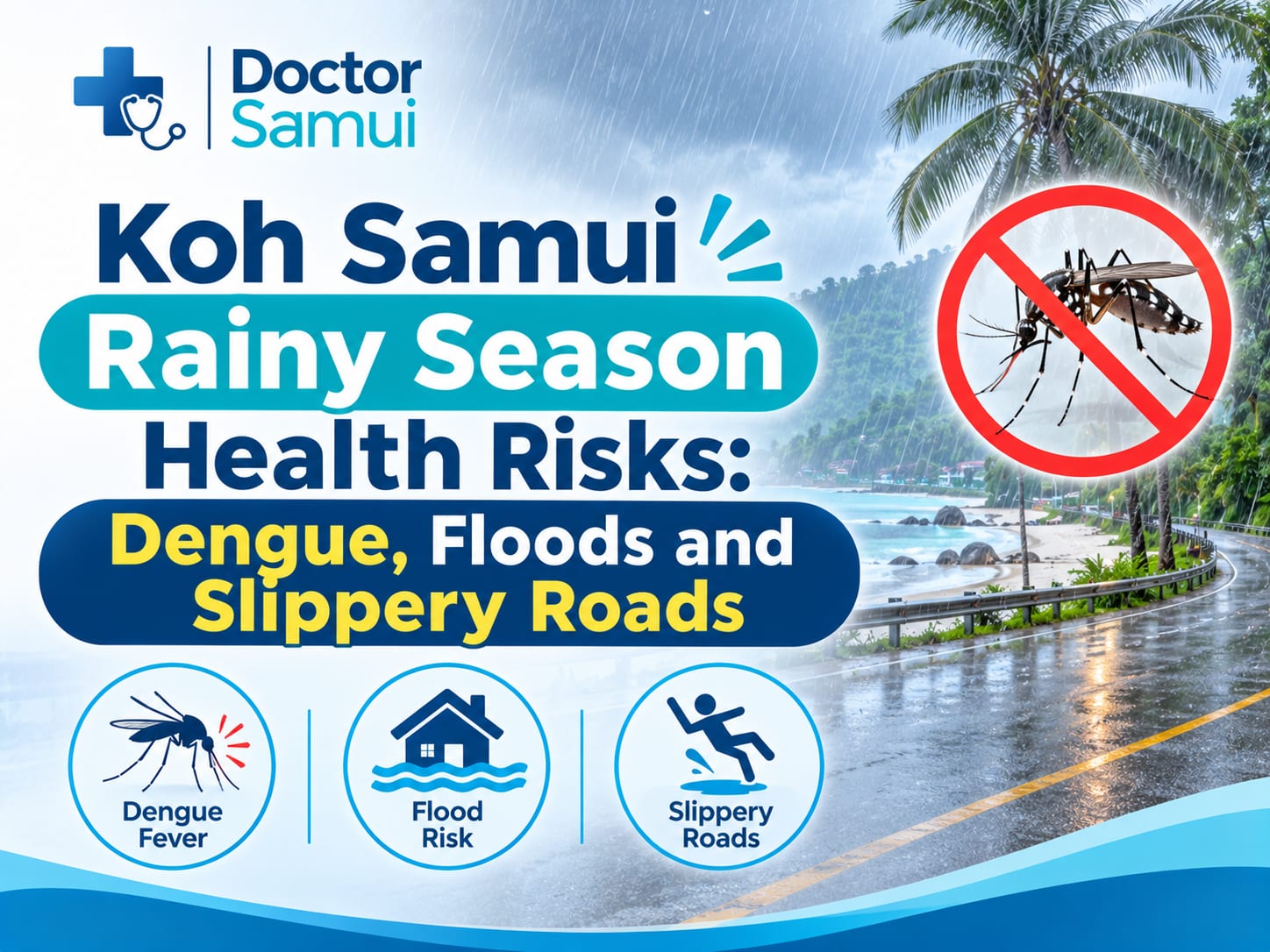
Koh Samui’s rainy season runs from October to December, driven by the northeast monsoon off the Gulf of Thailand. November is the peak. Health risks during this period include dengue fever, wound infections from floodwater, scooter crashes on wet roads, and rough-sea injuries. If you have a fever above 38.5°C for more than 48 hours, a cut that was exposed to floodwater, or road rash that is swelling or smelling, get seen the same day.
The ferry from Donsak pulls in and the sky over Chaweng is already dark by 2 p.m. By the time you reach your hotel, the ring road is flooded past the wheels of parked scooters, and the beach is a brown chop you would not swim in. This is Samui in November, and it catches a lot of people off guard.
Unlike the rest of Thailand, which dries out by October, Samui faces the Gulf of Thailand and gets hit by the northeast monsoon instead. Its wet season peaks late, runs October through December, and can still throw heavy showers into January. The health risks that come with the wet season are specific and manageable if you know what to watch for.

When Samui’s Monsoon Hits
Most of Thailand follows the southwest monsoon, which clears by October. Samui does not follow that pattern. It sits on the east side of the peninsula and receives the northeast monsoon. That system builds in October and peaks in November, bringing flash flooding to low-lying areas in Chaweng, Lamai, and the inland roads near streams.
December is still wet on Samui. Tourists who arrive expecting dry weather because monsoon season is over elsewhere are regularly caught out. January is usually when the skies clear properly, though brief heavy downpours can happen any month. If you are visiting in October or November, plan for rain every afternoon and significant surf on the east coast.
The Angthong Marine Park and many diving day trips run from the more sheltered west and north coasts. But the ferry routes from the mainland arrive on the east side, and rough sea states can disrupt schedules for days at a time around the November peak.
Mosquito-Borne Illness Peaks During Koh Samui Rainy Season
Standing water is everywhere after heavy rain: coconut shells, plant pots, clogged drains, puddles that sit for days. Aedes mosquitoes, the ones that carry dengue, breed in exactly these small, still pools. Dengue transmission rises during and after the wet season across Thailand, and Samui is no exception.
Dengue starts like a bad flu. High fever, severe headache, pain behind the eyes, muscle and joint aches. Some people develop a rash. Paracetamol is the right painkiller to use. Avoid ibuprofen and aspirin, which can increase bleeding risk if dengue is confirmed. Do not take either until dengue has been ruled out.
Watch for warning signs that dengue may be progressing: bleeding gums, tiny red dots on the skin called petechiae, persistent vomiting, or severe abdominal pain. At that point, rest and oral rehydration at the hotel is not enough. A blood test including platelet count tells you how the illness is tracking.
Doctor Samui can run a dengue NS1 antigen test and a full blood count at the Chaweng clinic, or come to your hotel. If your child has had a fever for more than 48 hours during the Samui rainy season, that is worth getting checked the same day. You can read more about what to expect at our fever and dengue test page.

Flood Water and Infected Cuts
After a heavy downpour in Lamai or along the inland roads near Nathon, water collects fast. It looks like rainwater. It is not. Street floodwater picks up animal waste, sewage overflow, and soil contaminated by rodents. If you wade through it with a cut, a graze, or even cracked skin on your feet, you have a route for bacteria to enter.
Leptospirosis is the main concern here. It is a bacterial infection spread through water or soil contaminated by animal urine, common in tropical flood conditions. You would not know you were exposed at the time. Symptoms can appear days to a few weeks later and can resemble a bad flu: fever, muscle pain, headache. Without treatment, it can become serious.
If you walked through floodwater with open skin, even a small scrape, come in for a clinical review. We may discuss a short course of preventive antibiotics depending on your exposure. Do not wait for symptoms to appear first.
Any wound that swells, reddens, or starts to smell after flood contact needs to be seen the same day. That is cellulitis starting, and it needs antibiotic treatment. See our wound dressing and care service for what to expect when you come in.
Scooter Crashes on Wet Roads
The road linking Bang Rak to Chaweng, the tight bends above Lamai, and the unlit inland shortcuts all share one thing in October and November: a thin layer of wet that makes corners much less forgiving than they look. First-timers on automatic scooters and experienced riders both come off.
Road rash from wet tarmac or gravel strips skin quickly and usually picks up debris in the wound. Rinse under clean water immediately. Do not leave grit in the wound, do not cover it tightly without cleaning it first, and do not use undiluted hydrogen peroxide, which damages tissue. At the clinic, we irrigate the wound properly, remove debris, and close or dress it correctly depending on depth.
Road rash also means checking your tetanus status. If you have not had a booster in the past five years and the wound is deep or contaminated, a tetanus shot is part of the same-day plan. If the injury happened at night and you are not near Chaweng, our 24-hour accident and trauma service covers hotel and villa visits across the island. Do not drive yourself to a clinic after a crash.
Rough Seas and Cancelled Ferries
From late October through November, east-coast seas around Chaweng and Lamai can build quickly. Flags go red on the beach, diving trips get cancelled, and the ferry service from Donsak to Nathon can suspend sailings for a day or more. Angthong National Marine Park closes during the worst of it.
Swimmers who misjudge surf conditions on a red-flag day can be pulled sideways by currents along Chaweng beach faster than they expect. Ear infections after diving in rough, low-visibility water are also common during this period, and they need treatment rather than waiting out. Our ear pain and swimmer’s ear service is available walk-in and by hotel visit.
If you are stranded on the island because ferries are cancelled, make sure your prescription medications do not run low. Many travellers assume a one-day delay becomes two and find themselves without chronic medications. Come in early. If your travel plans shift and you need a fit-to-fly certificate, we can help with that too.
Doctor Samui’s walk-in clinic in Chaweng is open every day. If you have a fever that has not come down after 48 hours, a wound exposed to floodwater, road rash from a scooter fall, or an ear problem after rough-water diving, do not wait it out. We also do 24-hour hotel and villa visits across the island, including Lamai, Bophut, Maenam, Choeng Mon, Hua Thanon, and Nathon. Contact us through the button below or visit doctorsamui.com to reach us any time of day or night.
FAQ
Dr. Ponlawat Pitsuwan
Physician, Doctor Samui
a walk-in clinic based in Chaweng, Koh Samui, with 24-hour hotel and villa visits across the island. He sees tourists, families, and long-stay expats for dengue and tropical fevers, wound care after scooter accidents, flood-related infection concerns, and urgent illness during the wet season. His focus is straightforward, evidence-based care delivered in plain language.
References
- World Health Organization. Dengue and severe dengue. WHO Fact Sheet, 2024.
- Centers for Disease Control and Prevention. Clinical Signs and Symptoms of Dengue. CDC, 2024.
- Centers for Disease Control and Prevention. Leptospirosis: Signs and Symptoms. CDC.
- Centers for Disease Control and Prevention. Dengue: Treatment. CDC, 2024.
- Centers for Disease Control and Prevention. Chapter 21: Tetanus. Epidemiology and Prevention of Vaccine-Preventable Diseases (Pink Book). CDC.
- World Health Organization. Leptospirosis. WHO.
The information in this article is for educational purposes only and does not constitute medical advice. It should not be used to self-diagnose or replace a consultation with a qualified physician. If you have concerns about your health, contact a licensed medical professional. For appointments at Doctor Samui, visit doctorsamui.com.
