Clinically reviewed by Dr. Ponlawat Pitsuwan, Physician, Doctor Samui.
Last reviewed: October 2026
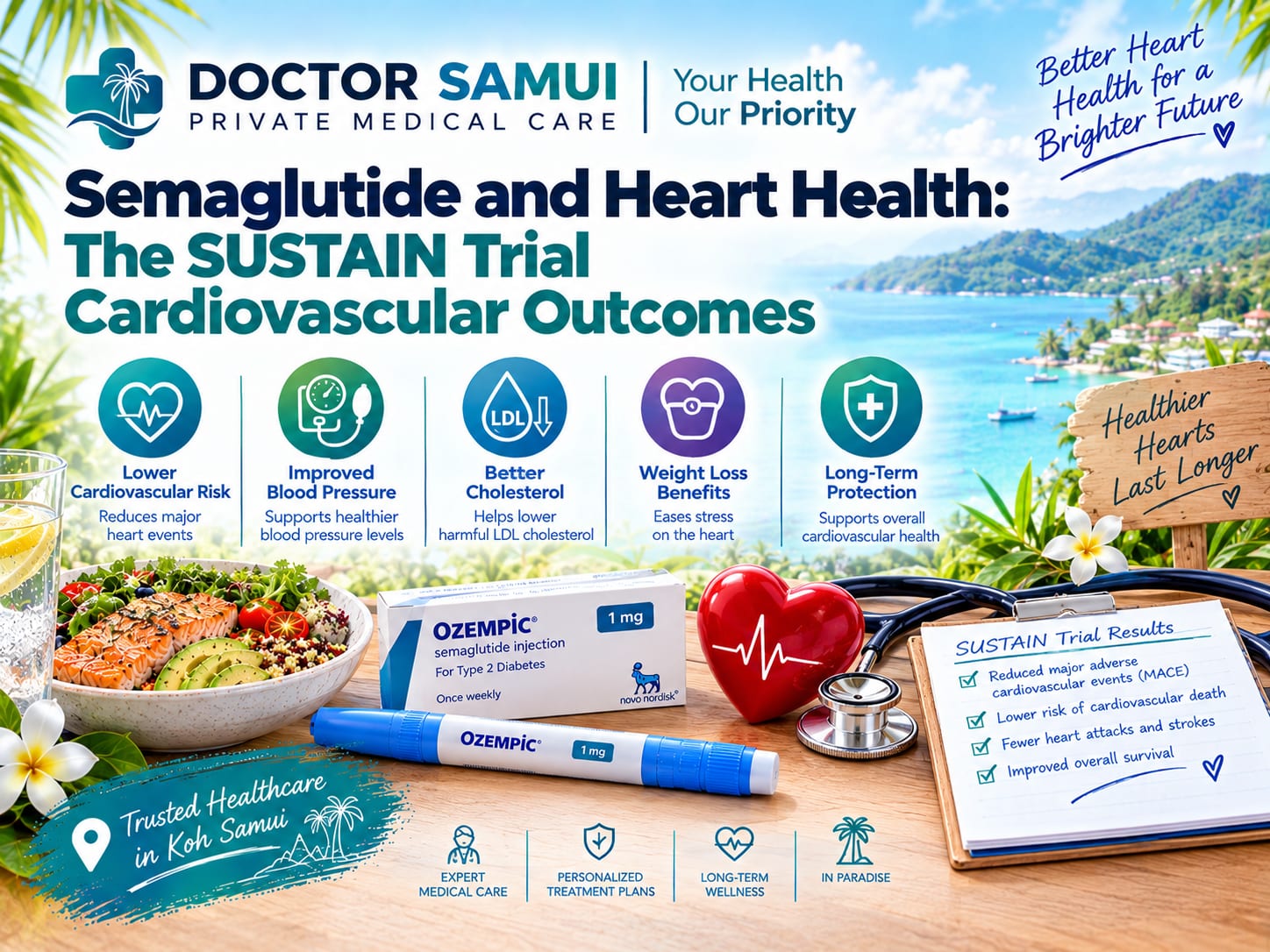
Semaglutide (Ozempic, Wegovy) reduces the risk of major cardiovascular events including heart attack, stroke, and cardiovascular death. This benefit has been confirmed across multiple large trials, in people with type 2 diabetes and in people with obesity alone. Crucially, the heart protection goes well beyond what weight loss alone can explain.
You have been on Samui long enough to know the ring road, the best beach at low tide, and which warung does a decent breakfast. You also know your last blood pressure reading was not great, and the word semaglutide keeps coming up whenever cardiometabolic risk gets discussed. You want to know whether this drug actually protects your heart, or whether that is just weight-loss marketing dressed up in trial data.
The short answer: the trials are real, the semaglutide cardiovascular benefit is real, and it goes well beyond the number on the scale. Here is what the evidence shows, from the first major outcomes trial through to the most recent 2024 data, and what it means if you are managing your heart health here in Thailand without regular specialist access.

From SUSTAIN 6 to SOUL: The Full Evidence Arc
The cardiovascular story for semaglutide started with SUSTAIN 6, published in 2016. It enrolled people with type 2 diabetes who already had high cardiovascular risk. The trial tested weekly injectable semaglutide against placebo. The primary outcome was a composite of cardiovascular death, nonfatal heart attack, or nonfatal stroke, known as MACE.
SUSTAIN 6 found a statistically significant reduction in MACE. The trial was designed to confirm that semaglutide caused no cardiovascular harm, so finding an actual benefit was a meaningful result. The nonfatal stroke signal was the strongest.
PIONEER 6 followed, testing oral semaglutide in a similar high-risk diabetic population. It showed a numerical reduction in MACE that did not reach statistical significance, partly because the follow-up was shorter and the event count was lower. It confirmed no cardiovascular harm.
Then came SELECT, published in 2023. This was the trial that changed the conversation. SELECT enrolled over 17,500 people with established cardiovascular disease and obesity but without type 2 diabetes. Semaglutide 2.4mg weekly reduced MACE by approximately 20% relative to placebo over a mean follow-up of around 40 months. It was the first large cardiovascular outcomes trial for a weight-management drug to show a clear benefit in people without diabetes.
The SOUL trial, with topline results announced in 2024 and full results published in 2025, tested oral semaglutide in people with type 2 diabetes and established cardiovascular disease. It confirmed a significant reduction in MACE, extending the cardiovascular benefit to the oral formulation in a definitive trial.
Why Semaglutide Protects the Heart Beyond Weight Loss
This is the question that matters most for patients who do not lose dramatic amounts of weight on semaglutide. A 2025 analysis of SELECT data found that weight and waist circumference reduction explained only around one-third of the cardiovascular benefit. The remaining protection appears to come from other pathways.
Those pathways include reductions in systemic inflammation, measured by markers such as high-sensitivity CRP. Semaglutide also appears to improve how the inner lining of blood vessels functions, which matters for plaque stability and blood pressure regulation.
This is not a minor point. It means patients with modest weight loss can still expect meaningful cardiovascular protection. The drug is not simply a heart-friendly side effect of becoming lighter.

Semaglutide and Heart Failure: What the Trials Show
Heart failure is a different outcome from heart attack and stroke, and the evidence here deserves its own section. The STEP-HFpEF trial, published in 2023, enrolled patients with heart failure with preserved ejection fraction. This is a form of heart failure where the heart pumps normally but the muscle is too stiff. Patients on semaglutide showed significant improvements in symptoms, exercise capacity, and quality of life compared to placebo.
This matters for a specific group: people who are overweight or obese, get breathless on exertion, and have been told their heart pumps normally on echo. Semaglutide appears to be beneficial here, and research in this area is ongoing.
Who Benefits Most from Semaglutide’s Cardiovascular Effects
The trial data covers two distinct groups, and it is worth being clear about which applies to you. If you have type 2 diabetes and established atherosclerotic cardiovascular disease, meaning plaque in your coronary arteries, a prior heart attack, or a prior stroke, SUSTAIN 6 and SOUL apply directly. The cardiovascular benefit in this group is well-established.
If you have obesity and established cardiovascular disease but no diabetes, SELECT applies. That trial showed roughly a 20% relative reduction in MACE. This is strong evidence for a large, real-world population.
If you have cardiovascular risk factors but no established disease, the data is less definitive. You are not in the SELECT population. That does not mean there is no benefit, but specific trial evidence does not extend to primary prevention, and your doctor should weigh the full clinical picture with you.
Additional Cardiovascular Risk Factor Improvements
Beyond MACE reduction, semaglutide improves a cluster of markers that matter for heart health. Across trials, patients on semaglutide have shown reductions in systolic blood pressure, LDL cholesterol, triglycerides, HbA1c, and body weight. These are all established risk factors for heart attack and stroke.
Blood pressure and triglyceride reductions tend to appear early. LDL and HbA1c improvements accrue over months. Not every patient sees the same magnitude of change.
If you are already on a statin or blood pressure medication, starting semaglutide does not mean stopping those. It means your overall cardiometabolic risk picture is likely improving across several fronts at once.
Managing Heart Health on Koh Samui
Many long-stay expats and frequent visitors to Samui fit exactly the population these trials recruited: middle age or older, carrying some weight, with one or two cardiovascular risk markers already documented. Regular follow-up that would be routine at home can become patchy when you are based on an island.
Doctor Samui offers GLP-1 consultations that include a baseline cardiometabolic workup covering blood pressure, HbA1c, fasting lipids, and kidney function. These are the same parameters used to assess eligibility and monitor safety in the major trials. You can read more about the approach at our semaglutide cardiovascular outcomes page.
For patients already on semaglutide who have moved to or are staying on Samui, monitoring can continue without a gap. A health check-up in Koh Samui is the right starting point if your last bloods were more than a year ago.
Starting Semaglutide for Cardiovascular Risk: What to Expect
Semaglutide is started at a low dose and increased gradually over several months. This titration exists to reduce gastrointestinal side effects, mainly nausea and reduced appetite. Most people tolerate it well once past the initial weeks, but the escalation schedule matters. Going too fast increases side effects; going too slow delays the therapeutic effect.
The drug is not suitable for people with a personal or family history of medullary thyroid carcinoma or a rare syndrome called MEN2. It should be used with caution in people with a history of pancreatitis. These are not common exclusions, but they need to be confirmed before starting.
For people with type 2 diabetes already on insulin or sulfonylureas, dose adjustment of those medications may be needed to avoid low blood sugar. This is a conversation to have with your prescribing doctor before the first dose, not after. If you are staying in Chaweng, Lamai, or elsewhere on the island, you can request a doctor hotel visit in Koh Samui rather than coming into the clinic.
If you have established cardiovascular disease, obesity, or type 2 diabetes and want to know whether semaglutide is appropriate for you, Doctor Samui offers a full cardiometabolic assessment at our Chaweng clinic or via house call across the island. We check your baseline blood pressure, HbA1c, lipids, and kidney function before any prescription, matching the workup used in the major cardiovascular trials. Contact Doctor Samui to book a GLP-1 consultation or request a hotel or villa visit.
Frequently Asked Questions
Dr. Ponlawat Pitsuwan
Physician, Doctor Samui
a walk-in clinic based in Chaweng, Koh Samui, with 24/7 hotel and villa visits across the island. He sees tourists, families, and long-stay expats for cardiometabolic risk assessment, GLP-1 therapy including semaglutide, health checkups, and chronic disease management. His focus is straightforward, evidence-based care delivered in plain language.
References
- Marso SP, et al. Semaglutide and Cardiovascular Outcomes in Patients with Type 2 Diabetes. N Engl J Med. 2016;375:1834-1844.
- Lincoff AM, et al. Semaglutide and Cardiovascular Outcomes in Obesity without Diabetes. N Engl J Med. 2023;389:2221-2232.
- Kosiborod MN, et al. Semaglutide in Patients with Heart Failure with Preserved Ejection Fraction and Obesity. N Engl J Med. 2023;389:1069-1084.
- McGuire DK, et al. Oral Semaglutide and Cardiovascular Outcomes in High-Risk Patients with Type 2 Diabetes. N Engl J Med. 2025;392:1243-1255.
- Deanfield J, et al. Semaglutide and cardiovascular outcomes by baseline and changes in adiposity measurements in the SELECT trial. Lancet. 2025.00001-0/fulltext)
The information in this article is for educational purposes only and does not constitute medical advice. It should not be used to self-diagnose or replace a consultation with a qualified physician. If you have concerns about your health, contact a licensed medical professional. For appointments at Doctor Samui, visit doctorsamui.com.