Clinically reviewed by Dr. Ponlawat Pitsuwan, Physician, Doctor Samui.
Last reviewed: October 2026
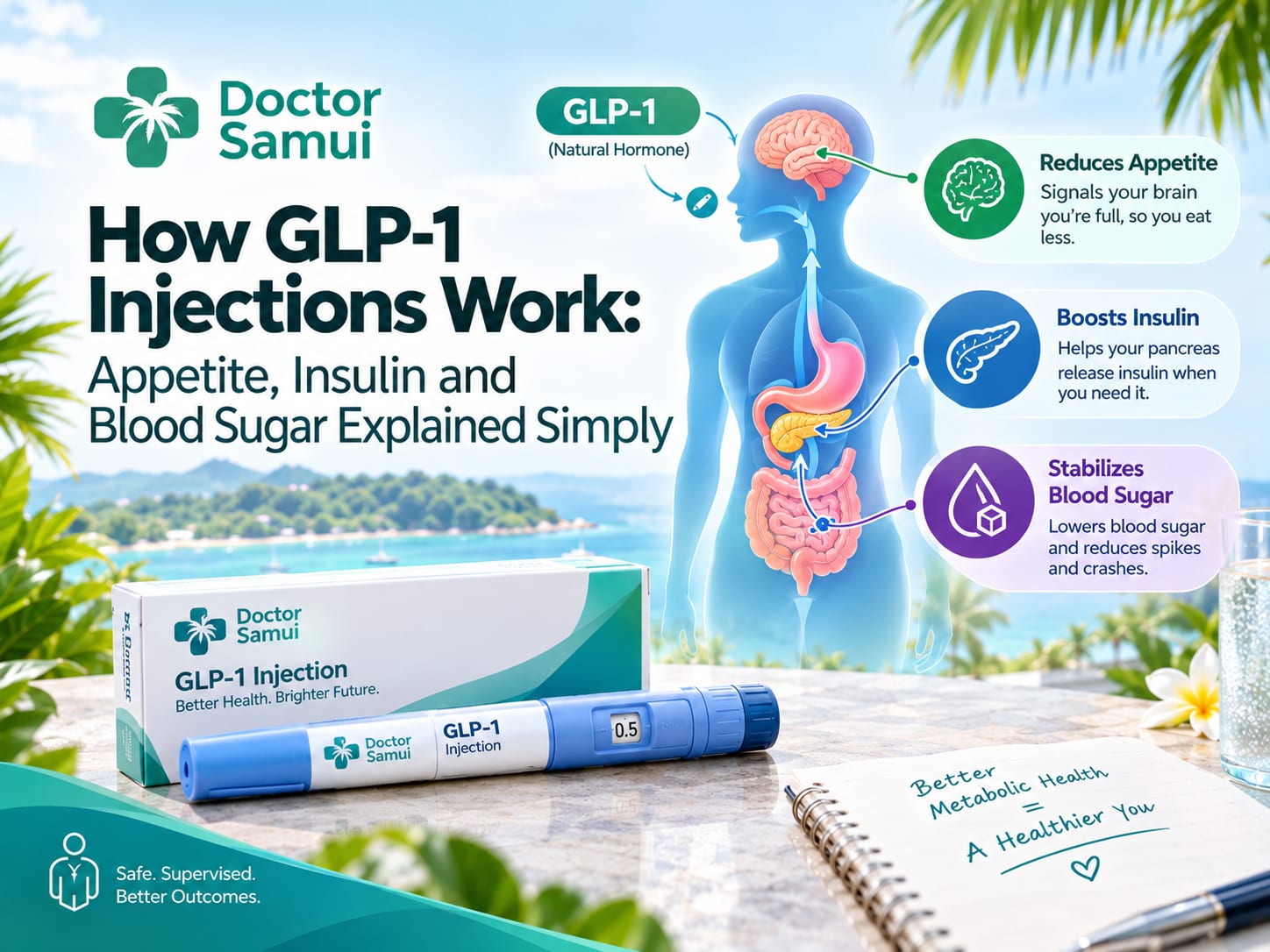
GLP-1 injections mimic a natural gut hormone your body releases after eating. They trigger insulin release, slow how quickly food leaves your stomach, and send satiety signals to your brain. The result is lower blood sugar and reduced appetite. Semaglutide and tirzepatide are the most widely used versions, given as a weekly injection under the skin.
You are three months into a long stay on Koh Samui. A friend back home started semaglutide and lost eight kilograms. Your doctor mentioned tirzepatide at your last check-up. Now you want to understand what these injections actually do before you commit to one. That is a reasonable place to start.
The short answer: GLP-1 injections work on three places at once. Your gut, your pancreas, and your brain. Each does something different, and together they explain both the benefits and the side effects.
What GLP-1 Actually Is
GLP-1 stands for glucagon-like peptide-1. Your gut makes it naturally every time you eat. It tells your pancreas to release insulin and to hold back glucagon. Insulin lowers blood sugar. Glucagon raises it. GLP-1 keeps the balance after a meal.
The problem is that your body breaks down natural GLP-1 within minutes. The injectable versions, semaglutide and tirzepatide, are designed to resist that breakdown. They stay active for roughly a week, which is why you only inject once weekly.
How GLP-1 Injections Lower Blood Sugar
When you inject semaglutide or tirzepatide, the drug binds to GLP-1 receptors on your pancreas. It triggers insulin release, but only when your blood sugar is already elevated. This matters. The response is glucose-dependent, meaning it does not fire when your blood sugar is normal. That is why GLP-1 injections on their own carry a low risk of causing hypoglycaemia compared to some older diabetes medications.
At the same time, these drugs suppress glucagon. Less glucagon means your liver releases less stored sugar into the bloodstream. Both effects together keep blood glucose steadier after meals.
How GLP-1 Injections Act on the Brain
GLP-1 receptors exist in the hypothalamus, the part of the brain that controls hunger and fullness. When semaglutide circulates at therapeutic levels, it activates these receptors directly.
The result is not just physical fullness from a slower stomach. Your brain genuinely receives fewer hunger signals. You stop thinking about food as often. Portion sizes that used to feel small start feeling like enough. This central appetite effect is one reason why higher doses used for weight management produce more significant reductions in food intake than lower doses used for diabetes alone.
Gastric Emptying: the Third Mechanism
GLP-1 injections slow how quickly food moves from your stomach into the small intestine. Food stays in the stomach longer. That physical fullness lasts longer after a meal. You eat less at the next one.
This is also where most early side effects come from. Nausea, bloating, and reflux in the first weeks are largely a result of this slower gastric emptying. Most people find these side effects ease as the body adjusts, particularly when dose increases are made gradually.
How Tirzepatide Works Differently to Semaglutide
Semaglutide targets only GLP-1 receptors. Tirzepatide targets two: GLP-1 and GIP. GIP is another gut hormone involved in insulin release and fat metabolism.
Because tirzepatide activates both pathways, clinical trial data shows it produces greater average weight loss than semaglutide. The SURMOUNT-1 trial reported an average weight reduction of around 21% of body weight at the highest tirzepatide dose. The STEP-1 trial reported approximately 15% with semaglutide 2.4 mg. These are different trials with different populations, so a direct comparison has limits. But the general pattern, tirzepatide producing greater average weight loss, is consistent across current evidence.
Both drugs are given as weekly subcutaneous injections. Both require gradual dose increases before reaching the maintenance dose.
Who Should Not Use GLP-1 Injections
Some people cannot safely use GLP-1 injections. Do not use these medications if you have a personal or family history of medullary thyroid carcinoma or multiple endocrine neoplasia type 2 (MEN2). Pregnancy and breastfeeding are also absolute contraindications.
Extra caution is needed with a history of pancreatitis, severe gastrointestinal disease, or certain kidney conditions. A medical consultation is required before starting. This is not something to begin based on an online guide, even a careful one.
What to Expect in the First Weeks on GLP-1 Treatment
The first few weeks are about starting low and increasing gradually to reduce side effects. Nausea is the most common early complaint. It is typically worst in the days after each dose increase and usually improves as your body adjusts at each level.
Taking the injection with a small meal and avoiding heavy or fatty food in the days after each increase can help. Constipation and diarrhoea are also reported. Serious but rare risks include pancreatitis and gallstone-related symptoms. If you develop severe abdominal pain, persistent vomiting, or yellowing of the skin or eyes, get assessed promptly.
Appetite changes can be noticeable within the first week. Meaningful weight loss tends to become apparent after several weeks at a therapeutic dose, not immediately.
Getting GLP-1 Treatment Reviewed on Koh Samui
Long-stay visitors and expats sometimes arrive mid-treatment, already taking semaglutide or tirzepatide at home. Others are considering starting for the first time. Both situations need proper medical oversight, and that is available here.
Doctor Samui can review your current dose, check for side effects, and confirm whether your regimen is on track. If you are considering starting, an initial consultation will cover your medical history, current medications, and any contraindications before anything is prescribed. You can find more detail on our GLP-1 receptor agonists page.
One practical issue for travellers: semaglutide pens require refrigeration between 2 and 8 degrees Celsius when not in use. Storage instructions once in use vary by brand, so check your specific pen’s labelling. If you have been travelling and are unsure whether your pen stayed within the correct temperature range, ask a doctor before injecting.
Doctor Samui operates as a walk-in clinic in Chaweng and offers 24/7 hotel and villa visits across the island. If you want a health check-up in Koh Samui as part of deciding whether GLP-1 treatment is right for you, or need monitoring while already on treatment, no appointment is needed. If you are staying further out, house call and IV therapy services are also available in Lamai and other areas of the island.
Already on semaglutide or tirzepatide and want a review while you are on Koh Samui? Doctor Samui offers consultations at our Chaweng walk-in clinic and 24/7 hotel and villa visits across the island. Walk in or call us to arrange a visit at your accommodation. No referral needed.
Frequently Asked Questions
Dr. Ponlawat Pitsuwan
Physician, Doctor Samui
a walk-in clinic based in Chaweng, Koh Samui, with 24/7 hotel and villa visits across the island. He sees tourists, families, and long-stay expats for metabolic health consultations, GLP-1 treatment review, weight management, and general health check-ups. His focus is straightforward, evidence-based care delivered in plain language.
References
- Wilding JPH, Batterham RL, Calanna S, et al. Once-weekly semaglutide in adults with overweight or obesity (STEP 1). New England Journal of Medicine. 2021;384(11):989-1002.
- Jastreboff AM, Aronne LJ, Ahmad NN, et al. Tirzepatide once weekly for the treatment of obesity (SURMOUNT-1). New England Journal of Medicine. 2022;387(3):205-216.
- Gabery S, Salinas CG, Paulsen SJ, et al. Semaglutide lowers body weight in rodents via distributed neural pathways. JCI Insight. 2020;5(6):e133429.
The information in this article is for educational purposes only and does not constitute medical advice. It should not be used to self-diagnose or replace a consultation with a qualified physician. If you have concerns about your health, contact a licensed medical professional. For appointments at Doctor Samui, visit doctorsamui.com.