Clinically reviewed by Dr. Ponlawat Pitsuwan, Physician, Doctor Samui.
Last reviewed: October 2026
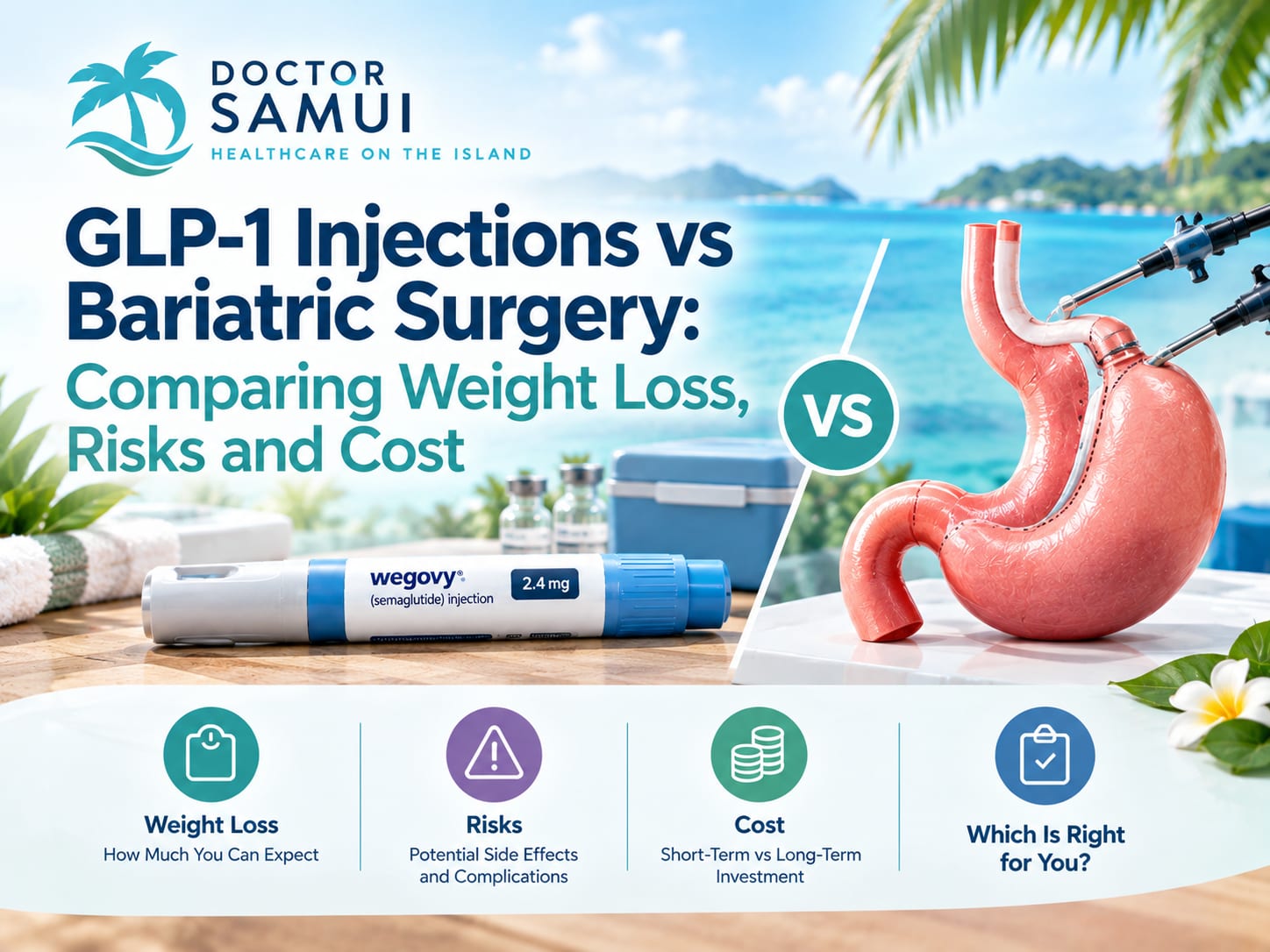
GLP-1 injections and bariatric surgery both produce meaningful weight loss, but surgery still delivers greater average results at 12 months and beyond in current evidence. Newer agents like tirzepatide narrow that gap significantly. The right choice depends on your BMI, health status, willingness to commit to surgery, and whether you can stay on medication long-term. Most weight lost on GLP-1 therapy returns within a year of stopping, while surgical results are more durable but not permanent.
You have been based on Samui for a few months. The ring road morning runs are going well, the food is excellent, and the heat keeps things interesting. But the weight question is still the bigger conversation. You are weighing two real options: a weekly injection you can start at a walk-in clinic versus a surgical procedure that needs a hospital, an anaesthetist, and weeks of recovery. Both work. Neither is simple.
They are not competing options for the same person. Surgery tends to produce more weight loss over time, but it carries anaesthetic and procedural risk, requires permanent lifestyle change, and cannot be undone. GLP-1 injections work while you take them, require ongoing adherence, and lose their effect when you stop. This article compares both on outcomes, risks, cost, and what to expect, so you can have a real conversation with a doctor rather than arriving with half the picture.

How GLP-1 Injections Work for Weight Loss
GLP-1 stands for glucagon-like peptide-1, a hormone your gut releases after eating. It signals your brain that you are full, slows how quickly your stomach empties, and reduces appetite. The injections mimic this signal at higher concentrations than your body produces naturally.
Semaglutide targets GLP-1 receptors only. Tirzepatide targets both GLP-1 and GIP receptors, another gut hormone, which is why it tends to produce stronger results. Both also improve blood sugar control, which matters if you have type 2 diabetes or are heading toward it.
These are not stimulants. They do not speed up your heart rate or suppress appetite through the nervous system the way older diet pills did. Side effects are mostly gastrointestinal, especially during the first few weeks of dose increases.
Types of Bariatric Surgery and What Each Does
The two most common procedures are sleeve gastrectomy and Roux-en-Y gastric bypass. Sleeve gastrectomy removes roughly 80% of the stomach, creating a smaller tube-shaped stomach. It also lowers ghrelin, the hormone that drives hunger.
Roux-en-Y gastric bypass creates a small stomach pouch and reroutes part of the small intestine, so you absorb fewer calories. It tends to produce slightly greater weight loss than sleeve gastrectomy but carries more nutritional risks long-term.
Both require general anaesthesia, a hospital stay, and several weeks of recovery. Both are permanent structural changes. There is no reversal option for sleeve gastrectomy.

GLP-1 vs Bariatric Surgery: Weight Loss Outcomes Compared
In current evidence, bariatric surgery produces greater total body weight loss at 12 months and beyond. Sleeve gastrectomy and gastric bypass typically produce 20 to 30% total body weight loss in trial settings. Semaglutide at maximum doses produces around 15% mean total body weight loss in major trials, with individual results ranging roughly from 5% to over 20%. Tirzepatide, the newer dual-receptor agent, reaches around 15 to 20% in trial data, narrowing the gap with surgery considerably.
At six months, the difference between GLP-1 agents and surgery is smaller. The gap widens at 12 months and beyond, in favour of surgery. Visceral fat reduction, the fat around your organs that drives metabolic risk, improves with both approaches.
For type 2 diabetes remission, surgery still has the stronger evidence. Gastric bypass in particular produces remission in a substantial proportion of patients, in some cases before significant weight loss occurs. GLP-1s improve blood sugar control strongly but produce full remission less consistently.
| Semaglutide | Tirzepatide | Sleeve Gastrectomy | Gastric Bypass | |
|---|---|---|---|---|
| Avg. weight loss (approx.) | ~15% TBWL (trial mean) | ~15-21% TBWL | ~20-30% TBWL | ~25-30% TBWL |
| Surgical risk | None | None | Moderate | Moderate, High |
| Reversible | Yes (stop injecting) | Yes (stop injecting) | No | No |
| Type 2 diabetes benefit | Strong | Strong | Strong | Very strong |
| Ongoing commitment | Weekly injection | Weekly injection | Permanent diet change | Permanent diet change |
| Weight regain if stopped | High | High | Moderate | Moderate |
Weight loss figures are ranges from major published trials and should be discussed with your doctor in the context of your starting weight and health status.
Risks: Surgery vs GLP-1 Injections Side by Side
Surgery carries the risks of any procedure under general anaesthesia: bleeding, infection, blood clots, and anastomotic leak. Long-term risks include nutritional deficiencies, particularly iron, B12, calcium, and vitamin D, which require lifelong supplementation after bypass.
GLP-1 side effects are mostly nausea, vomiting, and delayed gastric emptying, especially during dose increases. Pancreatitis is a rare but serious risk. GLP-1 agents are not recommended in patients with a personal or family history of medullary thyroid cancer or MEN2 syndrome, a rare hereditary condition. Anyone with a history of pancreatitis should discuss this with a doctor before starting.
For most people with obesity and no prior abdominal surgery, GLP-1 injections carry a lower short-term risk profile than surgery. That does not make them risk-free, and it does not mean surgery is the wrong choice for someone who qualifies and is well-prepared.
Weight Regain After Stopping GLP-1 or Surgery
This is the question that determines which option actually suits you, not just which one sounds easier.
When patients stop GLP-1 injections, appetite returns. The STEP 1 extension trial found that participants regained on average about two-thirds of their lost weight within one year of stopping semaglutide. GLP-1 therapy works while you take it. It is not a course; it is an ongoing treatment. You can read more about weight regain after stopping injections versus after surgery on the Doctor Samui GLP-1 page.
After bariatric surgery, some weight regain is common, particularly after five years. The structural changes to the stomach mean the degree of regain is generally lower than after stopping GLP-1 cold. Surgery does not guarantee permanent results either. Patients who do not make lasting dietary changes can regain weight even after gastric bypass.
The honest framing: surgery requires permanent behavioural commitment. GLP-1 injections require permanent medication adherence. Neither lets you opt out of the long-term work.
Cost Comparison: What to Expect in Thailand
In the US, bariatric surgery costs between $15,000 and $25,000 without insurance. In Thailand, the same procedures at reputable private hospitals cost significantly less but still represent a major one-time expense, and that figure does not include pre-operative investigations, post-surgical supplements, or follow-up care.
GLP-1 injections cost less upfront. In Thailand, branded semaglutide and tirzepatide are available, though pricing varies. The key consideration is that you pay monthly, indefinitely. Over two to three years, cumulative GLP-1 costs can approach or exceed the cost of surgery in some pricing scenarios.
For expats and long-stay residents on Koh Samui, access is also part of the calculation. Surgery requires travel to a facility equipped for bariatric procedures. GLP-1 treatment can be started or continued locally at the Doctor Samui clinic in Chaweng, without a referral.
Who Is Each Option Actually For?
GLP-1 injections tend to suit people with a BMI of 27 or above with weight-related health conditions, or 30 and above without, who want to avoid surgery, cannot have surgery safely, or want to try a non-surgical route first. They also suit people who have had bariatric surgery but have hit a plateau or experienced regain years later, which is an evidence-supported use.
Bariatric surgery tends to suit people with a BMI of 35 or above, particularly those with type 2 diabetes, sleep apnoea, or other conditions, who have tried medical weight management and want a more durable structural solution. It is not appropriate for anyone not ready to permanently change how they eat, regardless of BMI.
Neither option replaces lifestyle change. That is not a disclaimer; it is a clinical fact that holds across every major outcomes dataset.
Getting GLP-1 Treatment on Koh Samui
Whether you are a long-stay expat, someone visiting who needs a prescription continued, or starting this for the first time, access to medical weight management on the island is straightforward. The Doctor Samui clinic in Chaweng can assess your suitability for GLP-1 therapy, discuss semaglutide and tirzepatide, and start or continue treatment without the need to fly back to your home country. You can arrange a visit through the Doctor Samui contact page.
A consultation covers your current medications, any contraindications, and your goals. If you are on an existing programme and need continuity of care while on Samui, it is a short visit. If you are new to GLP-1 therapy, a bit more time is needed to go through the options properly.
For anyone staying outside Chaweng, house calls and villa visits are available across the island. If you are in Lamai, a house call doctor visit in Lamai can be arranged directly. If you are up near Choeng Mon or Bophut, the same applies from Choeng Mon or Bophut. You do not need to come to the clinic if you cannot.
Doctor Samui’s walk-in clinic in Chaweng offers GLP-1 consultations, prescriptions, and treatment for both new and existing patients. If you are already on a semaglutide or tirzepatide programme and need continuity while on the island, or if you want to discuss whether GLP-1 therapy is right for you, come in or contact us to arrange a hotel or villa visit. No referral needed.
Frequently Asked Questions
Dr. Ponlawat Pitsuwan
Physician, Doctor Samui
a walk-in clinic based in Chaweng, Koh Samui, with 24/7 hotel and villa visits across the island. He sees tourists, families, and long-stay expats for weight management consultations, GLP-1 therapy, and metabolic health concerns. His focus is straightforward, evidence-based care delivered in plain language.
References
- Wilding JPH, et al. Once-Weekly Semaglutide in Adults with Overweight or Obesity. New England Journal of Medicine, 2021; 384:989-1002.
- Jastreboff AM, et al. Tirzepatide Once Weekly for the Treatment of Obesity. New England Journal of Medicine, 2022; 387:205-216.
- Wilding JPH, et al. Weight regain and cardiometabolic effects after withdrawal of semaglutide: The STEP 1 trial extension. Diabetes, Obesity and Metabolism, 2022; 24(8):1553-1564.
- Rubino F, et al. Metabolic Surgery in the Treatment Algorithm for Type 2 Diabetes: A Joint Statement by International Diabetes Organizations. Diabetes Care, 2016; 39(6):861-877.
- U.S. Food and Drug Administration. Wegovy (semaglutide) Prescribing Information. FDA, 2026.
The information in this article is for educational purposes only and does not constitute medical advice. It should not be used to self-diagnose or replace a consultation with a qualified physician. If you have concerns about your health, contact a licensed medical professional. For appointments at Doctor Samui, visit doctorsamui.com.