Clinically reviewed by Dr. Ponlawat Pitsuwan, Physician, Doctor Samui. Last reviewed: September 2026
Green diarrhea is almost always caused by one of two things: food or liquid moving through your gut too fast for bile to break down fully, or something you ate that contains green pigment. On its own, it is not usually serious. But if it comes with fever, blood in the stool, or signs of dehydration, especially in Koh Samui’s heat, you need to see a doctor the same day.
You spent yesterday working through a market stall in Chaweng, tried three things you couldn’t quite name, and this morning your toilet told you something was off. The color catches you off guard. Green diarrhea looks alarming, but most of the time it has a straightforward explanation. Knowing which shade you are dealing with tells you a lot about what is actually going on.
The color comes down to bile, a digestive fluid your body makes every day. When everything moves normally, bile starts green and gradually turns stool brown as it passes through your gut. When things move too fast, or something disrupts your gut bacteria, the bile stays green. The shade, and what comes with it, is what really matters.

What Bile Has to Do With Green Diarrhea
Your liver makes bile and sends it into your small intestine to help digest fat. Fresh bile is bright green. Normally, gut bacteria and digestive enzymes slowly convert it to yellow, then brown, over the time it takes food to travel through you.
When diarrhea hits, that journey gets rushed. Food and liquid race through before the color change can happen. The result is green stool. When diarrhea causes this, it is called rapid intestinal transit. It is not a disease on its own. It is a sign your gut is pushing things through faster than usual.
What Each Shade of Green Actually Means
Not all green diarrhea looks the same, and the shade gives you useful information.
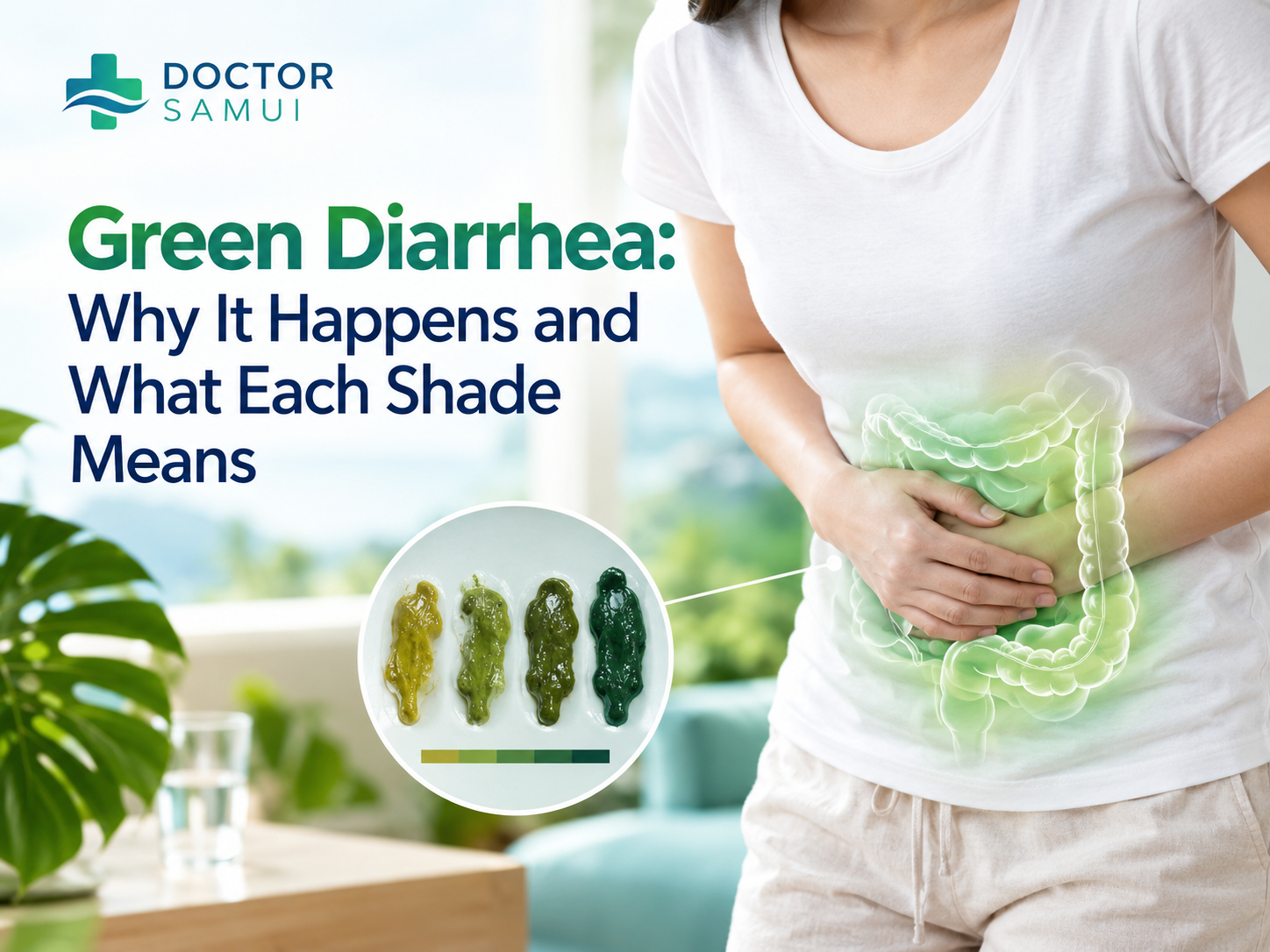
Bright lime green usually means very rapid transit. Your gut moved so fast that bile had almost no time to change. This is common with norovirus, food poisoning, or a sudden reaction to spicy or unfamiliar food. It can also happen after drinking large amounts of green-colored sports drinks or eating a lot of leafy greens.
Dark forest green, closer to army green, often points to something a little slower. Bile had some time to partially convert. This shade is common with bacterial infections, antibiotic-associated diarrhea, or high intake of vegetables or green supplements.
Olive or murky green with mucus is the shade that warrants more attention. Mucus alongside this color can indicate a bacterial infection irritating the lining of your gut. If this comes with fever or cramping, get assessed the same day.

Green Diarrhea After Eating in Koh Samui
This is the scenario we see most often at our Chaweng clinic. You eat something from a beachside restaurant or a night market stall, and within hours your gut revolts. The most common culprits are E. coli, Salmonella, Campylobacter, and Shigella. These bacteria turn up in undercooked seafood, raw vegetables washed in tap water, and food left out in the heat.
Samui’s climate is a real factor here. Bacteria multiply faster in the heat and humidity than they would somewhere cooler, which is why food poisoning hits harder and faster on the island than visitors expect.
Green diarrhea after a Thai meal is usually rapid transit triggered by spicy ingredients or an early-stage infection. If it is just loose green stool with no fever and you feel otherwise okay, monitor it and keep drinking. If fever, cramps, or mucus appear, do not wait.
Infections That Commonly Cause Green Diarrhea on Samui
Bacterial gastroenteritis, which means a gut infection caused by bacteria, is the most likely infection to produce green diarrhea here. Salmonella and Campylobacter, both common in undercooked chicken and seafood, cause fast transit and sometimes mucus or blood in the stool.
Norovirus causes rapid emptying of the entire digestive tract. Green diarrhea, vomiting, and nausea together often point to it. It passes in one to three days in most healthy adults, but dehydration can become serious quickly, especially in children.
E. coli from contaminated food or water is probably the single most common cause of traveller’s diarrhea on Koh Samui. Most strains cause watery green or yellow diarrhea without blood. If there is blood, that changes the picture and you need to be seen today. You can read more about traveller’s diarrhea treatment on Koh Samui for a fuller breakdown of what each infection usually needs.
Green Diarrhea in Children — What Travelling Parents Need to Know
In children, green diarrhea is very common and usually caused by a stomach bug, a new food, or a change in diet during travel. That said, children dehydrate faster than adults, and Samui’s heat makes that happen even quicker.
Watch for dry lips, no tears when crying, fewer wet nappies or toilet trips than usual, and unusual tiredness. These are signs a child needs fluids and a medical assessment now.
For infants under three months, any fever means go to a doctor immediately. For older children, a temperature above 38.5°C, blood or mucus in stool, or diarrhea lasting more than 48 hours means the same thing. Doctor Samui treats children and can come to your hotel or villa if your child is too unwell to travel.
Green Diarrhea After Antibiotics
Antibiotics can cause green diarrhea in two ways. First, they disrupt the gut bacteria that help convert bile from green to brown. Second, some antibiotics speed up gut movement.
This is common and usually settles when the course ends. Taking probiotics can help restore gut balance. Take them at least two hours apart from each antibiotic dose so the antibiotic does not cancel out the probiotic.
If green diarrhea during a course of antibiotics comes with fever or significant cramping, let your doctor know. A specific bacterial infection called Clostridioides difficile, which can emerge when antibiotics severely disrupt gut bacteria, needs to be ruled out.
What to Do at Home While You Monitor
Start with oral rehydration salts, not plain water alone. You lose electrolytes with every loose stool, and replacing water without salt and sugar does not rehydrate you properly. ORS sachets are available at every pharmacy on Samui. Mix them as directed and sip them steadily.
Eat bland food. Bananas, plain rice, toast, and plain crackers are gentle on an irritated gut. Avoid dairy, spicy food, alcohol, and raw produce until your stool returns to normal.
Loperamide, the common anti-diarrheal tablet, slows gut transit and reduces the frequency of bathroom trips. It is safe for uncomplicated diarrhea in adults. Do not use it if you have a fever or blood in your stool, as it can trap bacteria inside the gut and make a bacterial infection worse.
When to See a Doctor in Koh Samui for Green Diarrhea
Go the same day if you have a fever above 38.5°C, blood or mucus in your stool, diarrhea more than four or five times in one day, dizziness when you stand, a dry mouth, or if you have not urinated in many hours.
Samui’s heat speeds up dehydration in a way that catches a lot of visitors off guard. What would be manageable at home can tip into something serious within a few hours here if you are not replacing fluids fast enough.
At Doctor Samui, we can run a stool test to identify the bacteria or parasite causing your symptoms, prescribe the right antibiotic if one is needed, and give an IV rehydration drip if you are too dehydrated or vomiting too much to keep fluids down. If you cannot get to our Chaweng clinic, we offer hotel and villa visits across the island for guests who are too unwell to travel.
Green diarrhea with fever, blood, or dehydration needs same-day assessment. Doctor Samui offers walk-in care at our Chaweng clinic and 24/7 hotel and villa visits across Koh Samui, including Lamai, Bophut, Maenam, and Choeng Mon. We can run a stool test, prescribe antibiotics if needed, and set you up with IV fluids if you cannot keep anything down. WhatsApp us or walk in — no appointment needed.
Why is my diarrhea bright green after eating Thai food?
Bright green diarrhea after a Thai meal is most often rapid transit. Spicy or unfamiliar ingredients push things through your gut before bile has time to turn brown. If there is no fever and you feel otherwise okay, focus on staying hydrated and monitor it closely. If fever, cramps, or mucus appear, that warrants a same-day assessment.
Is green diarrhea a sign of a serious infection?
Green diarrhea on its own is usually not serious. The red flags that matter are fever above 38.5°C, blood or mucus in the stool, severe cramps, dizziness, or symptoms lasting more than two to three days. In Samui’s heat, dehydration can escalate quickly, so the bar for seeking care should be lower than it would be at home.
My child has green diarrhea — should I take them to a doctor?
Watch for dry lips, no tears when crying, less urination than usual, or unusual tiredness, as these are dehydration signs that need same-day care. Any fever in a baby under three months means go immediately. For older children, fever above 38.5°C, blood in stool, or symptoms beyond 48 hours mean they need to be seen. Doctor Samui treats children and can visit your hotel if getting out is difficult.
Can antibiotics cause green diarrhea?
Yes, this is common. Antibiotics disrupt the gut bacteria that help convert bile from green to brown, and some also speed up gut transit. It usually settles after the course ends. Take probiotics at least two hours apart from each antibiotic dose. If you develop fever or severe cramping alongside the green diarrhea, let your prescribing doctor know.
When should I go to a clinic rather than wait it out?
Go the same day if you have fever above 38.5°C, blood or mucus in stool, diarrhea more than four to five times a day, dizziness when standing, or signs of dehydration. On Koh Samui, the heat accelerates fluid loss faster than most visitors expect, so do not wait as long as you might at home. Doctor Samui offers walk-in care and can come to your hotel or villa if you are too unwell to travel.
What is the difference between green diarrhea from food and green diarrhea from infection?
Food-triggered green diarrhea, such as after eating a lot of leafy greens or green food coloring, is usually a one-off with no other symptoms. Infection-related green diarrhea tends to come with cramps, nausea, fever, or mucus. If symptoms started within hours of a specific meal and are getting worse rather than better, a stool test at our Koh Samui clinic can identify whether bacteria are involved.
Dr. Ponlawat Pitsuwan
Physician, Doctor Samui
a walk-in clinic based in Chaweng, Koh Samui, with 24/7 hotel and villa visits across the island. He sees tourists, families, and long-stay expats for traveller’s diarrhea, food poisoning, gastrointestinal infections, and related illness. His focus is straightforward, evidence-based care delivered in plain language.