Clinically reviewed by Dr. Ponlawat Pitsuwan, Physician, Doctor Samui. Last reviewed: September 2026
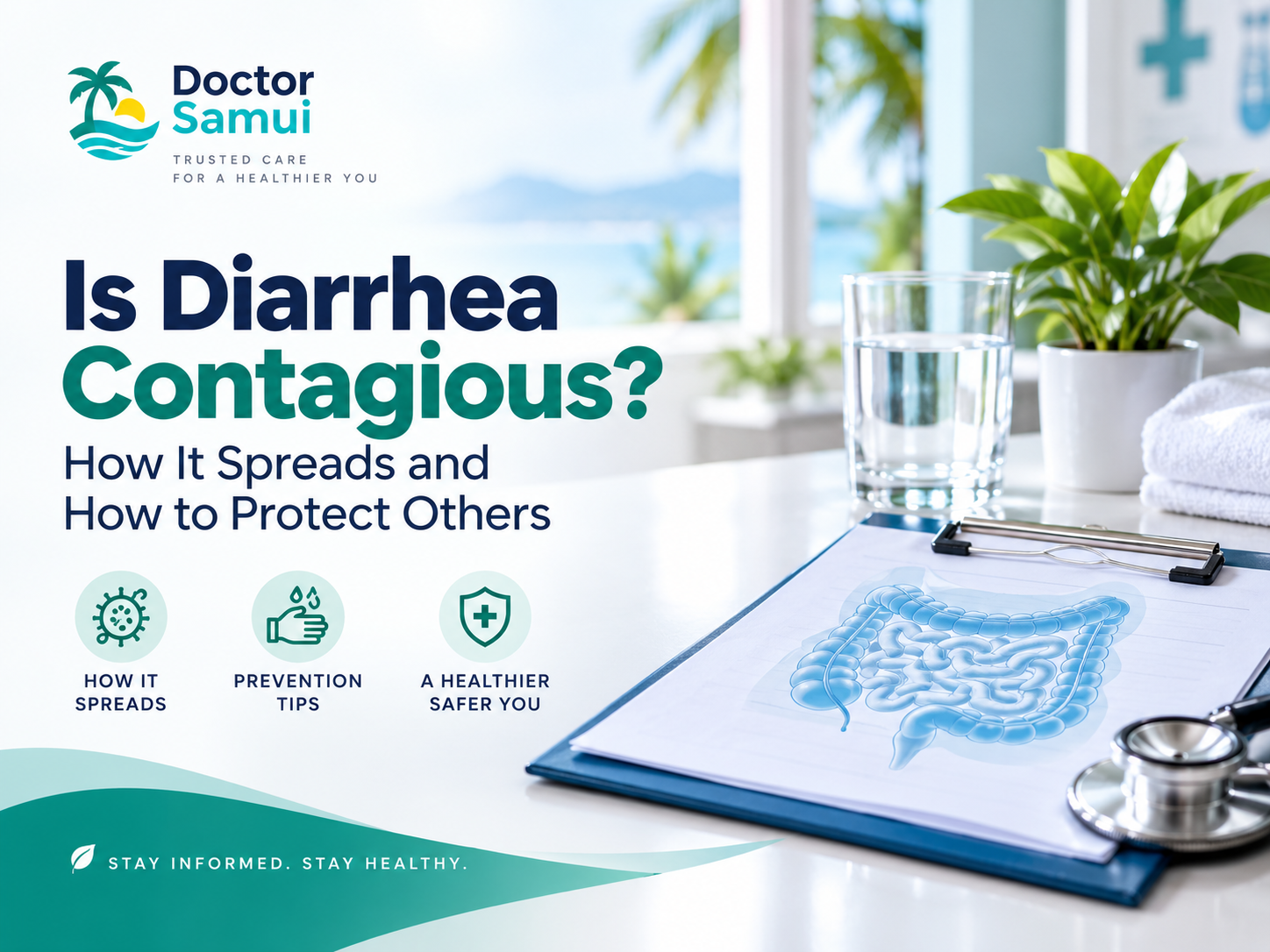
Some diarrhea is contagious and spreads easily in shared spaces. Some is not contagious at all. Viral causes like norovirus are the most infectious, spreading person to person before symptoms even start. Bacterial causes from contaminated food are less likely to spread directly between people, but still possible. The key is knowing which type you are dealing with, so you can protect the people around you.
One family member wakes up sick on night two of a villa holiday near Chaweng. By morning everyone is sharing the same bathroom, the same kitchen, the same pool. The question stops being how to feel better and becomes whether the rest of the group is next. That depends entirely on what caused the diarrhea in the first place.
What locals call "Samui Belly" covers a wide range of things: bacterial food poisoning from a beachside meal, a viral bug picked up on a snorkeling boat, or traveler’s diarrhea triggered by a change in diet and climate. Some of these spread easily from person to person. Others do not spread at all. Getting that distinction right is what this article is about.
Is All Diarrhea Contagious?
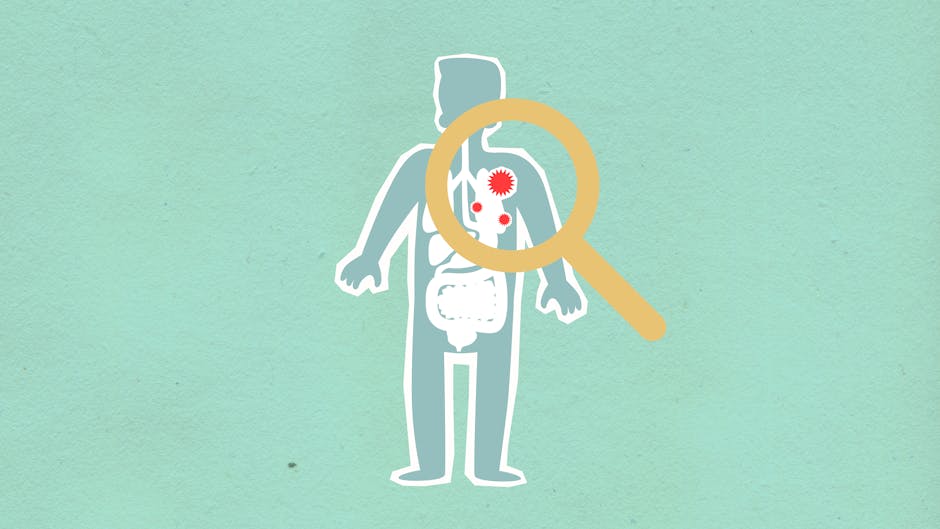
No. This is where most people get it wrong, and the mistake matters.
Diarrhea caused by a virus or live bacteria in your gut can spread to others through contaminated hands, surfaces, or food. Diarrhea from IBS, food intolerance, antibiotics, or anxiety does not spread. You cannot catch someone’s IBS flare or their reaction to lactose.
If your stomach turned after eating the same buffet as everyone else at the resort, that may be a shared exposure, not person-to-person spread. If others around you are falling sick one by one over the following 24 to 48 hours, a contagious cause is far more likely.
How Diarrhea Actually Spreads
The route is called fecal-oral transmission. Tiny amounts of stool from an infected person reach another person’s mouth, usually via hands, shared surfaces, food, or water. You do not need to see or smell anything for it to happen.
In a hotel room or villa, this means the toilet flush handle, bathroom taps, door handles, and shared food are all real risk points. Norovirus can survive on hard surfaces for days. Standard hotel cleaning sprays often do not kill it.
This is why one sick person in a villa can spread illness to everyone else within 24 to 48 hours if nothing changes. The virus moves silently, through touch, not through air.

How Long Is Diarrhea Contagious?
The answer is different depending on whether the cause is a virus, bacteria, or parasite.
With norovirus, the most common viral cause in resort settings, you are contagious before your symptoms even start. You remain contagious for at least 48 to 72 hours after your last episode. The virus can still be present in your stool for up to two weeks after you feel completely well. This explains why norovirus keeps moving through a group even after the first person recovers.
Rotavirus spreads similarly and hits young children hardest. It can remain in stool for up to two weeks after recovery, making it a real risk in family groups.
Bacterial causes like Salmonella or Campylobacter are contagious as long as the bacteria remain in your stool, which can be days to a couple of weeks without treatment. A stool culture confirms when you are clear. For practical purposes on a holiday, wait until you have been fully symptom-free for 48 hours before sharing meals, pools, or excursions with others. You can read more about how long diarrhea stays contagious in our diarrhea treatment guide.
Why Diarrhea Spreads Faster on Koh Samui
Tropical heat changes the picture. Bacteria multiply much faster in warm, humid conditions. Food left out at a resort buffet in 35-degree heat reaches unsafe bacterial counts in a fraction of the time it would in a cooler climate.
Shared villa bathrooms concentrate the risk further. A resort pool used by hundreds of guests is another real exposure point. Norovirus and E. coli both survive in water, and a single infected swimmer is enough to cause spread. Snorkeling and boat trips add another layer: shared gear, crowded boats, and limited handwashing facilities create ideal conditions for a viral illness to move quickly through a group.
The proportion of exposed people in a closed group setting who go on to get sick with norovirus is high. In shared holiday accommodation, that can mean most of the group falling ill within days if nothing is done to stop transmission.
Protecting Your Family or Travel Group in a Hotel or Villa
The sick person should use a separate bathroom if at all possible. If not, clean the toilet, flush handle, taps, and door handle after every use with a disinfectant rated effective against norovirus. Standard surface sprays often fall short. A diluted bleach solution with at least five minutes of contact time is the recommended approach for norovirus decontamination.
Wash hands with soap and water after every bathroom visit and before touching any food. Alcohol gel alone is not reliable against norovirus. Soap and water is the only method with strong evidence behind it.
Do not assume that because only one person is sick, the others are safe. Keep food preparation for the sick person completely separate. Do not share towels, cups, or cutlery. Avoid the pool and the sea until at least 48 hours after full recovery.
If you are staying at a hotel, contact the front desk. Reputable hotels on Koh Samui have protocols for suspected norovirus cases. A doctor can also come to your villa or hotel room for clinical assessment without you needing to go anywhere. Doctor Samui’s team covers Chaweng, Lamai, Bophut, and the wider island for exactly this.
Managing Symptoms While Protecting Others
Oral rehydration is the first priority. Dehydration is the main risk with infectious diarrhea, especially in Samui’s heat. Small, frequent sips of an oral rehydration solution work better than large amounts of plain water.
Loperamide, the anti-diarrheal tablet sold in most pharmacies, slows gut movement and reduces stool frequency. It does not kill the pathogen and does not make you less contagious. Viral shedding continues regardless of whether loperamide has reduced symptoms. Use it only for short-term comfort, and avoid it entirely in children or if you have a fever.
Antibiotics are sometimes appropriate for bacterial diarrhea but are not helpful for viral causes. They should only be taken if a doctor has assessed you and confirmed they are needed. Doctor Samui offers diarrhea treatment in Koh Samui including stool testing to identify the cause and guide the right treatment.
When to See a Doctor in Koh Samui
Most mild diarrhea in healthy adults settles within 48 to 72 hours. Some symptoms need clinical attention sooner.
See a doctor if you notice bloody stools, a fever above 38.5 degrees, signs of dehydration such as dizziness or dark urine, symptoms not improving after 72 hours, or if a child under two or an elderly family member is affected. Children dehydrate much faster than adults, and in Samui’s heat that window is short. An IV drip for rapid rehydration is available at the Chaweng clinic and during villa or hotel visits, and it makes a real difference when oral fluids are not staying down.
If multiple people in your group are sick at once, a stool culture helps identify the pathogen and confirms when it is safe to return to activities. If you have a dive trip or flight booked, fit-to-fly and fit-to-dive assessments are available at the clinic. Do not wait if symptoms are getting worse or if a child is involved.
If someone in your group has diarrhea and you are unsure whether it is spreading or how to protect others, Doctor Samui can help. We offer walk-in consultations at our Chaweng clinic, stool testing, IV drip therapy for dehydration, and 24/7 hotel and villa visits across Koh Samui. If a child is involved or symptoms are severe, do not wait. Contact us and we can come to you.
FAQ
Dr. Ponlawat Pitsuwan
Physician, Doctor Samui
a walk-in clinic based in Chaweng, Koh Samui, with 24/7 hotel and villa visits across the island. He sees tourists, families, and long-stay expats for infectious diarrhea, food poisoning, traveler’s illness, and dehydration, including stool testing, oral rehydration support, and IV drip therapy. His focus is straightforward, evidence-based care delivered in plain language.