Clinically reviewed by Dr. Ponlawat Pitsuwan, Physician, Doctor Samui. Last reviewed: August 2026
The BRAT diet, bananas, rice, applesauce, and toast, can ease mild diarrhea for the first 24 to 48 hours by firming loose stools and being gentle on an irritated gut. It is not a cure and it is not enough on its own. Staying hydrated with oral rehydration salts matters more than the food itself. If symptoms last beyond 48 hours, or if you have a fever or blood in your stool, get medical attention rather than waiting it out.
You were fine at breakfast. Then came the afternoon, a plate of grilled seafood near Chaweng or a bowl of noodles at the Bophut fisherman’s village, and your stomach had other plans. Traveler’s diarrhea moves fast in the tropics, and the first question most people ask is: what can I actually eat right now?
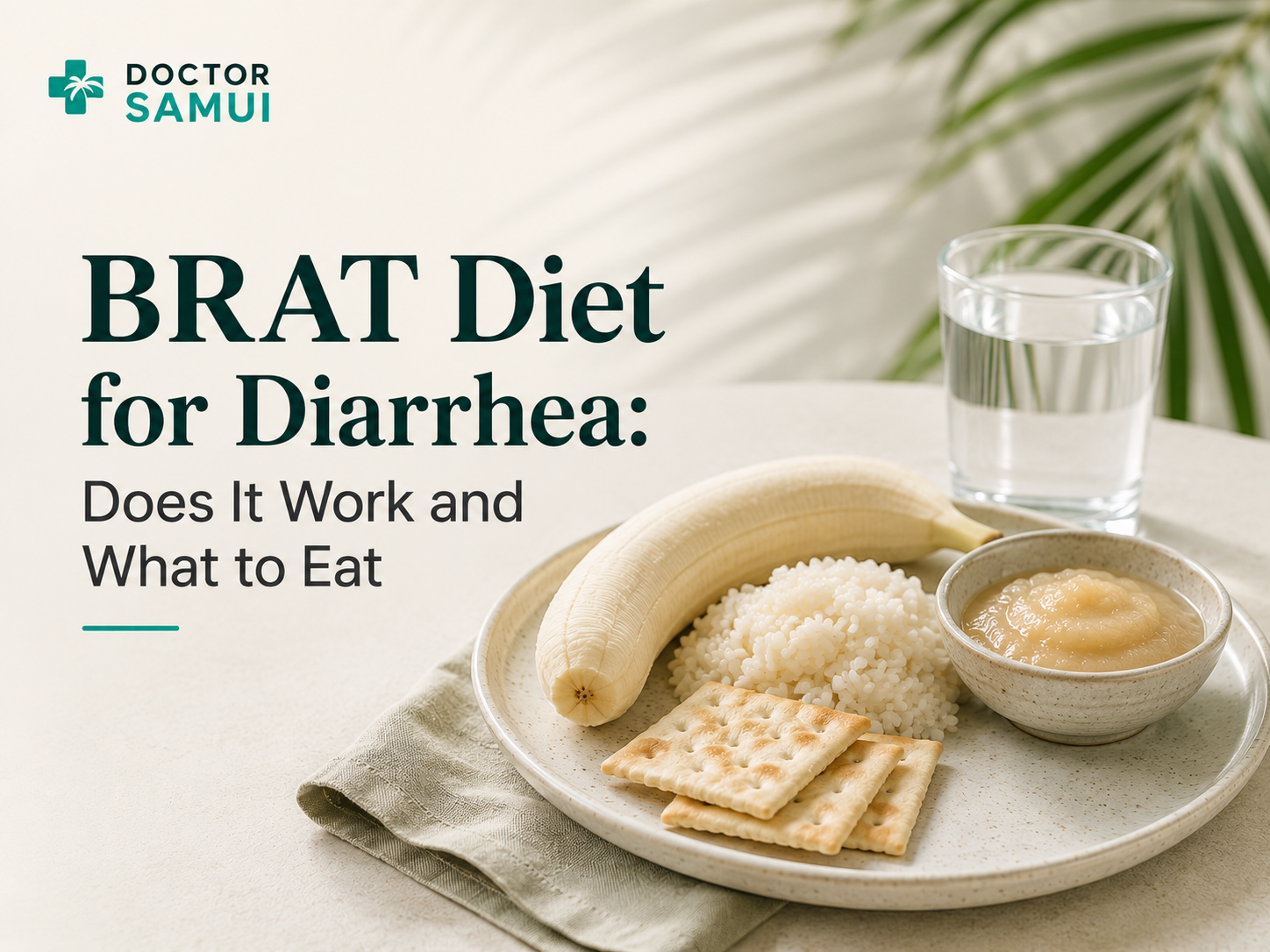
The BRAT diet is usually the answer they find. BRAT stands for bananas, rice, applesauce, and toast. These are bland, low-fat, easy-to-digest foods that can help slow things down when your gut is in revolt. The evidence behind them is modest, not strong. For mild cases in the first 24 to 48 hours, though, they give your digestive system a break while you focus on the more important job: replacing the fluids and salts you are losing.

What Is Actually Causing Diarrhea on Koh Samui
Not all diarrhea here has the same cause, and that matters when you are deciding whether to rest and rehydrate or get seen.
The most common causes we treat at the Chaweng clinic are bacterial food poisoning from undercooked seafood or contaminated street food, viral gastroenteritis spreading between guests in hotels and resorts, and traveler’s diarrhea from water or ice from an unsafe source. Spicy Thai food can also tip a sensitive gut over the edge, especially in the first few days on the island.
Bacterial diarrhea from contaminated seafood or raw shellfish tends to hit harder and faster. It often comes with cramping, nausea, and sometimes fever. Viral illness tends to be more gradual and may include vomiting alongside loose stools. The BRAT diet offers similar comfort in both situations, but bacterial causes may need antibiotics, not just plain rice.
Does the BRAT Diet for Diarrhea Actually Work
Honestly, the evidence is limited. The BRAT diet was standard medical advice for decades, but current guidance from the American Academy of Pediatrics and most gastroenterology bodies has moved away from it as a strict protocol, mainly because it is too nutritionally thin for prolonged use.
What it does well is reduce gut irritation. Bananas contain pectin, a soluble fibre that helps firm up loose stools. White rice is easy to digest and adds bulk. Applesauce also contains pectin. Toast provides simple starch without fat or fibre that would speed things along. These are real, if modest, benefits.
What it does not do is treat an underlying infection, replace lost electrolytes, or provide enough nutrition beyond a day or two. Think of it as a rest period for your gut, not a treatment.

The BRAT Diet on Koh Samui: What You Can Actually Find
Here is the practical problem: applesauce is almost impossible to find on Koh Samui. You will not see it in most resort minibars or small shops. That is fine, because the principle matters more than the exact food.
Ripe bananas are everywhere: every 7-Eleven, every market, every resort breakfast buffet. Plain steamed jasmine rice is available at any restaurant or convenience store at any hour. Plain congee, called jok, is served at local restaurants and some hotel kitchens and is one of the best gut-rest foods you can find on the island. Plain crackers work as a toast substitute and are stocked at every convenience store.
Skip the applesauce. Replace it with a ripe banana or a few plain crackers. The goal is bland, low-fat food, not a specific product from a home supermarket.
Why Dehydration Is the Bigger Risk in Koh Samui’s Heat
This is where tourists consistently underestimate things. Tropical heat and humidity mean you are already losing more fluid through sweat than you would at home. Add diarrhea on top of that and dehydration can set in faster than you expect, especially if you have been snorkeling, hiking a waterfall trail, or simply walking around in the sun.
Oral rehydration salts, or ORS, are the priority over food. ORS sachets are available at pharmacies and most 7-Eleven stores across the island. Mix one sachet with clean bottled water and sip it steadily. Fresh young coconut water is widely available here and contains potassium, making it a reasonable supplement, but it does not have enough sodium to replace ORS properly. Avoid sugary sports drinks, as the sugar can make osmotic diarrhea worse.
If you cannot keep fluids down at all, IV rehydration is the right call. Doctor Samui can administer IV fluids at the clinic in Chaweng or come directly to your hotel or villa, which matters when getting up and traveling across the island feels impossible.
Foods and Drinks to Avoid on Koh Samui
Beach holidays make avoidance harder. Spicy Thai food, rich curries, fried snacks, alcohol, dairy, and raw salads all make diarrhea worse. Alcohol is a gut irritant and a diuretic, so it speeds up dehydration. Dairy is harder to digest when your gut is already inflamed. Spice increases how quickly food moves through your system, which is the last thing you need.
Ice is a recurring issue here. Ice in restaurants and bars is usually made from filtered or RO water and is generally safe, but smaller vendors and street stalls may use ice from tap water. When in doubt, skip it.
Coffee and strong tea can also stimulate the gut and worsen loose stools. Plain weak tea or bottled water is the safer choice in the first 24 hours.
Is the BRAT Diet Safe for Everyone
For healthy adults, yes, for one to two days. As a short-term gut rest, it is low-risk. Beyond 48 hours it is too nutritionally limited, and you should start adding normal foods back in.
For children the picture is different. The American Academy of Pediatrics no longer recommends a strict BRAT diet for children because it does not provide enough calories, fat, or protein for a recovering child. For kids, age-appropriate ORS is the priority. Bland soft foods are fine alongside it, but a strict BRAT-only approach should not be maintained. If your child is under two and has had diarrhea for more than 24 hours, or any child has signs of dehydration such as no tears, dry mouth, or no wet nappies, see a doctor. Doctor Samui’s 24/7 hotel and villa visit service means you do not have to move a sick child across the island.
For elderly travellers, dehydration risk is higher and the threshold for seeking care should be lower.
Moving Back to Normal Eating After Diarrhea
Do not stay on the BRAT diet longer than 48 hours. After that, start adding soft, easy foods: plain chicken or fish, cooked vegetables, eggs. Thai chicken rice, khao man gai, is actually a solid recovery meal: gentle, plain, and available at restaurants all over the island.
Avoid spicy, fried, or fatty food for another two to three days after symptoms clear. Probiotics have reasonable evidence for shortening diarrhea in some types of gastroenteritis and are worth adding once you can eat again. Pharmacies on Samui stock probiotic capsules.
When the BRAT Diet Is Not Enough
Mild diarrhea that is improving after 24 hours is reasonable to manage with the BRAT approach and ORS. These symptoms are not in that category: diarrhea more than six times in 24 hours, blood or mucus in the stool, fever above 38.5°C, vomiting that stops you keeping fluids down, diarrhea lasting more than 48 hours without improvement, or a child or elderly person with any significant symptoms.
Loperamide, sold as Imodium, can slow diarrhea but is not right for all types. Do not use it if you have a fever or blood in your stool, as it can worsen bacterial infections. Ask a doctor before using it if you are unsure.
Diarrhea from bacterial food poisoning, particularly from undercooked seafood, may need antibiotics and a stool test. You can read more about how we assess and treat traveler’s diarrhea at the Doctor Samui diarrhea treatment page.
Diarrhea on Koh Samui that is not improving after 48 hours, or any case with fever, blood in the stool, or a child who cannot keep fluids down, needs clinical assessment, not more plain rice. Doctor Samui is a walk-in clinic in Chaweng with 24/7 hotel and villa visits across the island, including Bophut, Lamai, Maenam, Choeng Mon, and Taling Ngam. We can assess your symptoms, run relevant tests, prescribe antibiotics if needed, and administer IV fluids at your accommodation if you cannot tolerate oral intake. Contact us any time of day or night.
Frequently Asked Questions
Dr. Ponlawat Pitsuwan
Physician, Doctor Samui
a walk-in clinic in Chaweng, Koh Samui, with 24/7 hotel and villa visits across the island. He treats tourists, families, and long-stay expats for traveler’s diarrhea, food poisoning, dehydration, and acute gastrointestinal illness. His focus is straightforward, evidence-based care delivered in plain language.