Clinically reviewed by Dr. Ponlawat Pitsuwan, Physician, Doctor Samui.
Last reviewed: August 2026
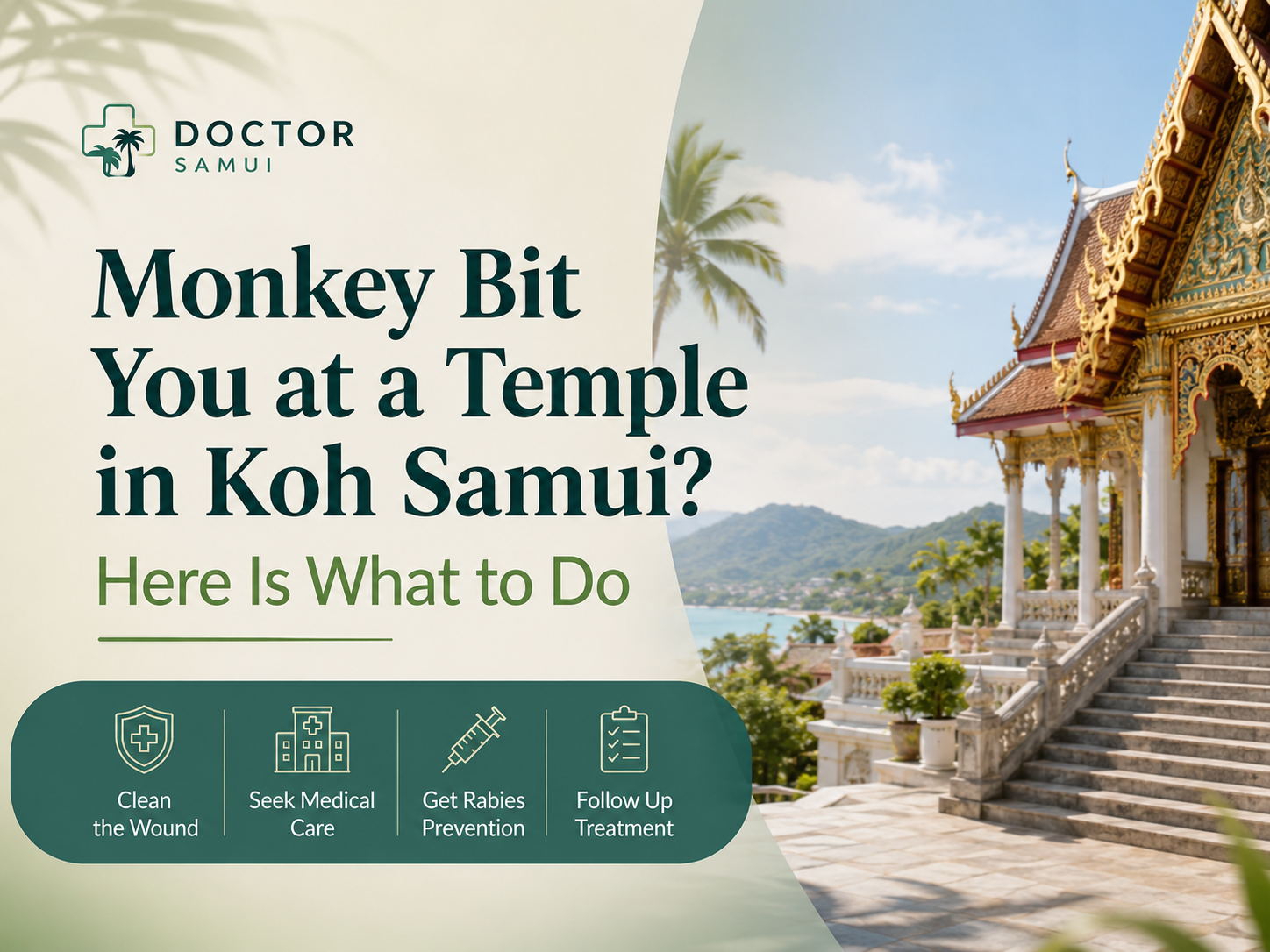
A monkey bite at a Koh Samui temple is a medical emergency until proven otherwise. Wash the wound with soap and running water for at least 15 minutes, then get to a clinic the same day. Rabies is fatal once symptoms start, but post-exposure treatment is highly effective when started quickly. Do not wait to see if the wound looks serious.
You are at Wat Plai Laem or the Big Buddha area, phone out for a photo, and one of the macaques lounging nearby grabs your hand and bites down. It is over in two seconds. The wound might look tiny. The monkey has already wandered off looking unbothered. That calm, almost tame appearance is exactly the problem.
These are long-tailed macaques, and the ones at Samui’s temple sites have spent years around tourists. They look harmless. They are not. A bite from a habituated temple monkey carries the same rabies risk as any wild primate, and it carries a second risk that most visitors have never heard of. The two things you need to do right now: wash the wound and see a doctor today.

Why Temple Monkeys on Koh Samui Are More Dangerous Than They Look
Most people are surprised when they get bitten. The monkey was sitting still, someone got too close, it grabbed them. That is how it almost always happens here.
The macaques around Koh Samui’s temple sites have lost their natural fear of people, but they have not lost their wild instincts. They bite when startled, when food is nearby, or when they feel cornered. A monkey that looks calm a moment before a bite is completely normal.
Rabies circulates in wildlife in Thailand, including macaques. The fact that a monkey lives near a temple, gets fed by visitors, and looks healthy tells you nothing about its rabies status. There is no way to know without laboratory testing of the animal, and that is never going to happen at a tourist site.
First Aid Right Now: The 15-Minute Wound Wash
Do this before anything else. Find the nearest tap and wash the wound with soap and running water for a full 15 minutes. Not a quick rinse. Fifteen minutes of active washing.
After that, apply an antiseptic if you have one. Iodine solution or an alcohol-based antiseptic works well. Do not seal the wound with tape or a dressing that closes it. Do not try to suck out the wound. Do not let anyone suture the bite shut before you have seen a doctor, as closing a potentially contaminated wound early raises infection risk.
This washing step matters clinically. It reduces the amount of virus in the wound and gives post-exposure treatment a better chance. Now get to a clinic.

Beyond Rabies: The Herpes B Virus Risk From Macaque Bites
This is the risk almost nobody mentions. Long-tailed macaques across Southeast Asia carry Herpes B virus, also called B virus or Macacine herpesvirus 1. It causes no harm to the monkeys but can cause severe brain inflammation in humans.
Transmission to tourists is uncommon, but the consequences are serious. The risk is greatest with deep bites, scratches near the eyes or mouth, or saliva contact with broken skin. The doctor will assess your individual risk based on where and how you were bitten. If antiviral therapy is indicated, it can be started the same day. This is another reason not to dismiss a bite that looks small.
How the Doctor Classifies Your Monkey Bite Koh Samui: WHO Categories Explained
When you come into the clinic, the first thing we do is classify the exposure. The World Health Organisation uses a three-tier system that determines exactly what treatment you need.
Category I means contact with a monkey but no broken skin. Washing is recommended, but no vaccine is required. Category II means superficial scratches or minor bites with broken skin, and vaccine is recommended. Category III means deep puncture wounds, bites on the hands or face, or saliva contact with mucous membranes. Category III requires both vaccine and rabies immunoglobulin, a protective antibody treatment injected around the wound.
Most temple monkey bites fall into Category III. Bites on hands and fingers are particularly concerning because the virus has a shorter route to reach the central nervous system.
What Treatment You Will Receive at the Clinic
At Doctor Samui’s Chaweng clinic, we stock rabies vaccine and immunoglobulin for same-day treatment. You do not need to travel to a hospital in Surat Thani.
For patients who have not had prior rabies vaccination, the standard course uses a WHO-approved vaccine such as Verorab, given on Day 0, Day 3, Day 7, and Day 14. For Category III bites, rabies immunoglobulin is also injected into and around the wound on Day 0. This is a one-time treatment, not repeated at later visits.
We also assess tetanus risk and give a booster if needed. Because primate bites carry a high risk of bacterial infection, a short course of antibiotics is usually prescribed. We provide a written vaccination card showing the vaccine brand, batch number, and each dose date.
Already Had Pre-Exposure Rabies Vaccines? Here Is What Changes
If you had pre-exposure rabies vaccination before your trip, or as part of routine care as a long-stay expat or regular diver, the protocol is shorter and simpler.
You still need to come in. But you only need two booster doses: Day 0 and Day 3. You do not need immunoglobulin. Bring any proof of prior vaccination you have, including dates and vaccine brand if possible, and we will confirm the right course.
Many of Koh Samui’s long-stay residents and frequent divers have had pre-exposure vaccination through occupational health or dive programmes. If you are not sure whether your prior shots count, bring what you have and let us check.
Finishing Your Vaccine Course If You Are Leaving Koh Samui
This is one of the most practical problems we deal with. A tourist gets bitten on Day 2 of a five-day trip, receives their first dose, then flies home before Day 7.
The vaccine course does not need to be completed on Koh Samui. Any registered clinic or hospital worldwide can continue the schedule, as long as they know what was already given. That is exactly why the written vaccination card matters. Show it to the next clinic and they continue from where we stopped, not from scratch.
Do not restart the course at home. Tell the next clinic the date you received your first dose and show them the card.
What to Expect at Doctor Samui After a Temple Monkey Bite
We see these cases regularly, especially after visits to the Big Buddha area and Wat Plai Laem. Walk into our Chaweng clinic and you will be seen the same day, typically within the hour. If you are staying at a hotel or villa and cannot travel, we do 24/7 house calls across the island, including Bophut, Maenam, Lamai, Choeng Mon, and Bang Rak.
We assess the wound, classify the exposure using WHO guidelines, and start rabies post-exposure treatment in a single visit. Immunoglobulin and Verorab are stocked on site. We provide full documentation for your travel insurance claim: a medical report, itemised receipt, and vaccination card.
Most international travel insurance policies cover emergency animal bite treatment, but they need the paperwork. If you are unsure whether your wound is serious enough to come in, come in anyway. Classification takes a few minutes, and the risk of doing nothing is not worth taking.
Bitten or scratched by a monkey at a temple or anywhere else on Koh Samui? Walk into Doctor Samui’s clinic in Chaweng today for same-day rabies vaccine and immunoglobulin. If you cannot travel, we offer 24/7 hotel and villa visits across the island. We provide a vaccination card so you can continue your dose schedule at any clinic worldwide, plus full documentation for your travel insurance claim.
FAQ
Dr. Ponlawat Pitsuwan
Physician, Doctor Samui
a walk-in clinic based in Chaweng, Koh Samui, with 24/7 hotel and villa visits across the island. He sees tourists, families, and long-stay expats for animal bite assessment, rabies post-exposure prophylaxis, wound care, and travel-related illness. His focus is straightforward, evidence-based care delivered in plain language.