Clinically reviewed by Dr. Ponlawat Pitsuwan, Physician, Doctor Samui. Last reviewed: August 2026
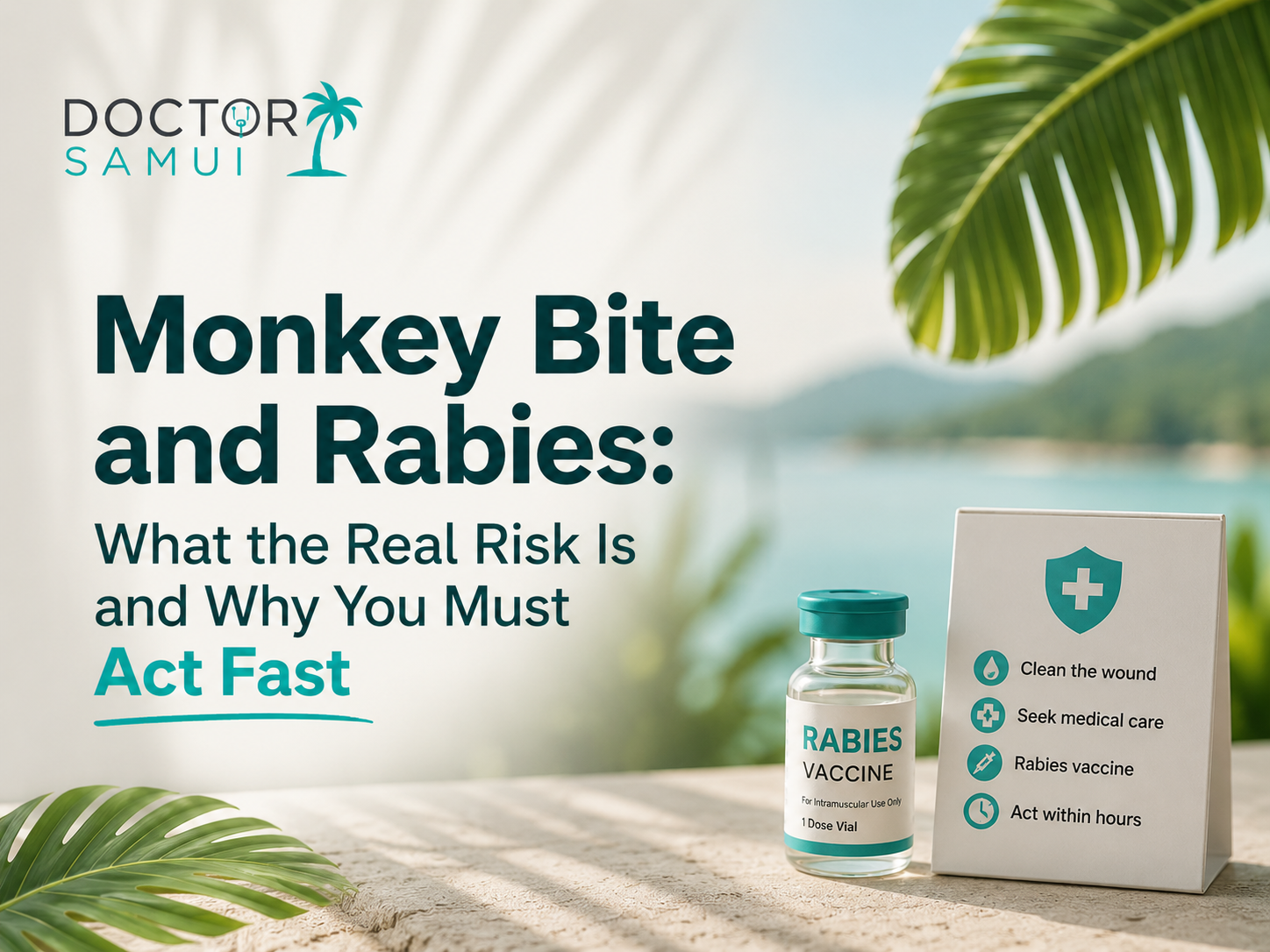
A monkey bite or scratch in Thailand carries a real rabies risk. Thailand is a rabies-endemic country, which means you treat every macaque bite or scratch as a potential exposure, regardless of how the animal looked. Wash the wound with soap and water immediately, then see a doctor the same day. Post-exposure treatment works, but only if you start it before symptoms appear.
You reached out to feed the macaque near the Big Buddha temple and, in a second, it bit your hand. Maybe it scratched your arm at a roadside viewpoint on the way to Namuang waterfall. You cleaned it up, took a photo, and now you are back at your hotel wondering whether it is really a big deal. It is. Call us or walk into our Chaweng clinic today.
Monkeys in Thailand are not animals under regular veterinary care. They are wild animals living close to tourist sites, and Thailand is a rabies-endemic country, meaning the virus is present in the local animal population. A bite or scratch that breaks the skin is a medical event, not an inconvenience. The good news is that post-exposure treatment is highly effective when you start it on time.
Scratch vs Bite: Does It Matter Clinically?
Most people who dismiss a monkey encounter do so because they were scratched, not bitten. That reasoning is wrong, and it puts you at risk.
Macaques constantly lick their paws. Saliva gets on their claws. When a claw breaks your skin, that saliva enters the wound. The WHO classifies a scratch that draws blood as a Category II or Category III exposure, both of which require post-exposure prophylaxis (PEP), the series of rabies vaccines that stop the virus before it reaches your nervous system.
A scratch that barely marks the skin without breaking it is a lower-risk Category II. A bite, a deep scratch, or any wound near your face or hands is Category III. Do not spend time deciding which category you fall into. See a doctor and let them assess it.
Why You Cannot Judge Monkey Bite Rabies Risk by How the Animal Looked
This is the most common mistake. The monkey seemed calm. It was not foaming at the mouth. It went back to eating straight after. So people wait.
A rabies-infected animal can shed the virus in its saliva for several days before showing any visible symptoms. There is no outward sign you can detect. A monkey that looks completely healthy can already be contagious. In a rabies-endemic country like Thailand, the animal’s appearance tells you nothing useful. You treat the exposure, not the animal.

It Is Not Just Rabies: Three Risks from One Bite
Rabies gets the most attention, and rightly so, because untreated rabies is fatal. But a macaque bite carries three separate risks, and most tourists never hear about the other two.
The first is bacterial infection. Monkey mouths carry bacteria that can cause serious wound infections within days, especially in Samui’s tropical heat and humidity.
The second is tetanus. If your tetanus vaccination is not current, a bite wound is enough to require a booster.
The third is herpes B virus, also called B virus. This infection is found almost exclusively in macaque monkeys, the species you encounter throughout Koh Samui and southern Thailand. Transmission to humans is uncommon, but when it does occur it can cause severe neurological illness. Antiviral treatment exists, but it must start early. Whether it is needed for your specific wound is a clinical decision made face to face, not something to work out at your hotel.
One doctor visit covers all three risks at once.
Where Monkey Encounters Happen on Koh Samui
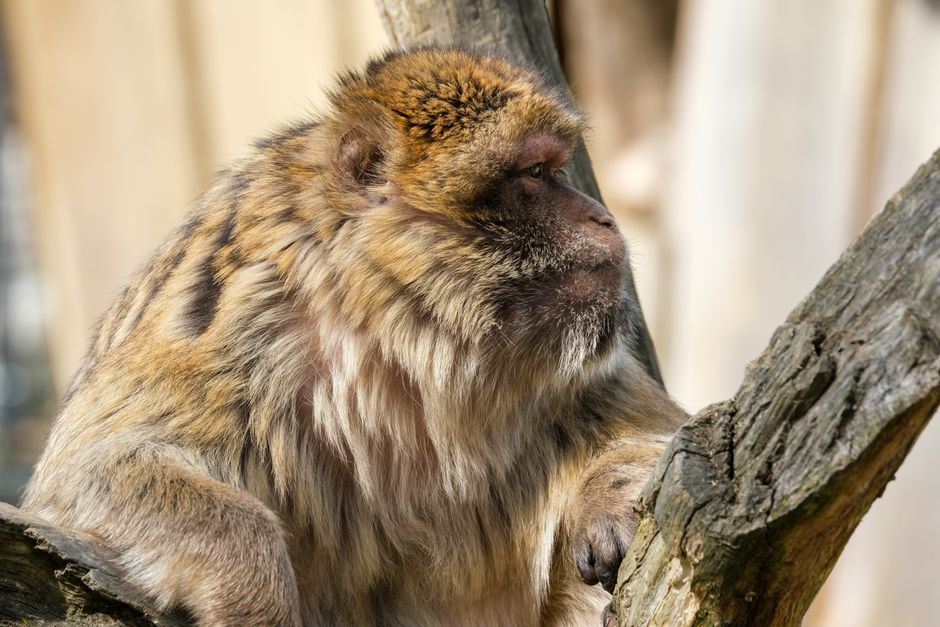
Koh Samui’s macaque population concentrates around a handful of sites that tourists visit every day. The area around Big Buddha temple in Bang Rak is the most common source of bites seen at the Chaweng clinic. The Namuang waterfall road and the hilltop viewpoints on the ring road between Chaweng and Lamai are also frequent locations. Grandmother and Grandfather Rock at Hua Thanon draws both tourists and macaques in large numbers.
Monkeys at these sites are used to humans, which makes them less afraid and more likely to approach, grab, or bite when they associate you with food. Do not feed them. Do not let children offer food directly from their hands. If a monkey makes contact with your skin, treat it as an exposure, not a story to tell at dinner.
If Your Child Was Bitten, Act Faster
More than half of animal bite victims worldwide are children. On Koh Samui, this pattern plays out regularly after temple visits and waterfall trips where children reach toward monkeys that adults would not approach.
Bites to the face and head are classified as higher clinical priority because the wound is closer to the brain. Children are also more likely to underreport what happened, so check carefully for marks after any monkey contact. A bite or scratch to the face, hands, or neck is a same-day priority, not something to monitor overnight. Doctor Samui offers 24/7 hotel and villa visits across the island, so distance from the clinic is not a reason to delay.
What Happens When You Come In for Treatment
When you arrive at the Chaweng clinic, or when a doctor visits your hotel, the assessment follows a clear sequence. We examine the wound, classify the exposure, and clean it properly. A proper clean is not just a rinse. Then we discuss your vaccine history.
If you have never had rabies pre-exposure vaccination, you will need the full PEP course: a series of injections over 28 days, plus rabies immunoglobulin (RIG) if the exposure is Category III. RIG is given on day zero and provides immediate protection while your body builds its own response to the vaccine. Doctor Samui stocks WHO-approved cell-culture rabies vaccines and RIG for same-day use. You do not need to travel to the mainland.
If you have already completed pre-exposure vaccination, your post-bite treatment is simpler: two vaccine doses, no RIG required. For long-stay expats and frequent visitors, getting pre-exposure vaccination at our Chaweng clinic before an encounter happens is worth a conversation. You can read more about the rabies vaccine on Koh Samui and why acting fast after a bite matters so much.
The first vaccine dose should be given as early as possible. Day 0 simply means the day you start. Even if two or three days have passed since the bite, come in now. The vaccine works at any point before symptoms appear. We also check your tetanus status and assess whether antiviral cover for herpes B virus is indicated.
Travel insurance typically covers animal bite treatment. Keep wound photos and a written record of the incident, as insurers often ask for this documentation.
The One Thing You Should Not Do After a Monkey Bite
Do not wait to see whether symptoms develop before deciding to seek care. Rabies symptoms, which include tingling or burning at the bite site, unusual sensitivity to water or light, fever, and confusion, mean the virus has already reached the nervous system. The window for effective post-exposure treatment is before any of this begins.
Wash the wound now, with soap and water, for at least 15 minutes. Then call us or walk in. Those two steps are the most important things you can do.
If a monkey has bitten or scratched you or your child on Koh Samui, do not wait. Doctor Samui’s Chaweng clinic is open for same-day walk-ins and stocks WHO-approved rabies vaccines and rabies immunoglobulin for immediate treatment. Our doctors are available 24/7 for hotel and villa visits across the island, including Chaweng, Bophut, Lamai, Bang Rak, Maenam, and Choeng Mon. You do not need to travel to the mainland. Come in today or call us to come to you.
Is a monkey scratch on Koh Samui as dangerous as a bite?
Clinically, yes. Macaques lick their paws constantly, so saliva is present on their claws. When a scratch breaks the skin, that saliva enters the wound and the risk of rabies transmission is real. The WHO classifies deep scratches as Category II or III exposures requiring post-exposure treatment. Do not dismiss a scratch because it looks minor.
The monkey looked healthy. Do I still need the rabies vaccine?
Yes. An infected monkey can shed the rabies virus in its saliva for several days before showing any visible symptoms. You cannot assess an animal’s rabies status by how it looks or behaves. In Thailand, which is a rabies-endemic country, the protocol is to start post-exposure treatment after any bite or scratch, regardless of the animal’s appearance.
My child was bitten on the face by a monkey at Big Buddha. Is that more serious?
Yes, and this is a same-day priority. Bites to the face and head are clinically higher priority because the wound is closer to the brain, which can shorten the time before the virus reaches the nervous system. Children also tend to underreport how serious an encounter was. See a doctor the same day and make sure rabies immunoglobulin is assessed on the same visit.
Do I need to go to a mainland hospital for rabies treatment after a bite on Koh Samui?
No. Doctor Samui’s Chaweng clinic stocks WHO-approved cell-culture rabies vaccines and rabies immunoglobulin for same-day use. If you cannot travel to the clinic, a doctor can come to your hotel or villa anywhere on the island, around the clock. You do not need to leave Koh Samui to start treatment.
I was bitten two days ago and have not seen a doctor yet. Is it too late?
No. Post-exposure treatment works at any point before rabies symptoms appear. Symptoms include tingling at the bite site, sensitivity to water or light, and confusion. If none of those have started, come in now and begin the vaccine course today. Waiting longer does not help.
What is herpes B virus and should I worry about it after a macaque bite?
Herpes B virus is a viral infection carried by macaque monkeys, the species common across Koh Samui. Transmission to humans is uncommon, but when it occurs it can cause serious neurological illness. Antiviral treatment exists and must start early. Whether it is needed for your specific bite is a clinical decision, which is one more reason not to manage a monkey bite on your own.
Should I get the rabies pre-exposure vaccine if I live on Koh Samui or visit regularly?
It is worth considering for anyone spending extended time on the island. Two doses of pre-exposure vaccine means that if you are ever bitten, you need only two follow-up doses and no rabies immunoglobulin. It removes significant time pressure and simplifies treatment. This can be arranged at our Chaweng clinic during a routine visit.
Dr. Ponlawat Pitsuwan
Physician, Doctor Samui
a walk-in clinic based in Chaweng, Koh Samui, with 24/7 hotel and villa visits available across the island. He assesses tourists, families, and long-stay expats for animal bites, rabies post-exposure treatment, wound care, and travel health. His focus is evidence-based care delivered in plain language.