Clinically reviewed by Dr. Ponlawat Pitsuwan, Physician, Doctor Samui. Last reviewed: August 2026
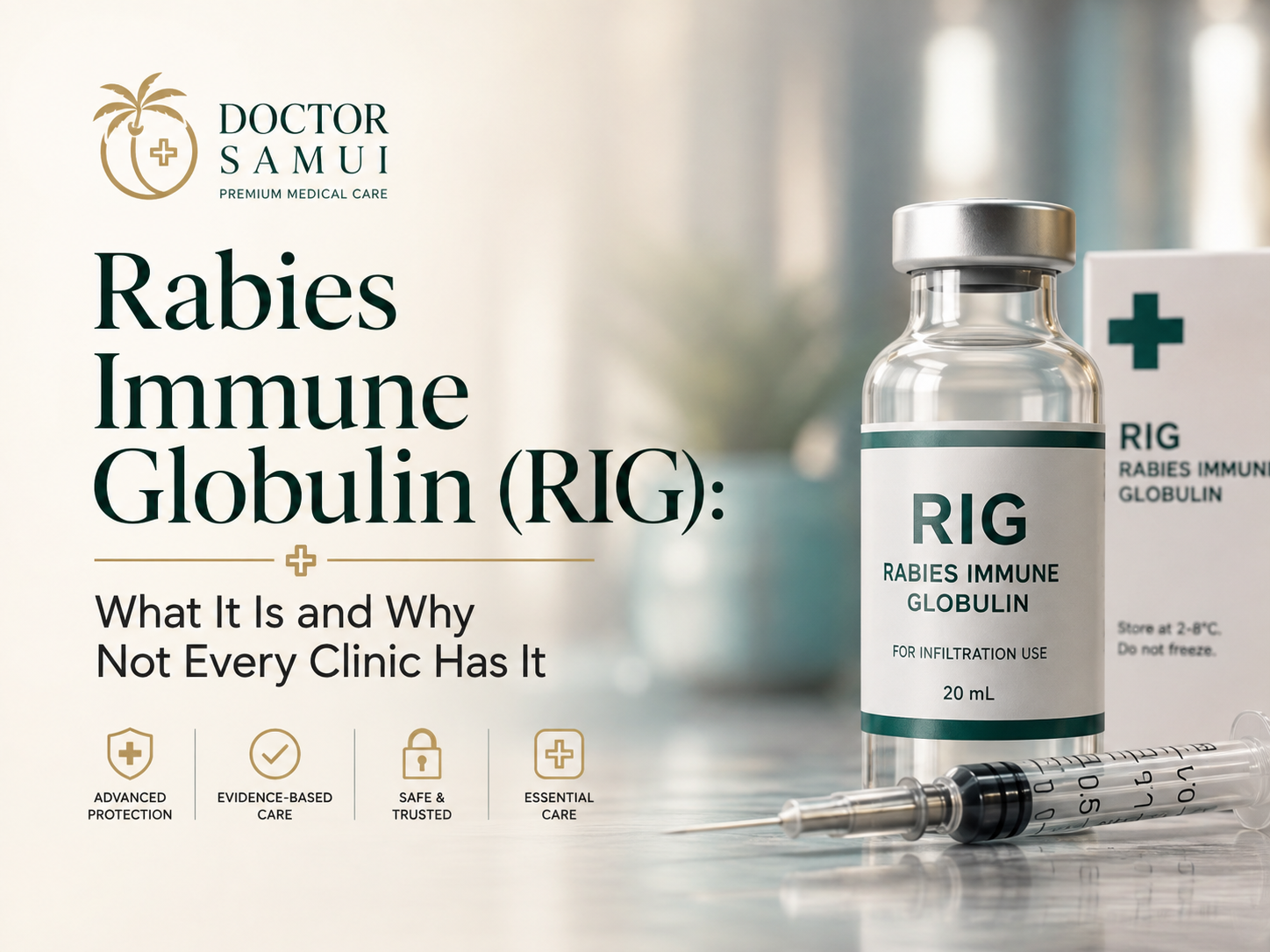
Rabies immune globulin (RIG) is an emergency injection given alongside your first rabies vaccine dose after a bite or deep scratch. It provides immediate, temporary protection while your body builds its own immunity. RIG is only effective if given within seven days of starting your vaccine course, and not every clinic in Koh Samui stocks it. If you need it, time matters.
A dog steps out from behind a food stall near Fisherman’s Village, you reach down, and a second later you are looking at a puncture wound on your hand. Or a monkey at one of the island viewpoints swipes across your forearm and breaks the skin. Both happen here regularly, and both can mean you need more than just the rabies vaccine. You may need rabies immune globulin, and you need to know fast.
RIG and the rabies vaccine are not the same thing, and that difference is the most important thing to understand after a bite. Most people arrive at a clinic asking for "rabies shots" but have no idea that for an unvaccinated person, a single injection of RIG at the wound site is often the most critical step of the entire treatment. Doctor Samui stocks RIG in-clinic and handles this assessment seven days a week at our Chaweng walk-in, with same-day hotel and villa visits available across the island.
The Vaccine and RIG Do Completely Different Jobs
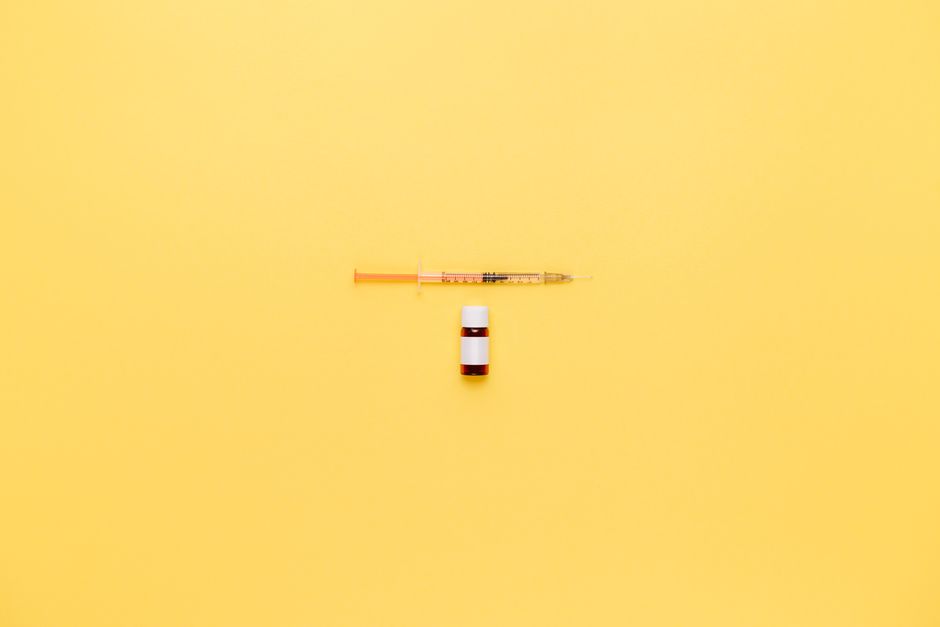
The rabies vaccine tells your immune system to start building its own defence. That takes time, usually around a week. RIG is different. It delivers ready-made antibodies directly into and around your wound right now, before your body has had time to respond.
The vaccine builds your own protection over days. RIG gives you borrowed protection within hours. One without the other leaves a gap in the first critical days after a serious bite.
If you are unvaccinated and you have a deep bite or scratch, you need both.
Who Actually Needs Rabies Immune Globulin
Not everyone who gets bitten needs RIG. The WHO classifies animal exposures into three categories, and RIG is specifically for Category III: deep bites, multiple bites, bites on the face or hands, or any exposure where the animal’s saliva could have reached broken skin or a mucous membrane. A single superficial scratch that does not bleed falls into Category II and does not require RIG.
There is one other major exception. If you completed a full pre-exposure rabies vaccine course before your trip, you do not need RIG at all. Your immune system already has the memory it needs and responds fast enough that the gap RIG is designed to cover simply does not exist for you.
If you are unsure which category applies to your bite, that is exactly what the assessment at Doctor Samui is for.
The 7-Day Window and Why Timing of RIG Is Critical
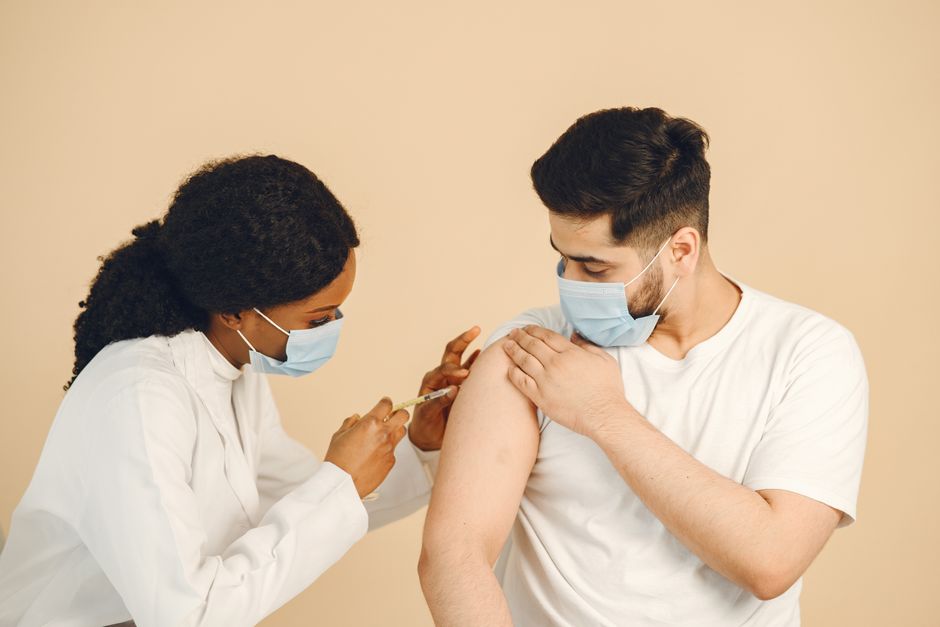
RIG has a strict deadline. It should be given on Day 0, meaning the same day as your first vaccine dose. It can still be given up to Day 7. After that, it is not used.
By around Day 7, the vaccine has already started triggering your own antibody response. Adding RIG at that point can interfere with the immunity that is building. It stops being helpful and starts working against the process.
If you were bitten two days ago and have not started treatment, RIG is still on the table. If you arrive on Day 8, it is not. We see patients every week at our Chaweng clinic who delayed because they were not sure it was serious. Do not do that.
HRIG vs ERIG: Which Type of RIG Is Used in Thailand
There are two types of rabies immune globulin. Human rabies immune globulin (HRIG) is made from plasma donated by immunised human donors. Equine rabies immune globulin (ERIG) is derived from immunised horses.
HRIG carries a very low risk of allergic reaction. ERIG is cheaper and more widely available in parts of Asia, but it carries a slightly higher chance of an allergic response. In Thailand, both products exist. HRIG is the standard used in quality clinics, and it is what Doctor Samui stocks.
How RIG Is Given and Why the Dose Depends on Your Weight
RIG is not a simple arm injection. The standard dose is 20 IU per kilogram of body weight, and as much of that dose as possible is infiltrated directly into and around the wound. Any remainder is given by injection at a muscle site away from the vaccine.
This matters for two reasons. First, the antibodies need to be at the wound, not just circulating in the bloodstream. Second, because dosing is weight-based, a larger adult needs significantly more product than a child, which affects both the procedure and the cost.
Children, Families, and RIG on Koh Samui
Children are bitten more often than adults here. They approach animals at street level, they move unpredictably around dogs, and they are less likely to report a scratch straight away. If your family is on the island, this section matters.
The safety profile of HRIG in children is excellent. The dose is calculated per kilogram, so a lighter child receives less product. Wound infiltration is done carefully. Children tolerate it well.
If your child was bitten or scratched on this trip, come in that day. Do not wait to see if the wound looks better.
Why Rabies Immune Globulin Is Hard to Find on Koh Samui
This is the question we hear most after patients have already been turned away somewhere else. The answer is not that RIG is unavailable in Thailand. It is that stocking it correctly is genuinely difficult for smaller clinics.
RIG requires strict cold-chain refrigeration throughout its entire storage life. It has a short shelf life. It must be dosed by patient weight, so a clinic cannot buy a standard box and assume it covers every patient. The unit cost is high, and the cases that require it are a relatively small subset of all bite presentations. For a small walk-in that sees occasional bites, maintaining RIG in stock does not work financially.
Doctor Samui maintains RIG in-clinic because we see a significant volume of bite cases across the island. We handle cold-chain requirements, stock multiple units, and calculate dosing on the spot. For patients coming from Bophut, Lamai, Maenam, or further around the ring road, same-day hotel visits are available if you cannot travel. You can read more about why not every clinic on Koh Samui carries rabies immunoglobulin and what to do if you have been turned away.
Cost, Insurance, and the Documentation You Will Need
RIG is the most expensive single component of rabies post-exposure prophylaxis. Because dosing is weight-based, the cost scales with the patient. A larger adult pays more than a child, sometimes significantly more.
Most comprehensive travel insurance policies cover emergency post-exposure treatment including RIG. What matters is getting proper documentation. Ask for an itemised receipt and a clinical summary that names the product used, the dose, and the reason it was given. Doctor Samui provides full documentation for insurance claims as standard, including records of the bite assessment, wound care, and the complete vaccine schedule.
Keep every receipt. Do not rely on a handwritten note.
If you or someone in your group was bitten or scratched by an animal on Koh Samui, Doctor Samui can assess your wound, classify your exposure, and start rabies post-exposure treatment on the same day, including rabies immune globulin if it is indicated. We stock HRIG in-clinic at our Chaweng walk-in and cover 24/7 hotel and villa visits across Chaweng, Lamai, Bophut, Maenam, Choeng Mon, and the rest of the island. Do not wait to find out whether the clinic down the road has RIG. Contact Doctor Samui now.
Frequently Asked Questions
Dr. Ponlawat Pitsuwan
Physician, Doctor Samui
a walk-in clinic based in Chaweng, Koh Samui, with 24/7 hotel and villa visits across the island. He sees tourists, families, and long-stay expats for animal bite assessment, rabies post-exposure prophylaxis, and emergency care following outdoor and water activities. His focus is straightforward, evidence-based care delivered in plain language.