Clinically reviewed by Dr. Ponlawat Pitsuwan, Physician, Doctor Samui.
Last reviewed: October 2026
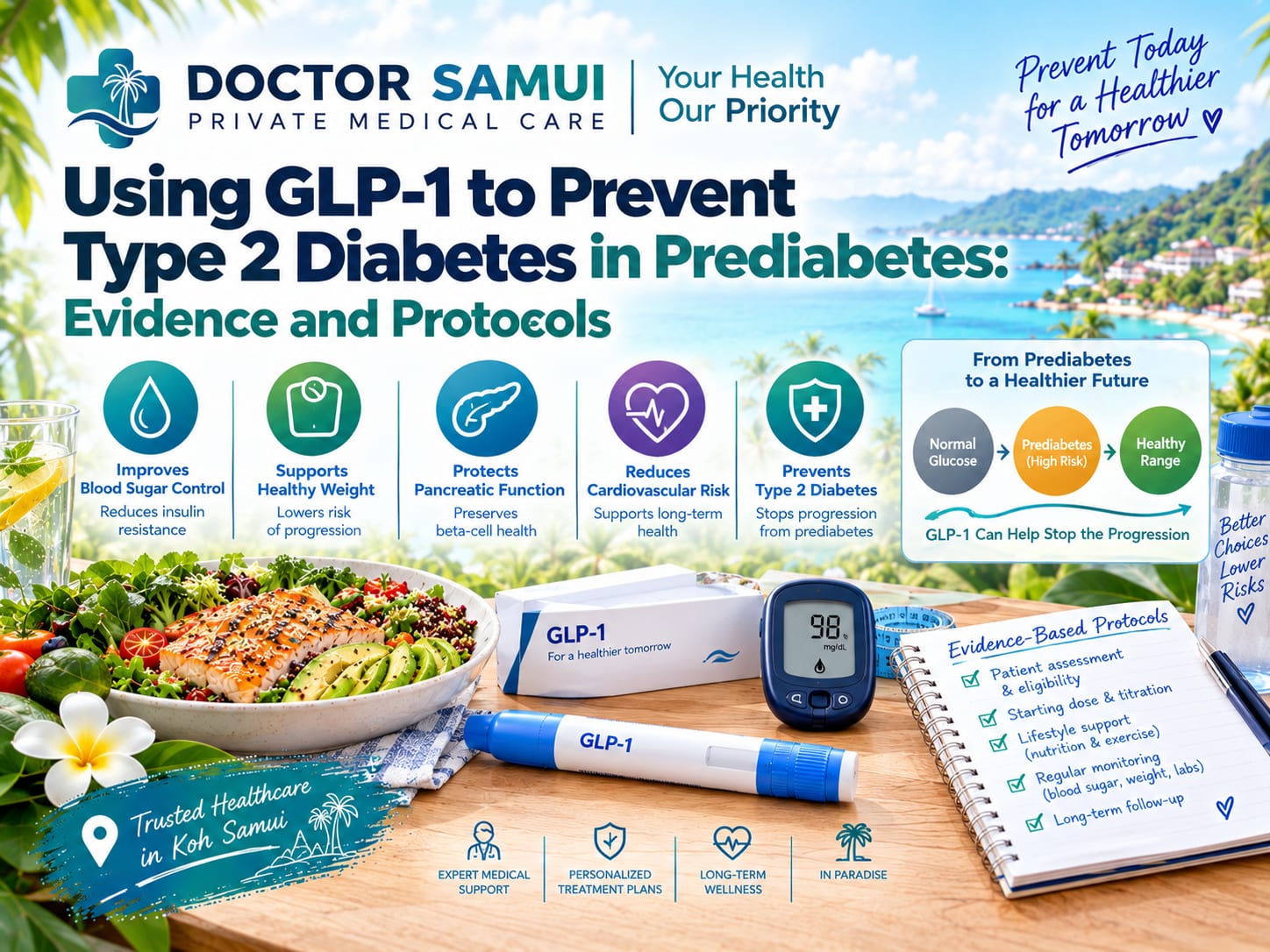
GLP-1 receptor agonists, including semaglutide and liraglutide, show strong evidence for lowering blood sugar and reversing prediabetes in clinical trials, but no GLP-1 drug currently holds a regulatory approval specifically for prediabetes in the US, EU, or Thailand. Current guidelines from the American Diabetes Association position lifestyle change and, in some cases, metformin as the first steps. GLP-1 use in prediabetes is off-label, evidence-based, and increasingly used in clinical practice for higher-risk individuals. A clinician assessment is essential before starting.
Your routine health check on Koh Samui comes back with a fasting glucose just above normal, or an HbA1c sitting in the prediabetes range. HbA1c is your average blood sugar over roughly three months. You feel fine. But you know what the number means, and you start reading.
If GLP-1 receptor agonists have come up in that reading, the evidence behind them is real and worth understanding clearly. Prediabetes is not diabetes yet, but it raises your risk for type 2 diabetes and carries its own cardiometabolic risk, meaning a raised risk for heart disease and stroke even before a diabetes diagnosis arrives. The key question is whether GLP-1 medications can meaningfully shift that risk, and whether they are the right choice for you specifically.
What the Evidence Shows for GLP-1 in Prediabetes
The evidence is strong. Multiple randomised controlled trials show that GLP-1 receptor agonists produce meaningful reductions in HbA1c and fasting plasma glucose in people with prediabetes or impaired glucose tolerance. Trials of semaglutide and liraglutide consistently show higher rates of blood sugar returning to a normal range compared to placebo.
The SCALE Obesity and Prediabetes trial, a large randomised study of liraglutide, found that significantly more participants in the liraglutide group reverted to normal blood sugar compared to placebo at three years. Body weight reduction drives much of this. A loss of around five to ten percent of body weight improves insulin resistance, and GLP-1 receptor agonists produce this in most patients through reduced appetite and slowed gastric emptying.
The evidence for tirzepatide, a dual GIP and GLP-1 receptor agonist, is also substantial. The SURMOUNT-1 trial showed major weight and blood sugar improvements in participants with obesity and prediabetes, with a high proportion reverting to normal glucose levels. That said, most of these trials were run in people with obesity. The evidence in lean individuals with an isolated borderline HbA1c is thinner.
What Current Guidelines Actually Say About GLP-1 for Prediabetes
No GLP-1 drug is approved specifically for prediabetes in any major regulatory jurisdiction, including Thailand. The American Diabetes Association 2025 Standards of Care place lifestyle intervention first for all people with prediabetes. Metformin is the only medication with a specific ADA recommendation for prediabetes prevention in higher-risk individuals.
GLP-1 receptor agonists appear in ADA guidance for type 2 diabetes management and for obesity with metabolic risk, not specifically for prediabetes prevention. Prescribing a GLP-1 for prediabetes is therefore off-label. The prescriber uses established evidence to justify use outside the approved indication. This is an accepted clinical practice, but it requires a proper assessment, not a prescription based on a blood test result alone.

How GLP-1 Compares to Metformin and SGLT-2 Inhibitors for Prevention
Metformin is the most studied medication for diabetes prevention. The Diabetes Prevention Program trial showed that metformin reduced progression to type 2 diabetes compared to placebo, though its effect was smaller than the lifestyle intervention arm. Metformin is inexpensive, widely available in Thailand, and well-tolerated by most people.
SGLT-2 inhibitors are a different drug class that works through the kidneys to reduce blood glucose. A 2025 systematic review and meta-analysis published in Frontiers in Endocrinology found that both GLP-1 receptor agonists and SGLT-2 inhibitors show potential for modifying progression to type 2 diabetes in people at high risk. Indirect comparisons from other meta-analyses suggest GLP-1 receptor agonists may produce greater HbA1c reductions, but direct head-to-head trial data in prediabetes remain limited, and no trial has established one class as clearly superior for long-term diabetes prevention.
GLP-1 receptor agonists produce more weight loss than either metformin or SGLT-2 inhibitors in most patients with significant obesity. For someone with a BMI above 30, insulin resistance, and prediabetes, the combined metabolic benefit of a GLP-1 agent may be greater than metformin alone. For someone lean with a borderline HbA1c and no other risk factors, lifestyle change and metformin remain the more appropriate starting point.
Does the Blood Sugar Benefit Last After Stopping GLP-1?
This is the most important question for anyone weighing cost and commitment. The honest answer is that durability after stopping is not well established. When semaglutide is stopped, weight typically returns, and with it, insulin resistance and blood sugar can worsen toward pre-treatment levels.
This does not mean GLP-1 treatment is not worthwhile. It means you need to go in with clear expectations. For some patients, a structured course alongside intensive lifestyle change can produce durable results. For others, longer-term or indefinite use may be required to maintain the benefit. Glycaemic durability is a conversation to have with your doctor before you start, not after.
Prediabetes on Koh Samui: Why Island Life Can Tip the Balance
This matters specifically for long-stay expats and people spending extended time on the island. The local Thai diet is high in refined carbohydrates. White rice, sticky rice, fruit-heavy smoothies, and sweetened drinks are part of daily eating here. The heat also genuinely limits how much structured exercise most people manage.
A beach lifestyle on Samui can easily mean long stretches of physical inactivity, even for people who exercise regularly at home. Regular alcohol intake raises insulin resistance and adds caloric load, and it is part of the social culture here. None of this makes Samui unusual among tropical destinations, but if your HbA1c came back borderline during a health check on the island, your island routine may be a factor.
Addressing the dietary and activity picture is not optional. GLP-1 therapy works best when lifestyle change runs alongside it. A health checkup on Koh Samui includes fasting glucose, HbA1c, lipids, and renal function, which are all necessary before starting a GLP-1. You can book at the Chaweng clinic or arrange a hotel or villa visit anywhere on the island.
Who Is the Right Candidate for GLP-1 in Prediabetes?
Not every prediabetes diagnosis needs a GLP-1. The patients most likely to benefit are those with obesity, particularly a BMI above 30, alongside prediabetes and other metabolic risk factors such as raised triglycerides, low HDL cholesterol, or high blood pressure. People who have tried lifestyle change and still see worsening glucose trends are also reasonable candidates.
GLP-1 receptor agonists are not appropriate for everyone. They should not be used in people with a personal or family history of medullary thyroid carcinoma or multiple endocrine neoplasia type 2. They are not recommended in pregnancy. People with severe gastrointestinal conditions should discuss carefully with their doctor before starting.
Nausea, vomiting, and reduced appetite are common when starting, and dose escalation needs to be gradual. Lean individuals with an HbA1c just inside the prediabetes range and no other risk factors are unlikely to need a GLP-1 right now. A structured lifestyle plan and a repeat blood test in three to six months is a clinically reasonable approach in that group.
Starting GLP-1 for Prediabetes at Doctor Samui’s Koh Samui Clinic
If you are on Koh Samui and want to explore whether GLP-1 therapy is appropriate for your prediabetes, the process starts with a clinical assessment, not the prescription itself. You will need baseline bloods: HbA1c, fasting plasma glucose, a lipid panel, renal function, and a review of your current medications and medical history.
Doctor Samui can run this assessment at the Chaweng walk-in clinic or during a doctor hotel visit on Koh Samui across the island. If GLP-1 therapy is appropriate, the starting dose is low and increased gradually over several weeks to reduce gastrointestinal side effects. Follow-up blood tests are needed to track glycaemic response and weight, and to decide whether to continue, adjust, or stop.
GLP-1 medications are available in Thailand and can be prescribed here. The prescribing decision is always based on your individual risk profile, not a single blood result. You can find out more about GLP-1 therapy and prediabetes prevention on Koh Samui on our dedicated service page.
If your blood sugar came back in the prediabetes range and you want a clear, personalised assessment, Doctor Samui can help. We offer health checkups and GLP-1 consultations at our Chaweng walk-in clinic and through 24/7 hotel and villa visits across Koh Samui, including Lamai, Bophut, Maenam, and Chaweng. Walk in or contact us to arrange a visit.
Frequently Asked Questions
Dr. Ponlawat Pitsuwan
Physician, Doctor Samui
a walk-in clinic based in Chaweng, Koh Samui, with 24/7 hotel and villa visits across the island. He sees tourists, families, and long-stay expats for metabolic health assessments, prediabetes screening, GLP-1 consultations, and chronic disease management. His focus is straightforward, evidence-based care delivered in plain language.
References
- Jastreboff AM, et al. Tirzepatide Once Weekly for the Treatment of Obesity. New England Journal of Medicine, 2022.
- Knowler WC, et al. Reduction in the Incidence of Type 2 Diabetes with Lifestyle Intervention or Metformin. New England Journal of Medicine, 2002.
- American Diabetes Association. Standards of Care in Diabetes — 2025. Diabetes Care, 2025.
- Ghobar et al. GLP-1 receptor agonists and SGLT-2 inhibitors for the prevention or delay of type 2 diabetes mellitus onset: a systematic review and meta-analysis. Frontiers in Endocrinology, 2025.
- Davies MJ, et al. Management of Hyperglycaemia in Type 2 Diabetes, 2022. A Consensus Report by the American Diabetes Association (ADA) and the European Association for the Study of Diabetes (EASD). Diabetes Care, 2022.
The information in this article is for educational purposes only and does not constitute medical advice. It should not be used to self-diagnose or replace a consultation with a qualified physician. If you have concerns about your health, contact a licensed medical professional. For appointments at Doctor Samui, visit doctorsamui.com.