Clinically reviewed by Dr. Ponlawat Pitsuwan, Physician, Doctor Samui.
Last reviewed: October 2026
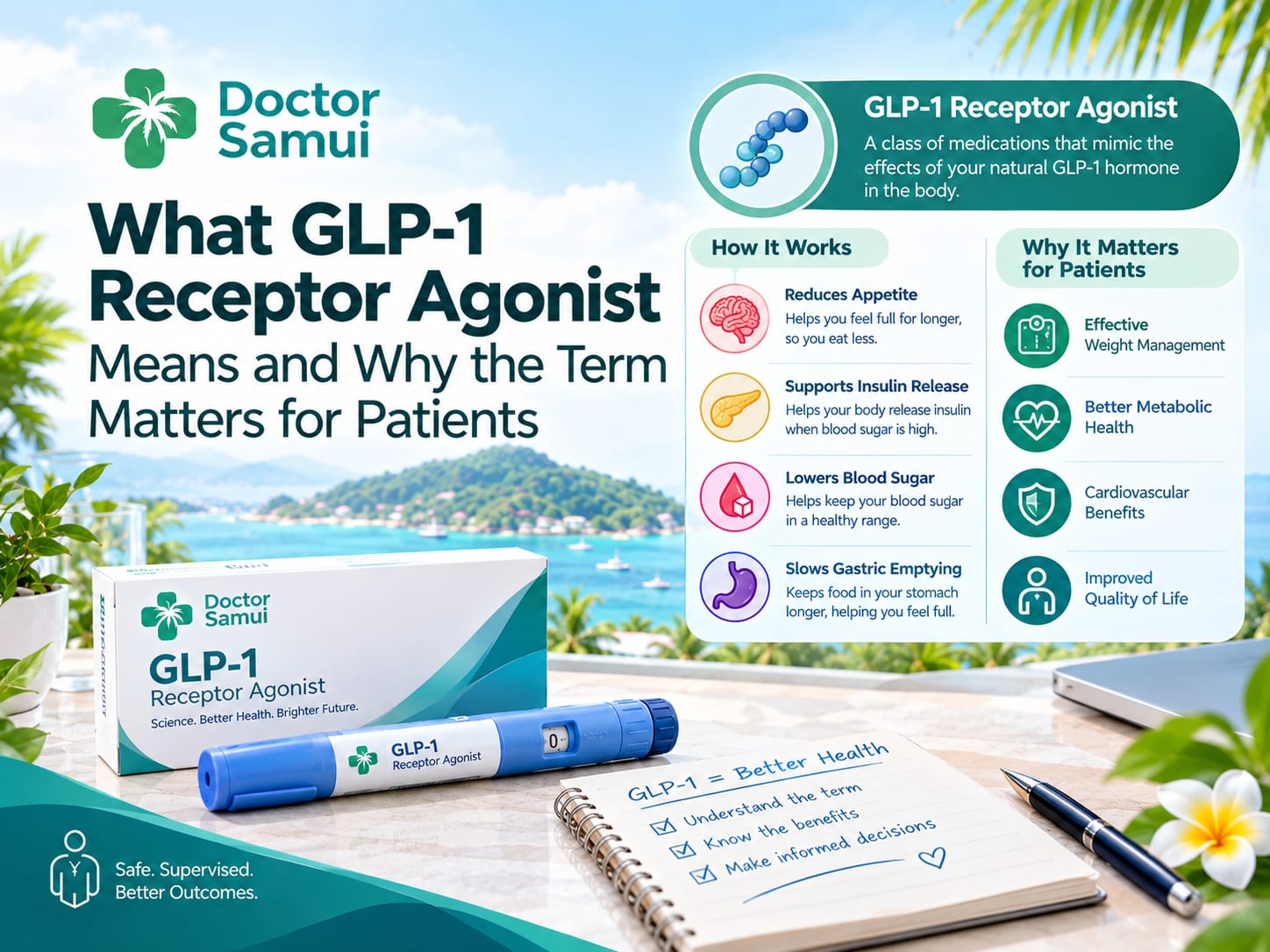
A GLP-1 receptor agonist is a medication that mimics a natural gut hormone called glucagon-like peptide-1. It binds to GLP-1 receptors in your body and activates them, helping to control blood sugar, slow digestion, and reduce appetite. Semaglutide and liraglutide are GLP-1-only agonists. Tirzepatide activates a second receptor as well. All require a prescription and clinical assessment before starting.
You have been researching weight management or type 2 diabetes, and the same phrase keeps appearing: GLP-1 receptor agonist. Your doctor mentioned it. A long-stay friend on Koh Samui who has been using semaglutide for months uses the term as if everyone already knows what it means. Most people do not, and that gap matters when you are trying to make a real decision about your health.
Understanding the term helps you ask better questions, compare your options, and know what to expect when treatment starts. This guide breaks it down plainly, covers the drugs in this class, and explains what to do if you are on one of these medications and need support while on the island.

What "Agonist" Actually Means
Start with the word itself. An agonist is a substance that binds to a receptor and switches it on. A receptor is a protein on the surface of a cell, like a lock. The agonist is the key. When the key enters the lock, the cell gets a signal and does something.
Your body already makes a natural key for the GLP-1 receptor: the hormone glucagon-like peptide-1, released from your gut after you eat. The problem is that this natural hormone breaks down very quickly in the bloodstream. GLP-1 receptor agonists are medications designed to do the same job but last much longer.
So "GLP-1 receptor agonist" means: a drug that binds to and activates the GLP-1 receptor, doing what the natural hormone does but for a sustained period. That is the whole term, decoded.
How GLP-1 Receptor Agonists Work in the Body
When the drug activates the GLP-1 receptor, several things happen at once. Your pancreas releases more insulin, but only when your blood sugar is actually elevated. This is important: the drug does not push insulin out when blood sugar is already normal, which is why low blood sugar is much less common with this class than with some older diabetes medications.
At the same time, the drug suppresses glucagon, a hormone that raises blood sugar. It also slows how quickly food moves from your stomach into your intestine. And it sends a fullness signal to your brain, telling you that you have eaten enough.
The result is lower blood sugar after meals, reduced appetite, and slower digestion. Those three effects together are why this drug class works for both type 2 diabetes and weight management.

Why the Glucose-Dependent Mechanism Matters for Safety
This is the detail most patients are not told clearly. Because insulin release only happens when blood sugar is high, these drugs carry a much lower risk of hypoglycaemia (dangerously low blood sugar) when used on their own. That does not mean hypoglycaemia is impossible.
If you combine a GLP-1 receptor agonist with insulin or a sulfonylurea tablet, the risk goes up. Tell any doctor treating you exactly what you are taking. At Doctor Samui’s Chaweng clinic, when we review medications for patients already on GLP-1 therapy, this combination check is one of the first things we look at.
GLP-1 Receptor Agonists: Drugs in This Class
Not all drugs in this class are identical. Semaglutide and liraglutide are GLP-1-only agonists: they bind to the GLP-1 receptor and nothing else. Tirzepatide is a dual agonist: it activates both the GLP-1 receptor and a second receptor called GIP (glucose-dependent insulinotropic polypeptide). Both types are often grouped together in conversation, but they have distinct mechanisms.
Some are injected once weekly, others daily. Some are available as oral tablets. Dosing always starts low and increases gradually, a process called dose titration, to reduce side effects while your body adjusts. Your prescribing doctor decides which drug, which dose, and which schedule fits your situation.
Conditions These Medications Are Used For
The original approved use was type 2 diabetes, and that remains the core indication. The evidence base has expanded. Major trials have shown cardiovascular benefits in patients with established heart disease, and regulatory agencies in multiple countries have approved semaglutide for reducing cardiovascular risk in adults with obesity or overweight alongside cardiovascular disease. Emerging evidence points to benefits in chronic kidney disease and metabolic liver disease, though not all of these indications are approved in every country, including Thailand.
For weight management, these medications are approved for adults who meet specific body weight criteria, alongside diet and exercise. A clinical assessment is needed to confirm you are a suitable candidate and to rule out contraindications.
Common Side Effects and What They Tell You About the Mechanism
Nausea is the most common side effect, especially in the first weeks of treatment. It is a direct result of slowed gastric emptying: food sits in your stomach longer than usual, and your stomach responds to that. The same mechanism can cause vomiting, bloating, and changes in bowel habits.
These effects are dose-dependent and are typically worst at the start or after a dose increase, then improve as your body adjusts. Eating smaller meals, avoiding fatty or heavily processed food, and not lying down immediately after eating all help. If nausea is severe or persistent, that warrants a clinical review.
Rarely, more serious side effects can occur, including pancreatitis (inflammation of the pancreas). These medications are not suitable for people with a personal or family history of medullary thyroid carcinoma or multiple endocrine neoplasia syndrome type 2. Your prescribing doctor must review these contraindications before you start.
Why Knowing the Term Helps You as a Patient
When you understand what a GLP-1 receptor agonist is, you can do things that someone who does not cannot. You can read a prescription and know what drug class you are on. You can ask whether a GLP-1-only option or a dual agonist fits your goals better. You can recognise nausea as expected and manageable rather than alarming.
You can also ask the right questions if your situation changes: what happens if I need surgery, if I become pregnant, or if I travel and cannot reach my usual pharmacy. Understanding the term is the first step to managing your treatment, not just following it. You can find more detail on the full what is a GLP-1 receptor agonist page before coming in for a consultation.
Getting a GLP-1 Assessment on Koh Samui
If you are a long-stay resident or expat on the island and want to discuss whether a GLP-1 receptor agonist is right for you, a clinical assessment is where that conversation starts. If you are already on one of these medications and travelling through Samui, there are practical things to sort early. Most injectable GLP-1 medications require refrigeration, so confirm your accommodation can store them correctly before you arrive. Carry a copy of your prescription or a letter from your prescribing doctor.
If you develop side effects on the island that concern you, Doctor Samui can see you at the clinic in Chaweng or come to your hotel or villa anywhere across the island, 24 hours a day. If you want a broader review that covers your current medications, weight, and metabolic health, a health check-up in Koh Samui gives a clear baseline to work from. For guests staying near Lamai or further south, IV therapy and house call services in Lamai are also available if you need support at your accommodation.
Doctor Samui offers GLP-1 receptor agonist consultations at our walk-in clinic in Chaweng and through 24-hour hotel and villa visits across Koh Samui. Whether you want to find out if you are a candidate, need support managing side effects while travelling, or want your current GLP-1 medication reviewed, we can see you the same day. Walk in or contact us to arrange a visit to your hotel or villa anywhere on the island.
Frequently Asked Questions
Dr. Ponlawat Pitsuwan
Physician, Doctor Samui
a walk-in clinic based in Chaweng, Koh Samui, with 24-hour hotel and villa visits across the island. He sees tourists, families, and long-stay expats for metabolic health consultations, GLP-1 medication reviews, and general medical care. His focus is straightforward, evidence-based care delivered in plain language.
References
- Lincoff AM, Brown-Frandsen K, Colhoun HM, et al. Semaglutide and Cardiovascular Outcomes in Obesity without Diabetes (SELECT trial). New England Journal of Medicine, 2023.
- Davies MJ, et al. "Management of Hyperglycaemia in Type 2 Diabetes, 2022." Diabetologia
- Lau J, et al. "Discovery of the Once-Weekly Glucagon-Like Peptide-1 (GLP-1) Analogue Semaglutide." Journal of Medicinal Chemistry
- World Health Organization. "Obesity and overweight." WHO Fact Sheet
The information in this article is for educational purposes only and does not constitute medical advice. It should not be used to self-diagnose or replace a consultation with a qualified physician. If you have concerns about your health, contact a licensed medical professional. For appointments at Doctor Samui, visit doctorsamui.com.