Clinically reviewed by Dr. Ponlawat Pitsuwan, Physician, Doctor Samui.
Last reviewed: October 2026
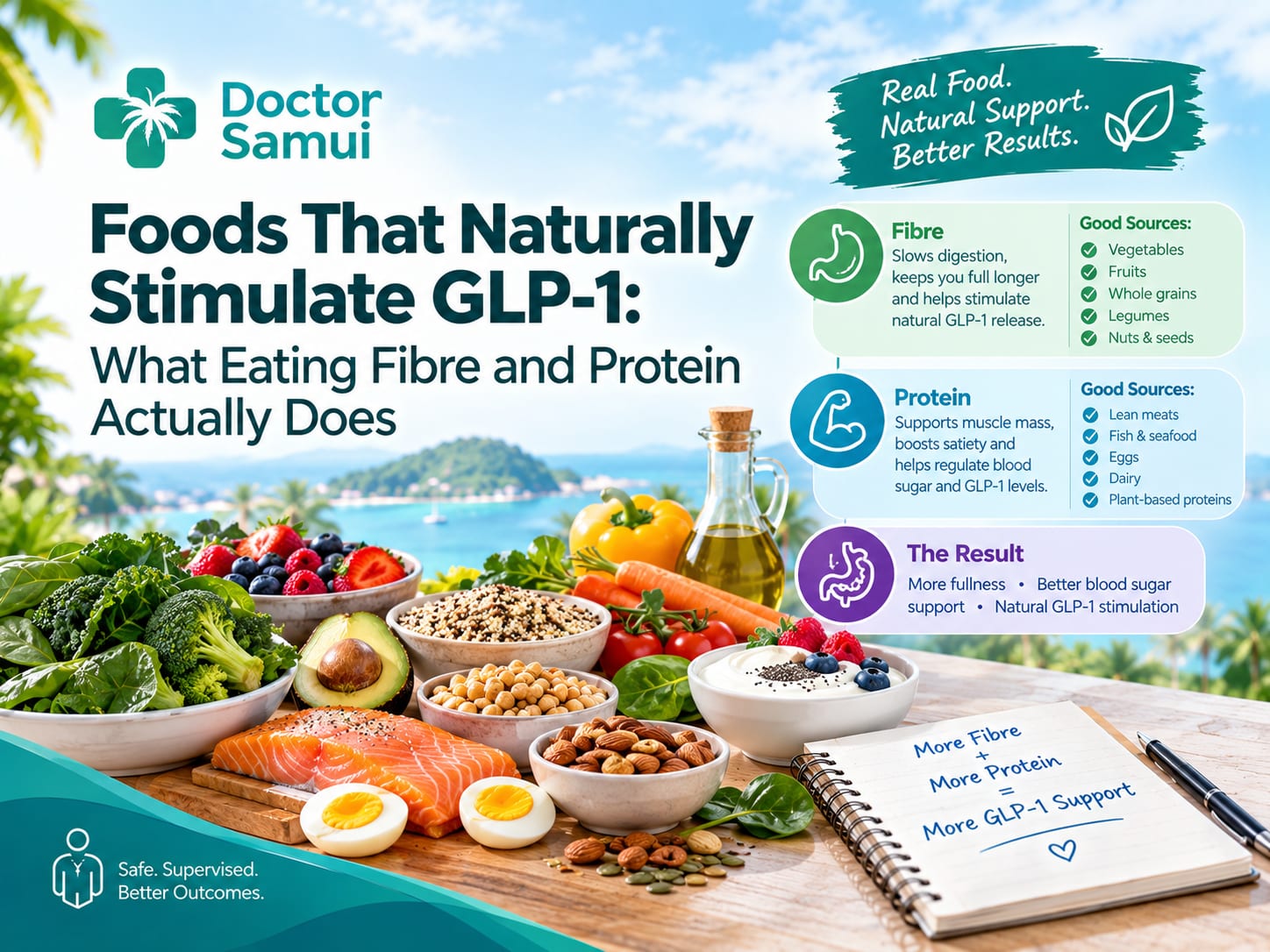
GLP-1, glucagon-like peptide-1, is a gut hormone released when you eat. Fibre and protein are the two strongest dietary triggers. Fermentable fibre feeds gut bacteria, which produce short-chain fatty acids that stimulate GLP-1-releasing cells in your intestine. Protein triggers those same cells directly through amino acid signals at the gut wall. Food-driven GLP-1 responses are real but modest compared to prescription GLP-1 medications.
You pick up a grilled fish plate at the seafood stalls along Fisherman’s Village in Bophut, add a papaya salad, and sit down to eat. Three hours later you are still not hungry. That is not just the heat slowing you down. Part of it is a hormone called GLP-1, the gut signal that tells your brain the meal is done.
GLP-1 is not a wellness trend. It is the same hormone that prescription weight-loss medications mimic, at much higher concentrations. The difference is that food nudges your own GLP-1 in a quieter, shorter-lived way. Understanding how that works helps you eat in a way that actually supports your hunger signals, whether you are a long-stay expat trying to get your appetite under control or a visitor eating out every day.

What GLP-1 Is and Why Food Triggers It
GLP-1 is an incretin hormone, meaning it helps manage blood sugar by prompting your pancreas to release insulin after a meal. Your intestine releases it within minutes of eating. It also slows the rate food leaves your stomach and sends a fullness signal to your brain.
The cells that make GLP-1 are called L-cells. They sit mostly in your lower small intestine and colon. When nutrients reach those cells, particularly fibre breakdown products, protein, and fats, GLP-1 goes up. The effect peaks quickly and fades within a couple of hours.
This is exactly what prescription GLP-1 receptor agonists replicate. They bind the same receptors but stay active far longer, which is why the weight-loss effect from medication is much larger than from diet alone.
How Fibre Triggers GLP-1 Release
Not all fibre does this equally. The type that matters most is fermentable soluble fibre, the kind your gut bacteria can break down.
Soluble fibre reaches your colon mostly intact. Gut bacteria ferment it and produce short-chain fatty acids, including butyrate. Those fatty acids act on L-cells to stimulate GLP-1 release. Insoluble fibre, the type that adds bulk, does less for GLP-1 specifically.
Fermentable sources include oats, legumes, ripe papaya, guava, and some root vegetables. On Koh Samui, these are easy to find year-round at the fresh markets in Chaweng and Lamai.
How Protein Stimulates GLP-1 Secretion
Protein is the other strong trigger, and the mechanism is different from fibre. When protein is digested, amino acids reach the gut wall directly and stimulate L-cells. The GLP-1 response from protein tends to happen faster than from fibre.
Protein quality and how you spread it across meals both matter. Eating protein at breakfast, lunch, and dinner appears to produce a more consistent GLP-1 signal than loading most of it into one large meal. The evidence for this is moderate rather than definitive, but the practical advice is sound regardless.
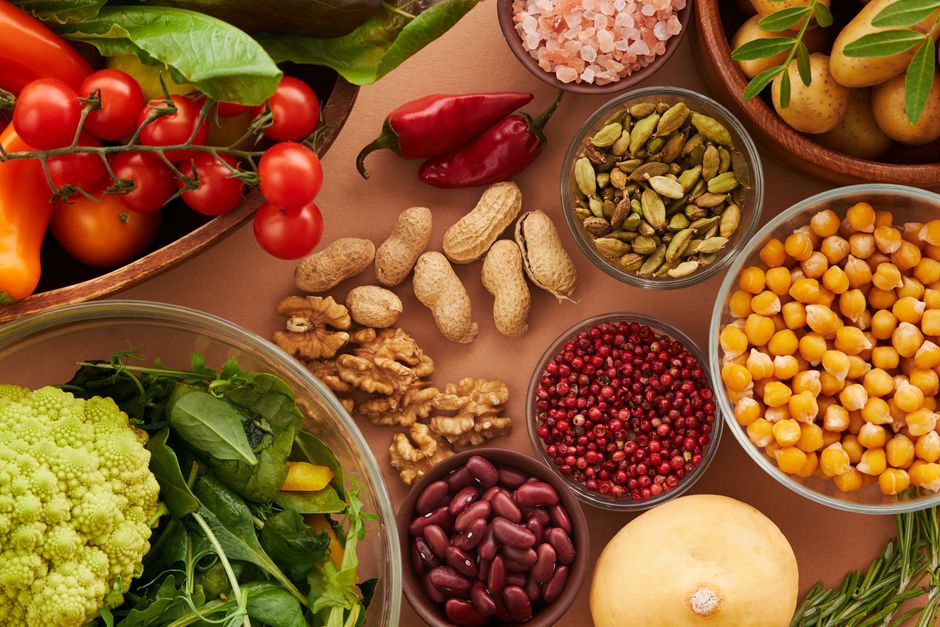
Lean fish, eggs, tofu, edamame, and plain yoghurt are all strong choices. Most are easy to find at markets and restaurants across the island.
Natural GLP-1 Foods Readily Available on Koh Samui
Generic advice tells you to eat oats and Brussels sprouts. That is not especially useful when you are eating Thai food every day on a tropical island.
Fresh fish and seafood are some of the best protein sources for GLP-1 support. The grilled fish at Lamai beach restaurants and the seafood spots along Bophut are genuinely good quality and fresh. Edamame and tofu appear on menus across the island and provide both plant protein and fermentable fibre. Ripe papaya and guava from the fresh market are solid soluble fibre sources, and green papaya in som tum still contributes useful fibre even before ripening.
Fermented foods are worth adding where you can. Plain yoghurt from any convenience store supports the gut microbiome that drives the fibre-to-GLP-1 pathway. Coconut in small amounts provides some fat that also modestly stimulates GLP-1 release. The point is not to overhaul your diet. It is to build most meals around a protein source with fermentable fibre alongside it.
What a GLP-1-Supportive Meal Looks Like in Practice
You do not need a strict ratio or a complicated plan. The principle is simple: combine protein and fermentable fibre in the same meal, repeat across the day, and keep meals low-glycaemic where you can.
A practical Samui example is grilled fish with a papaya salad and steamed vegetables, or tofu stir-fry with brown rice and edamame on the side. Both give you the protein and fibre signals together. Eating this way at two or three meals a day works better than loading all your protein into one large evening meal.
The WHO recommendation for adults is around 25 grams of total dietary fibre daily. If your usual intake is much lower than that, increase gradually. Moving to high-fibre eating too quickly causes bloating, which is uncomfortable and no help to anyone, especially mid-holiday.
What Food Cannot Do: Realistic Expectations vs GLP-1 Medication
Food-driven GLP-1 release is real and supports satiety. But the concentration produced by eating is significantly lower than the levels reached with prescription GLP-1 receptor agonists like semaglutide or tirzepatide. The appetite suppression and weight-loss effects from medication are in a different category. Trying to eat your way to the same clinical result is not realistic for someone managing obesity, type 2 diabetes, or significant metabolic risk.
Diet is a foundation. It supports the mechanism. For some people, improving fibre and protein intake genuinely reduces hunger and helps with weight management. For others, that is not enough, and that is not a personal failure. It is a clinical question worth discussing with a doctor. GLP-1 receptor agonist medications are not suitable for everyone. People with a personal or family history of medullary thyroid carcinoma, multiple endocrine neoplasia type 2, or a history of pancreatitis should not use them. A doctor needs to review your history before any prescription is considered.
If you want to understand whether food-based changes alone are appropriate for your situation, the can food raise GLP-1 naturally page at Doctor Samui covers this clearly, including what a clinical assessment looks like.
When Diet Alone Is Not Enough: GLP-1 Support on Koh Samui
If you have made consistent dietary changes over two to three months and your weight or hunger has not shifted, that is worth a proper assessment. Not just more advice about oats.
Doctor Samui offers GLP-1 consultation and prescription support for long-stay expats and visitors who are medically appropriate candidates. This includes a health review, a discussion of whether GLP-1 medication is suitable, and ongoing support. You can walk in to the Chaweng clinic, or book a health check-up in Koh Samui as a starting point if you want a broader metabolic picture first.
A food-first approach always makes sense as a foundation. But if you are past that point, a clinical conversation is the right next step. The clinic speaks English, German, and Hebrew, and offers 24-hour hotel and villa visits across the island if you are not based near Chaweng.
If you are a long-stay expat or visitor on Koh Samui and want to understand what dietary changes can realistically do for GLP-1, or you are ready to discuss prescription support, Doctor Samui can help. Walk in to the Chaweng clinic or contact us to arrange a consultation. Hotel and villa visits are available 24 hours across the island. Visit doctorsamui.com/glp-1/ for more on what GLP-1 support looks like.
Frequently Asked Questions
Dr. Ponlawat Pitsuwan
Physician, Doctor Samui
a walk-in clinic based in Chaweng, Koh Samui, with 24-hour hotel and villa visits across the island. He sees tourists, families, and long-stay expats for weight management consultations, metabolic health reviews, GLP-1 prescriptions, and general health check-ups. His focus is straightforward, evidence-based care delivered in plain language.
References
- Holst JJ. The physiology of glucagon-like peptide 1. Physiological Reviews. 2007 Oct;87(4):1409-39.
- Cani PD et al. Gut microbiota fermentation of prebiotics increases satietogenic and incretin gut peptide production with consequences for appetite sensation and glucose response after a meal. Am J Clin Nutr. 2009 Nov;90(5):1236-43.
- Tolhurst G et al. Short-chain fatty acids stimulate glucagon-like peptide-1 secretion via the G-protein-coupled receptor FFAR2. Diabetes. 2012 Feb;61(2):364-71.
- WHO. Healthy diet. World Health Organization fact sheet. 2020.
The information in this article is for educational purposes only and does not constitute medical advice. It should not be used to self-diagnose or replace a consultation with a qualified physician. If you have concerns about your health, contact a licensed medical professional. For appointments at Doctor Samui, visit doctorsamui.com.