
Clinically reviewed by Dr. Ponlawat Pitsuwan, Physician, Doctor Samui.
Last reviewed: October 2026
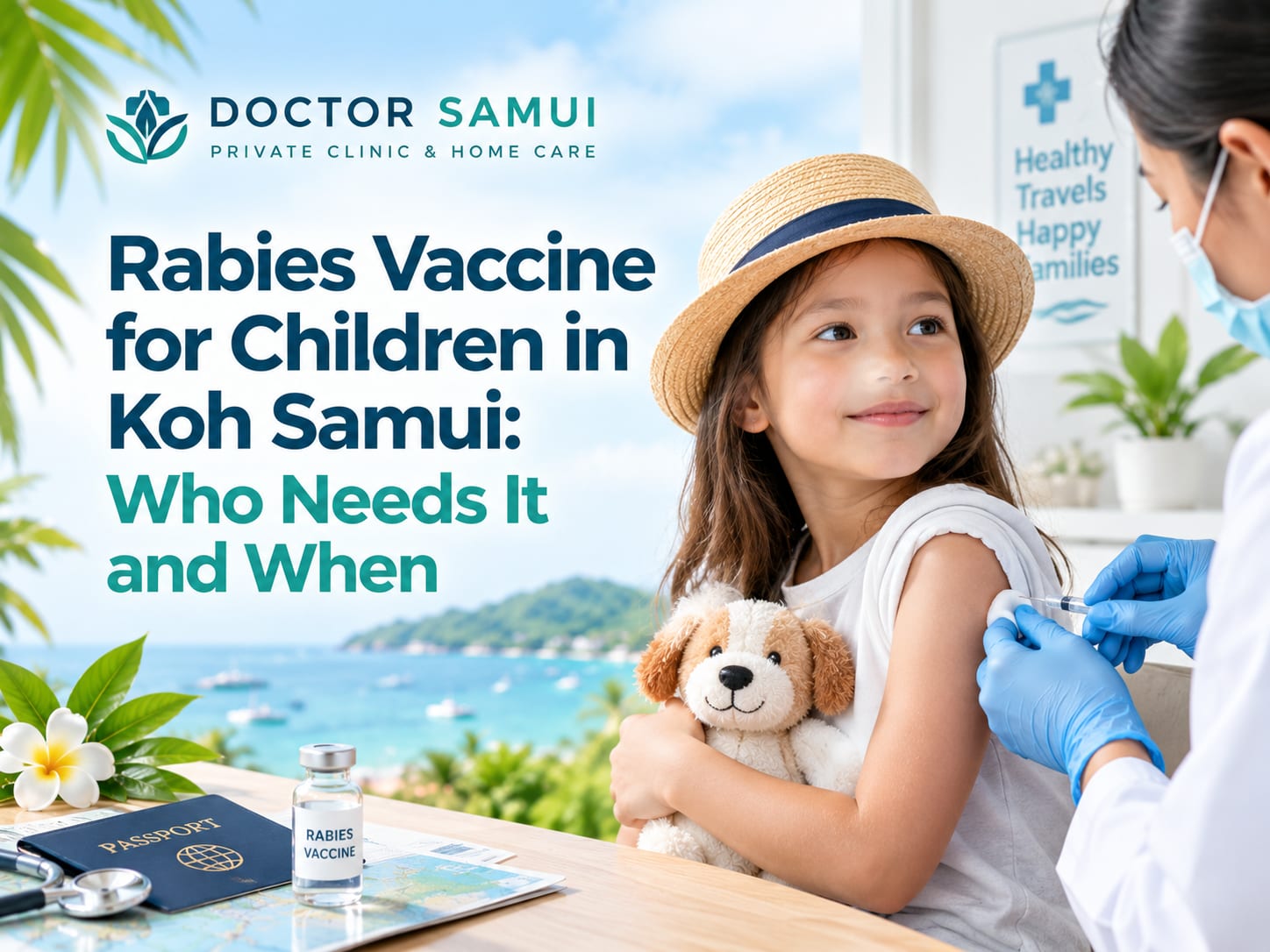
Rabies is present in Thailand, and children on Koh Samui face a real risk from stray dogs on the beach, monkeys near temples, and wildlife on waterfall trails. If your unvaccinated child is bitten or deeply scratched, they need post-exposure treatment the same day — not tomorrow. Doctor Samui provides rabies vaccination and rabies immunoglobulin for children in clinic and at your hotel or villa, 24 hours a day across the island.
Your child spots a dog resting near the shoreline at Chaweng Beach. It looks relaxed. It lets them walk close. Then comes the scratch, or the bite, or the lick on a grazed knee — and suddenly you are searching your phone at the resort, far from your usual doctor, not sure what the next hour needs to look like. This is the situation parents arrive in most often, and the answer is simple: get to a clinic today, not in the morning.
Rabies circulates in the local animal population in Thailand on a permanent basis. Children are at higher risk than adults because they play closer to animals, get bitten on the face or hands where blood flow is strong, and often do not mention a small scratch until it is already hours old. Whether your child needs the child rabies vaccine on Koh Samui before your trip — or right now after an encounter — is what this guide covers.

Why Children on Koh Samui Face a Higher Rabies Risk
Children get bitten more. That is the short answer. They approach animals at face and neck height. They do not always read warning signs. And they are less likely to mention a minor scratch until well after it happened.
Koh Samui has specific hazards that are easy to underestimate. Stray dogs rest near Chaweng and Lamai beach bars and outside food stalls. Temple monkeys around the island approach children directly, especially if snacks are visible. On trails near Na Muang waterfall, wildlife encounters are common, including small mammals that look harmless. Any warm-blooded animal can carry rabies.
Parents often assume that because Koh Samui is a tourist island, the risk is managed. It is not. The injuries we see at our Chaweng clinic often happen during the moments that feel the safest: a beach walk at sunset, a temple visit, a waterfall trail.
Pre-Exposure Vaccine Versus Post-Exposure Treatment
There are two completely different situations, and they need different decisions.
Pre-exposure prophylaxis (PrEP) means vaccinating your child before any animal contact happens, ideally before you travel. It is three doses given over three to four weeks. The CDC recommends it for children travelling to Thailand, especially for trips longer than a few days or where reaching medical care quickly may be difficult.
Post-exposure prophylaxis (PEP) is what happens after a bite or scratch. An unvaccinated child needs four doses of vaccine plus rabies immunoglobulin (RIG). A child who already had the full pre-exposure course needs only two booster doses and no RIG. That difference matters in practice — RIG is harder to source on the island, and fewer injections means far less stress for a young child.
If your child did not receive pre-exposure vaccination before this trip, do not wait until you are home to start. Post-exposure treatment must begin the same day. Come to Doctor Samui’s Chaweng clinic or request a hotel visit, and we will assess the exposure and begin the correct protocol straight away.
How Doctors Assess Bite Risk in Children
Not every animal encounter needs the same response. The WHO divides exposures into three categories, and treatment depends on which one applies.
Category I is contact with an animal but no broken skin — petting, feeding, or a lick on fully intact skin. No vaccine is needed, though washing the area and mentioning it to a doctor is still sensible. Category II covers minor scratches, abrasions, or licks on skin that is already broken. This requires vaccine but not RIG. Category III is the most serious: a bite that breaks skin, a deep scratch, or any contact involving the eyes, nose, or mouth. This requires both vaccine and RIG, and the RIG must be given at the first appointment.
Parents should not self-assess a child’s wound. What looks like a graze can still be Category III depending on depth and location. Bring your child in and let a doctor decide.
What Happens at the Clinic — A Guide for Parents
When you arrive after an animal exposure, the first step is wound washing. Thorough cleaning with soap and water for at least 15 minutes is one of the most effective ways to reduce transmission risk. We do this before anything else.
After wound care, the doctor assesses the exposure category and takes a short history — what animal, what happened, when, and whether it was provoked. From there, we decide whether your child needs vaccine only or vaccine plus RIG. For RIG, the dose is calculated by body weight, so we will ask how much your child weighs.
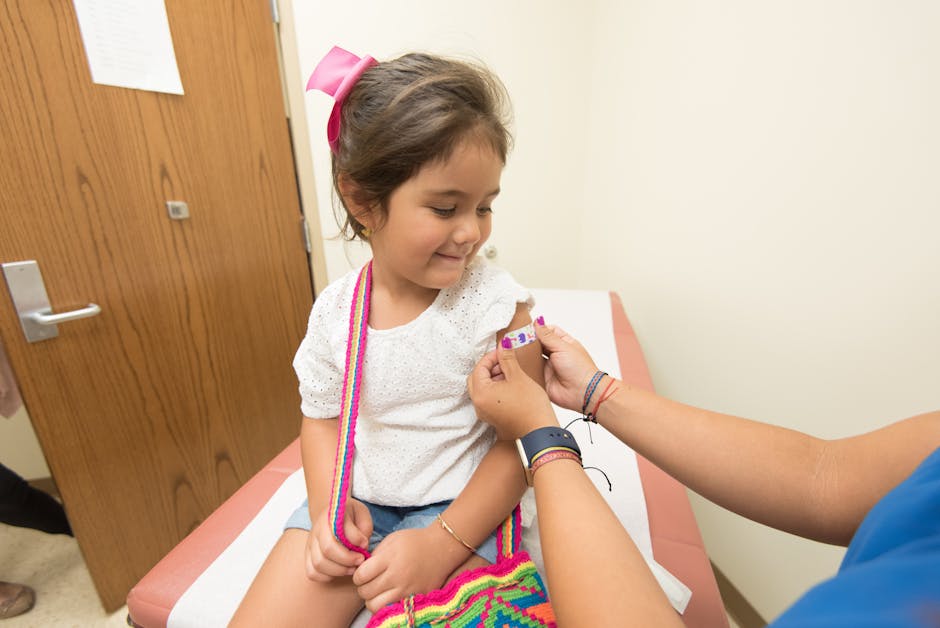
For the vaccine itself, children under two years receive the injection in the outer upper thigh. Older children and teenagers receive it in the upper arm. The dose volume is the same regardless of age or weight. We use cold-chain verified vaccines including Verorab, and we provide a full written vaccination record so your home doctor can continue any remaining doses after you fly.
Completing the Vaccine Course Before You Fly Home
This is the question parents ask most often mid-holiday. What if we need to leave before the course is finished?
Start immediately. The first two doses give strong early protection, and the remaining doses at Day 7 and Day 14 can be given by a doctor at home. The course does not restart if there is a gap — it continues from where it stopped.
Doctor Samui provides a written record with the vaccine name, batch number, dates given, and the protocol followed. This is what your doctor in Australia, the UK, Germany, or the US needs to continue the course without repeating doses already given. Ask for it before you leave, and photograph it in case the paper copy is lost.
Getting Your Child Vaccinated Without Leaving Your Resort
If your child is very young, had a frightening experience with the animal, or you have other small children to manage, travelling to a clinic at 10 pm is not always straightforward.
Doctor Samui offers 24/7 hotel and villa visits across the island, covering Chaweng, Lamai, Bophut, Maenam, Choeng Mon, Bang Rak, and further afield. A doctor comes to you, assesses the wound, and administers the vaccine and RIG where needed. For post-exposure treatment, timing matters more than location. Starting treatment at your hotel the same night is far better than waiting until morning. You can also use the family health visit service for pre-exposure vaccination during your stay, if you would prefer your child vaccinated without a clinic trip.
Rabies Immunoglobulin for Children — Why Availability Matters
RIG is not a vaccine. It works immediately while the vaccine builds protection over several days. For an unvaccinated child with a Category III bite, RIG is not optional — it must be given at the first appointment, not later.
The problem is availability. RIG is perishable, expensive, and not stocked at every clinic or pharmacy on Koh Samui. Smaller providers often do not carry it. If a child needs RIG and the clinic does not have it, that creates a delay that should not happen.
Doctor Samui stocks RIG for paediatric use. If your child has had a serious bite and you are not sure where stock is available, call us before travelling anywhere else — we can advise by phone.
If your child has had any contact with a dog, monkey, or other animal on Koh Samui — bite, scratch, or lick on broken skin — do not wait to see how it feels tomorrow. Doctor Samui provides same-day rabies assessment and vaccination for children at our Chaweng walk-in clinic, with 24/7 hotel and villa visits across the island. We stock rabies vaccine and rabies immunoglobulin, issue full written vaccination records, and have English, German, and Hebrew-speaking staff. Contact us using the button below.
Frequently Asked Questions
Dr. Ponlawat Pitsuwan
Physician, Doctor Samui
a walk-in clinic based in Chaweng, Koh Samui, with 24/7 hotel and villa visits across the island. He sees tourists, families, and long-stay expats for rabies risk assessment, pre-exposure and post-exposure vaccination, and paediatric care following animal encounters. His focus is straightforward, evidence-based care delivered in plain language.
