
Clinically reviewed by Dr. Ponlawat Pitsuwan, Physician, Doctor Samui. Last reviewed: October 2026
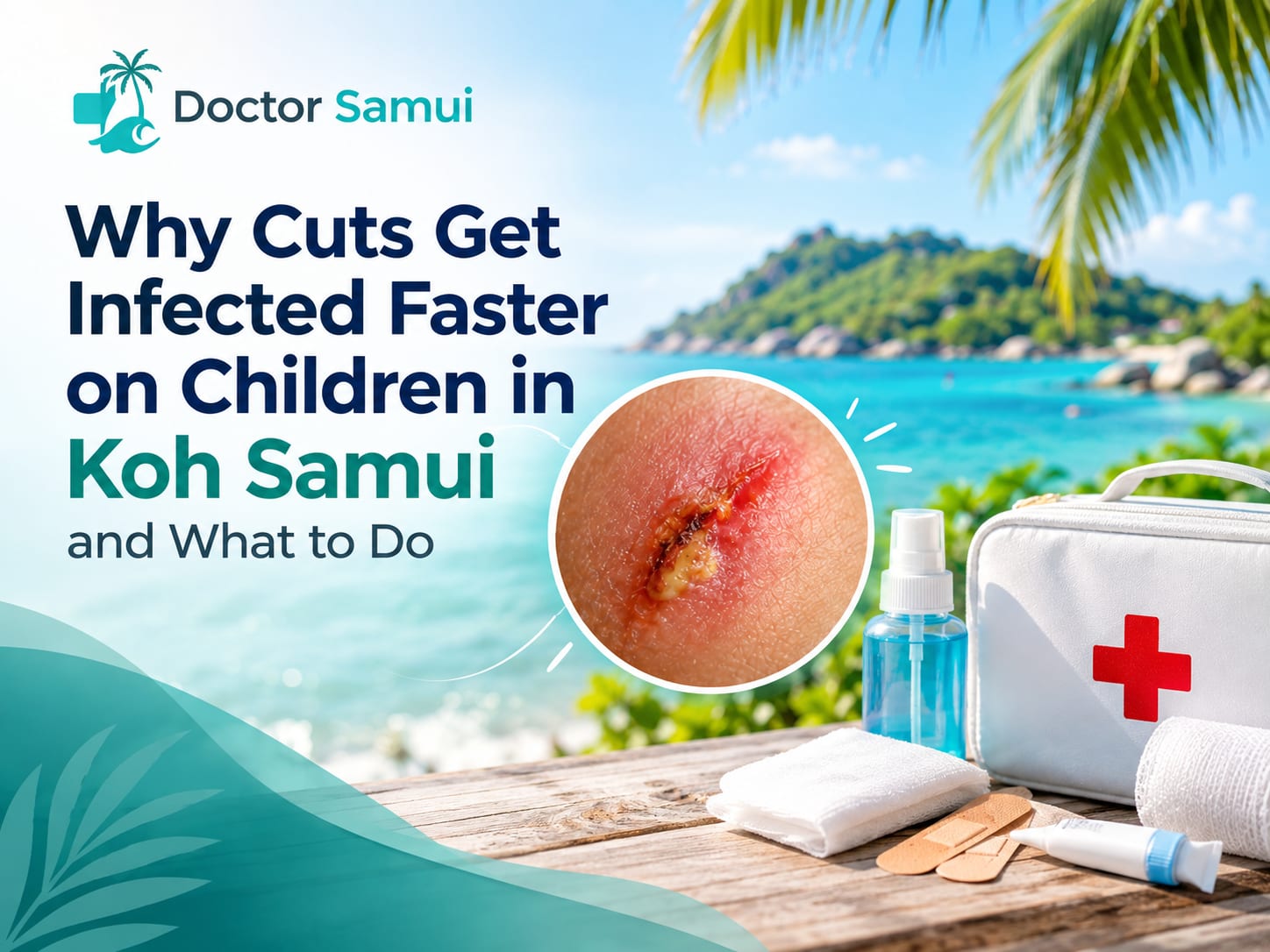
Children’s cuts can show clear signs of infection within 24 to 48 hours in Koh Samui’s tropical heat and humidity, faster than most parents expect from back home. Children’s skin is thinner and their immune response is still developing, which lets bacteria take hold quickly. A cut from coral, a waterfall rock, or wet sand needs same-day cleaning and assessment, not a wait-and-see approach. Doctor Samui treats infected wounds in children at the Chaweng clinic and with 24/7 hotel and villa visits across the island.
Your child slips on a mossy rock halfway up the Na Muang waterfall trail, and what looks like a minor graze turns red and swollen by dinner. By morning it is warm to the touch and hurts more than yesterday. That is not slow healing. That is early infection, and in Koh Samui’s climate it moves fast.
Children’s skin is genuinely thinner than adult skin, and their immune systems are still learning to fight bacteria they have never encountered before. Add tropical heat, high humidity, and contact with coral, soil, or seawater, and a small cut becomes an infection risk within hours. Knowing what to watch for, and what to do in the first 30 minutes, makes a real difference.
Why Children’s Skin Is More Vulnerable to Infection in the Tropics
The outer layer of a child’s skin breaks more easily on rough surfaces and lets bacteria in more quickly once broken. This is not unique to Koh Samui, but the environment here makes it matter a great deal more.
In Koh Samui’s heat and humidity, bacteria multiply at a rate that simply does not happen in cooler climates. A wound that might stay clean for 48 hours in Europe can be showing infection signs within a day here. Children’s immune systems are still developing, so the early defence against tropical bacteria found in Thai soil and seawater is slower to respond than in a healthy adult.
Sweat, wet clothing, and the way kids move through water, sand, and mud all carry contamination back into an open wound. Parents used to scrapes healing quietly at home are often caught off guard by how quickly things escalate on the island.
The Specific Koh Samui Hazards That Put Children at Risk
The island’s most popular family activities are also the ones that put open wounds in contact with some of the most bacteria-rich environments around. Reef walking and snorkelling near Chaweng and Lamai, waterfall hikes at Na Muang, barefoot beach play near fishing villages, and muddy paths after rain are the settings behind most of the infected cuts that come into our Chaweng clinic.
Coral cuts deserve particular attention. Coral carries marine bacteria that are aggressive in children and respond poorly to antibiotics used for standard skin infections. A coral graze that looks shallow can leave fragments embedded in the skin, and those fragments are a direct route for infection to reach deeper tissue.
Waterfall and rock-path cuts are different but equally serious. The soil and rock surfaces at Na Muang carry bacteria that thrive in warm, wet conditions. A cut that touches that soil needs thorough cleaning, not just a rinse under the waterfall itself.

First Aid Mistakes That Make Child Cut Infections Worse
Beach wisdom gets this one wrong, and it can make things worse. The two things parents most often try first are hydrogen peroxide and alcohol. Both damage the tissue around the wound, slow healing, and strip away the cells a child’s body is using to fight bacteria. Neither should go into an open wound.
Letting a cut "air out" sounds reasonable, but in Koh Samui’s humidity it means the wound sits exposed to warm, bacteria-laden air. A wound heals better when it stays moist under a clean dressing, not open to the environment.
Do not take your child back into the sea or pool to "let the salt water clean it." Seawater around Koh Samui contains marine bacteria. Pool water irritates damaged tissue. Both introduce new problems. Keep the wound dry and covered until a doctor has assessed it.
What to Do in the First 30 Minutes After the Cut
Rinse the wound with clean water. Bottled water from your hotel room works well. The goal is to flush out sand, coral fragments, dirt, and surface bacteria. Use a gentle flow, not a hard blast. Saline sachets from a travel first aid kit are ideal if you have them.
Do not dig at embedded fragments yourself. Coral or grit pushed deeper causes more damage and carries bacteria further into the tissue. Cover the wound with a clean non-stick dressing or a clean dry cloth, and apply gentle pressure if it is still bleeding.
Then contact Doctor Samui. If your child cut themselves on coral, reef rock, waterfall stone, or soil, same-day assessment is the right call. We can come to your hotel or villa, so there is no need to bundle an upset child into a taxi if that feels difficult.
Warning Signs: When a Child’s Cut Needs Immediate Attention
Some redness around a fresh wound is normal. What you are watching for is redness that spreads past the wound edge, or redness that is growing larger hour by hour. That is not healing. That is cellulitis, a spreading skin infection that needs antibiotics quickly.
Other signs that warrant same-day assessment: the wound is swollen and warm, there is pus or cloudy fluid, your child has a fever, or you can see red streaks moving away from the wound. Red streaks mean infection is tracking under the skin, and waiting is not safe.
In a temperate country you might watch these signs for a day or two. In Koh Samui’s climate, a spreading infection in a child can move from worrying to serious within 24 hours. If it looks worse than yesterday, get it assessed today.
How Doctor Samui Treats Infected Cuts in Children
When you come in or we visit your villa, the first priority is assessing the wound properly: checking the depth, looking for embedded material, and deciding whether it needs cleaning under local anaesthetic. For children, we use age-appropriate doses and explain each step before we do it. A frightened child does not need surprises.
If the wound needs debridement, we remove contaminated or damaged tissue so healing can happen cleanly. We use specialist wound dressings, including silver-impregnated dressings for wounds showing early infection, which slow bacterial growth while the tissue heals.
If antibiotics are needed, the type and dose depend on the wound source. A coral cut may need different cover than a soil cut. We prescribe based on what caused the wound, the child’s age and weight, and the bacteria most likely to be involved. We also check your child’s tetanus vaccination status and can administer a booster on site if needed, since tetanus bacteria are present in Koh Samui’s soil and on coral surfaces.
Hotel and Villa Visits When Your Child Cannot Travel to the Clinic
Many families on Koh Samui are staying at pool villas or beach resorts that are not close to Chaweng. Getting a distressed, injured child into a vehicle and across the island is not always practical, and it is not necessary.
Doctor Samui’s 24/7 visit service covers Chaweng, Lamai, Bophut, Maenam, Choeng Mon, Bang Rak, Hua Thanon, Taling Ngam, Nathon, and Angthong. We bring wound-care equipment, dressings, antibiotics, and vaccines to your location. The assessment and initial treatment at your villa is the same as what we provide in the clinic.
Practical Considerations for Families
Most travel insurance policies cover clinic visits and villa call-outs for injury, including wound infection. Keep your policy documents accessible on your phone and ask for an itemised receipt from any clinic you visit. Doctor Samui provides the documentation your insurer will need.
If your child has known antibiotic allergies, particularly to penicillin or amoxicillin, flag this immediately when you call or arrive. Bring your child’s vaccination record if you have it. If you do not have it, tell us what you remember and we will work from there. You can find further guidance on managing children’s health during island travel on our family health page.
If your child has a cut that looks infected, is getting redder or more swollen, came from coral or waterfall rock, or you are simply not sure whether it needs attention, contact Doctor Samui. We offer walk-in wound care at our Chaweng clinic and 24/7 hotel and villa visits across Koh Samui. We carry the dressings, antibiotics, and vaccines needed to manage wound infections on site. Do not wait for morning if things look worse tonight.
Frequently Asked Questions
Dr. Ponlawat Pitsuwan
Physician, Doctor Samui
a walk-in clinic based in Chaweng, Koh Samui, with 24/7 hotel and villa visits across the island. He sees tourists, families, and long-stay expats for wound assessment and treatment, coral and reef injuries, paediatric care, and tropical infection management. His focus is straightforward, evidence-based care delivered in plain language.
