
Clinically reviewed by Dr. Ponlawat Pitsuwan, Physician, Doctor Samui. Last reviewed: October 2026
If your child is stung by a jellyfish on Koh Samui, rinse the area with seawater or vinegar immediately. Do not use fresh water from a hotel shower. Remove visible tentacles without touching them with bare skin. Any sting that leaves welts, causes breathing difficulty, or involves a suspected box jellyfish needs a doctor the same day.
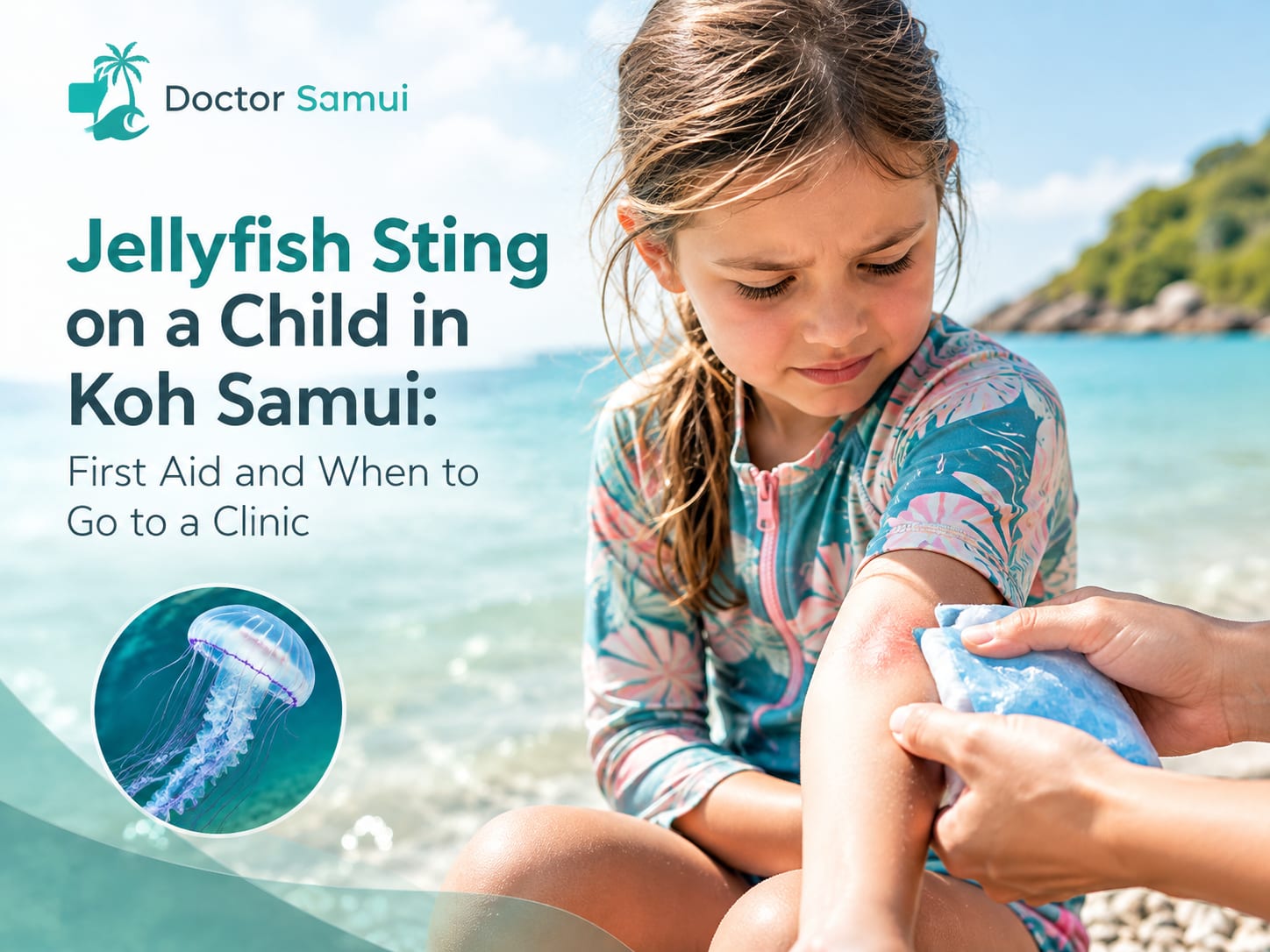
Your child walks out of the shallows at Chaweng or Lamai, crying and holding their arm, with a red line already forming on their skin. You are barefoot, twenty metres from the sea, and your phone has one bar of signal. This is the moment you need to know exactly what to do, not a checklist to figure out later.
Most jellyfish stings on Koh Samui are painful but not life-threatening. A few are. The difference between those two outcomes often comes down to what happens in the first five minutes. The most common mistake parents make here makes things considerably worse, not better.
Why Children Are More Vulnerable Than Adults
A box jellyfish sting that causes pain and welts in an adult can cause cardiovascular collapse in a small child. This is not alarmism. It comes down to body size. A child receives a proportionally much larger venom load relative to their weight, and their system can be overwhelmed faster.
Cases in Thailand involving young children and box jellyfish have resulted in cardiac events within minutes. Older children are not exempt. A twelve-year-old stung at close range needs the same urgent assessment as a toddler.
If your child is small, move faster. The same sting you might manage at home in an adult warrants a clinic visit in a five-year-old.
Box Jellyfish on Koh Samui: The Species Parents Must Know
Koh Samui has the highest recorded rate of box jellyfish cases in Thailand. Most incidents happen between July and October, but box jellyfish are present in these waters year-round.
The species responsible for the most serious stings are nearly transparent, often small, and easy to swim into without seeing. Their tentacles cause immediate, severe burning pain and leave distinct raised lines on the skin.
Moon jellyfish are also common on Samui and cause much milder stings, usually just a rash or faint irritation. If the sting left a patchy redness with little pain, that is more likely a moon jellyfish. If there are clear red lines and intense pain, treat it as a box jellyfish sting until you know otherwise.

Step-by-Step First Aid for a Child Jellyfish Sting on Koh Samui
Get your child out of the water immediately. Calm them as best you can. Do not let them rub the affected area.
Step one: rinse with seawater or vinegar
This is where most parents get it wrong. The instinct at a beach resort is to head for the nearest shower. Do not do this. Fresh water can trigger unfired stinging cells in the tentacle remnants to fire again, releasing more venom into your child’s skin.
Use seawater to rinse the area. Vinegar is better. Chaweng and Lamai beaches both have vinegar posts installed near lifeguard stations for exactly this reason. Pour vinegar generously over the sting for at least 30 seconds.
Step two: remove visible tentacles
Do not use your bare fingers. Use a dry towel, a card, or a folded sarong to lift tentacles away from the skin. Do not press down and do not scrub. Pressing drives stinging cells deeper into the skin.
Step three: manage pain
After rinsing and tentacle removal, soaking the area in comfortably hot water can help reduce pain. Not scalding, but as warm as your child can tolerate. Children’s paracetamol helps with pain. Over-the-counter antihistamines such as cetirizine or loratadine can reduce itching and mild allergic response.
Do not apply ice directly to the sting. It does not help with jellyfish venom and can damage already-irritated skin.
Emergency Red Flags: When to Call for Help Immediately
Some situations do not wait for a walk-in appointment. Call 1669, Thailand’s emergency line, or contact Doctor Samui’s 24-hour line directly if your child shows any of the following.
Difficulty breathing, swelling of the lips or tongue, or loss of consciousness are signs of a severe whole-body allergic reaction that needs epinephrine immediately. Vomiting, dizziness, muscle cramps, or an irregular heartbeat after a sting are also serious warning signs. A sting covering a large area of a small child’s body needs emergency assessment regardless of how calm the child appears.
If your child is unresponsive and not breathing, begin CPR while someone else calls for help. Do not wait.
What a Clinic Can Do That First Aid Cannot
First aid buys time. It does not end the clinical picture.
At Doctor Samui’s Chaweng clinic, a doctor can assess the sting pattern, identify the likely species, and determine whether the reaction is worsening. IV antihistamines work faster than oral medication when a reaction is escalating. IV pain relief is available for severe cases, along with close monitoring for delayed allergic response in the hour after treatment.
Blistering can develop within hours. In Koh Samui’s heat and humidity, open blisters on a child going back to the beach can become infected within 24 hours. The clinic can dress wounds properly and provide written documentation for travel insurance if needed.
If your child is too distressed or unwell to travel, a doctor can come directly to your hotel or villa across Chaweng, Lamai, Bophut, Maenam, Choeng Mon, and the rest of the island, at any time of day or night.
After the Sting: Recovery, Skin Care, and Follow-Up
Most mild jellyfish stings settle within a few days. The redness fades, the pain eases, and children move on quickly. Moderate to severe stings from box jellyfish are a different matter.
Keep the area clean and dry between swims. Use a non-stick dressing if blistering develops. The tropical sun on Koh Samui significantly worsens dark marks on healing skin, so keep the area out of direct sun for at least two weeks or cover it with light clothing.
Some children develop raised skin or discolouration that persists for several months. A follow-up review is sensible if redness, rash, or blistering has not improved within two weeks of the sting.
Prevention: Beach Safety for Families on Koh Samui
The highest-risk period is July through October, but there is no truly safe month. Jellyfish follow plankton blooms and current shifts, neither of which post advance warnings.
Chaweng and Lamai beaches have jellyfish nets in designated swimming zones. Swim inside those zones. Check warning flags before the children enter the water. Red or purple flags mean stay out.
Full rash guards significantly reduce skin exposure and are worth wearing during peak months. Jellyfish-guard lotions, available in some dive shops and pharmacies on Koh Samui, add another layer of protection. Our family health page covers jellyfish sting first aid for kids in more detail, including prevention steps for families planning beach days across the island.
Your child has been stung by a jellyfish on Koh Samui and you are not sure what to do next. Doctor Samui’s Chaweng clinic is open for walk-in paediatric care, and doctors are available 24 hours a day for hotel and villa visits across Chaweng, Lamai, Bophut, Maenam, Choeng Mon, and beyond. We assess sting severity, provide IV or oral treatment, dress wounds, and issue documentation for travel insurance where needed. Contact Doctor Samui to speak to a doctor now.
Is it safe to rinse my child’s jellyfish sting with fresh water from the hotel shower?
No, and this is the most common mistake we see on Samui beaches. Fresh water can trigger unfired stinging cells in the tentacle remnants to release more venom into the skin, making the sting significantly worse. Use seawater first, then vinegar if you can find it. Vinegar posts are installed at Chaweng and Lamai beach lifeguard stations for exactly this reason.
What are the signs that my child’s jellyfish sting is a medical emergency?
Difficulty breathing, swelling of the face or lips, vomiting, dizziness, loss of consciousness, or muscle cramps all require immediate emergency help. Call 1669 or contact Doctor Samui’s 24-hour line without delay. A child who seems okay at first should still be assessed within an hour of any significant sting, because small children can deteriorate quickly.
My child was stung but seems okay now. Do we still need to see a doctor?
Yes, if the sting left visible welts, caused more than mild pain, or involved a suspected box jellyfish. Blisters can develop hours later and become infected quickly in Koh Samui’s heat. Doctor Samui can assess the sting, prescribe treatment, and advise on wound care, and a doctor can come to your hotel or villa if your child is too distressed to travel.
Which Koh Samui beaches are most dangerous for jellyfish, and when is the risk highest?
Koh Samui has the highest recorded rate of box jellyfish cases in Thailand. Chaweng, Lamai, Chaweng Noi, and Crystal Bay have all had documented incidents. Risk is highest from July through October, but jellyfish are present year-round. Swim inside the netted zones at Chaweng and Lamai and check warning flags before entering the water.
Can a jellyfish sting leave a permanent scar on my child’s skin?
Moderate to severe stings can cause blistering that leads to dark marks or raised skin lasting several months. Sun exposure on Koh Samui makes post-inflammatory discolouration worse, so keep the area covered outdoors while it heals. A follow-up clinic review is sensible if blistering develops or redness persists beyond two weeks.
My toddler was stung in shallow water near our resort in Chaweng. Is shallow water safer?
No. Box jellyfish are commonly found in shallow water close to shore and can be completely transparent, making them nearly impossible to see. Stings in ankle-deep water are not uncommon at Chaweng and Lamai. Swim inside netted zones and use protective swimwear regardless of water depth.
Dr. Ponlawat Pitsuwan
Physician, Doctor Samui
a walk-in clinic based in Chaweng, Koh Samui, with 24-hour hotel and villa visits across the island. He treats tourists, families, and long-stay expats for jellyfish and marine stings, paediatric emergencies, wound care, and tropical illnesses. His approach is straightforward, evidence-based care explained in plain language.
