
Clinically reviewed by Dr. Ponlawat Pitsuwan, Physician, Doctor Samui. Last reviewed: September 2026
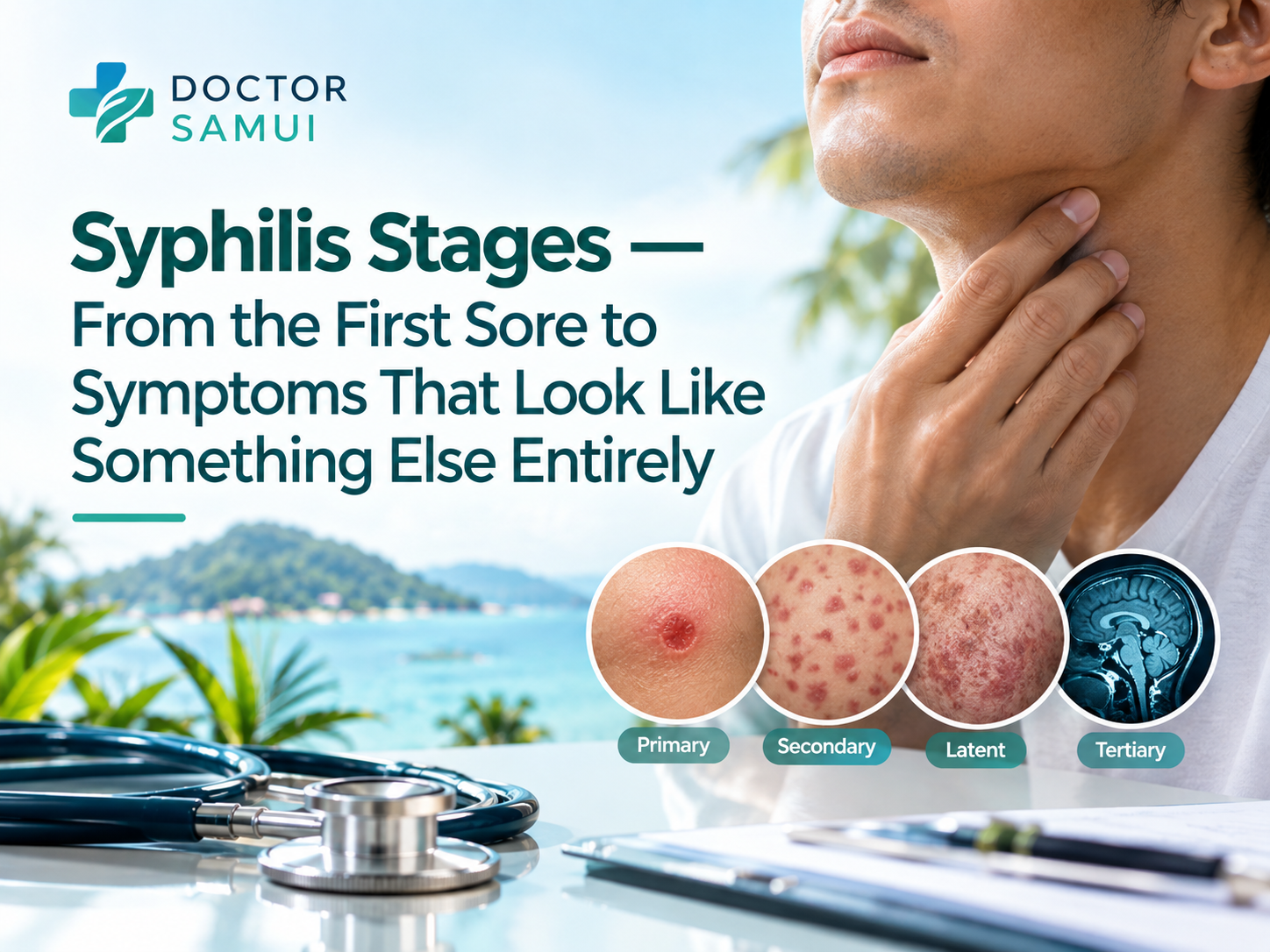
Syphilis moves through four stages: primary, secondary, latent, and tertiary. Each stage looks different, and the symptoms between stages can disappear entirely, which is why so many people assume the infection has cleared. It has not. A blood test is the only way to confirm. Syphilis is curable at every stage with antibiotics, but damage done in the late stage may not reverse even after treatment.
You notice a small sore. It does not hurt. You are two weeks into a trip to Samui, you have been in the ocean, scrambling over rocks at Na Muang, maybe picking up a reef scrape or two. The sore heals on its own, and you forget about it. Six weeks later, there is a rash across your chest and the soles of your feet. Not itchy. Just there. You put it down to heat rash or something you ate.
This is the pattern we see repeatedly at our Chaweng clinic. It is exactly how syphilis moves quietly through people who have no idea it is happening. Every stage produces symptoms that look like something more ordinary, something you would ignore on holiday. A painless sore looks like a coral graze. A rash looks like prickly heat. Then both disappear and you feel completely fine, while the infection continues. What follows is a clear breakdown of each stage, what you might actually notice, and what you could easily mistake it for.
Primary Syphilis — The Sore That Does Not Hurt
The first sign is a chancre: a firm, round, painless ulcer. It appears at the site where the bacteria entered your body, usually between 10 days and three months after exposure. Most people picture a genital sore, and it often is one. But a chancre can appear anywhere contact occurred: the lips, inside the mouth, the throat, the tonsils, or even a finger.
A sore on your lower lip after oral sex looks like a cold sore. A firm ulcer on your fingertip looks like a small cut or a coral nick. People treat these with antiseptic and move on. The chancre heals on its own in three to six weeks whether you treat it or not. That healing means nothing. The bacteria have moved deeper into the body.
Any painless, firm ulcer that appears after unprotected sexual contact needs to be assessed, wherever it appears on your body. Do not wait for it to hurt. It probably will not.
Secondary Syphilis — The Stage That Looks Like Everything Else
Secondary syphilis usually begins two to eight weeks after the chancre appears, sometimes while the original sore is still present. This is the stage that fools people most, especially on Koh Samui.
The rash is the main sign: reddish-brown, flat or slightly raised spots that can spread across the trunk and, notably, the palms of the hands and soles of the feet. A rash on the palms is unusual for most skin conditions, which makes it a useful flag. The rash is not itchy. In a tropical setting, that matters. Prickly heat itches badly. Sunburn peels. A drug reaction usually itches too. The secondary syphilis rash does none of these things. It just sits there, flat and quiet.
It can also closely mimic pityriasis rosea, a common skin condition that causes a scaly pink rash across the torso. Pityriasis rosea is harmless and resolves on its own. Syphilis does not. Other secondary symptoms include flu-like tiredness, swollen glands, mouth sores, and patchy hair loss. You may have some of these or none of them. All of them can disappear without treatment, and the infection moves on.
Why Syphilis Gets Missed in a Tropical Setting
Working out which condition is causing a symptom is harder on holiday. You are hot. You have been in the sun. You have eaten unfamiliar food. You are already managing small skin irritations from reef contact, insect bites, or sweating more than usual. Into this backdrop, syphilis places symptoms that blend in perfectly.
Heat rash is itchy. The syphilis rash is not. Coral cuts look infected and painful. A syphilis chancre is painless. A viral illness gives you fever and sore throat, and so can secondary syphilis. We see patients who have been managing a rash with antihistamines or coconut oil for weeks before anyone suggests a blood test.
The honest answer is that you cannot tell the difference by looking. You need a test. Our sexual health service in Chaweng is set up for exactly this kind of walk-in concern.
The Latent Stage — Silent, But Not Over
Latent syphilis is the stage where all symptoms disappear. No rash, no sore, nothing. This is the stage most people never know they are in.
Early latent syphilis covers roughly the first year after infection. In this window, secondary symptoms can return and the person is still potentially infectious to sexual partners. Late latent syphilis is everything after that first year. No symptoms, no relapse, but the bacteria are still present and organ damage is accumulating silently. You can remain in late latent syphilis for years or decades.
Many long-stay expats who test positive at our Chaweng clinic have been in late latent syphilis without knowing it. They recall a brief illness or a sore that healed a year or two earlier and never connected the two. A routine STI panel is often what picks it up.
Tertiary Syphilis — When the Damage Becomes Permanent
Tertiary syphilis develops in a minority of untreated cases, but when it does, it is serious. The bacteria can damage the heart and major blood vessels, the brain, and the eyes.
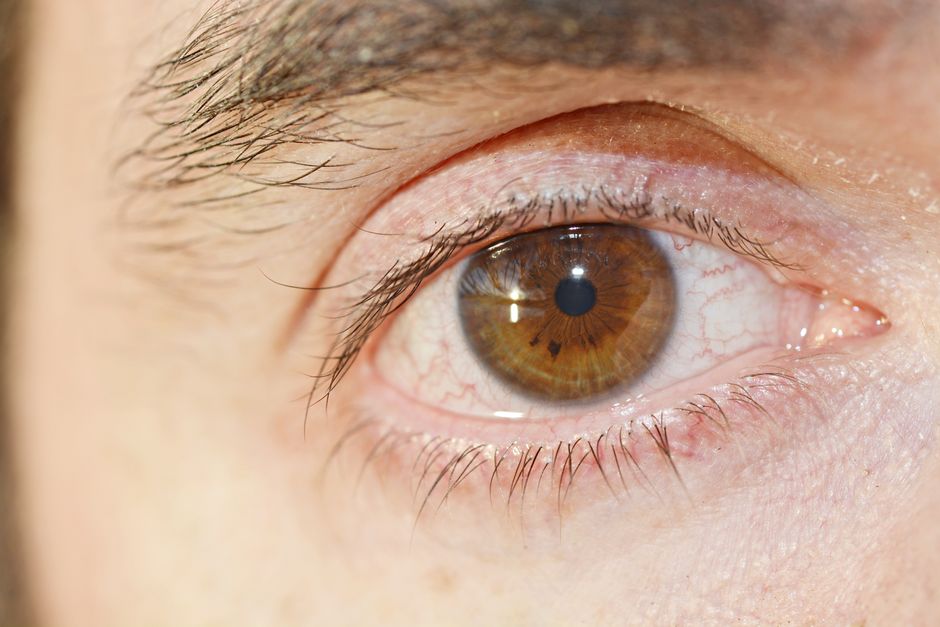
Ocular syphilis can occur at any stage, not just tertiary. It causes blurred vision, eye pain, or light sensitivity and can lead to permanent vision loss. Neurosyphilis can cause personality changes, memory problems, or in advanced cases, loss of coordination and dementia-like symptoms. If you are being treated for a neurological or eye condition and syphilis has never been ruled out, ask your doctor to check.
Syphilis is curable at every stage with antibiotics. But tertiary-stage damage to the heart, brain, or eyes may not fully reverse even after the infection is cleared.
Syphilis and HIV — Why the Two Travel Together
An open syphilis ulcer makes it significantly easier to transmit and acquire HIV. The sore is a direct route through the skin barrier. The risk runs both ways: untreated HIV can affect how syphilis progresses, and syphilis can accelerate HIV activity in the body.
If you are testing for syphilis, test for HIV at the same time. If you have had a potential HIV exposure within the last 72 hours, PEP (post-exposure prophylaxis) is still an option. Our sexual health service covers both, including same-day RPR blood testing and access to PrEP and PEP for HIV prevention.
Getting Tested for Syphilis Stages on Koh Samui
The RPR and VDRL blood tests are the standard way to screen for syphilis. The window period is generally three to six weeks after exposure. If you test negative but exposure was recent, a repeat test at three months gives a confirmed result.
Treatment is antibiotics, most commonly benzathine penicillin G given by injection. Primary and secondary syphilis usually require a single dose. Latent and tertiary stages require a longer course. The treatment itself is straightforward. What creates complications is delay.
If you are unsure about a sore, a rash, or a recent exposure, do not wait until you are home. A discreet walk-in appointment or a hotel visit from our team across Samui takes less time than you think, and a negative test result is worth having in writing. You can find full details on our sexual health testing page.
Doctor Samui offers confidential STI testing including RPR blood testing for syphilis, HIV testing, PrEP and PEP, and full sexual health panels at our walk-in clinic in Chaweng. If you are staying elsewhere on the island, our team provides 24/7 discreet hotel and villa visits across Koh Samui. You do not need to wait until you are home to get tested. Come in, call, or request a visit and we will handle the rest.
FAQ
Dr. Ponlawat Pitsuwan
Physician, Doctor Samui
a walk-in clinic based in Chaweng, Koh Samui, with 24/7 hotel and villa visits across the island. He sees tourists, families, and long-stay expats for sexual health concerns including STI testing, PrEP and PEP, syphilis diagnosis and treatment, and HIV screening. His focus is straightforward, evidence-based care delivered in plain language.
