
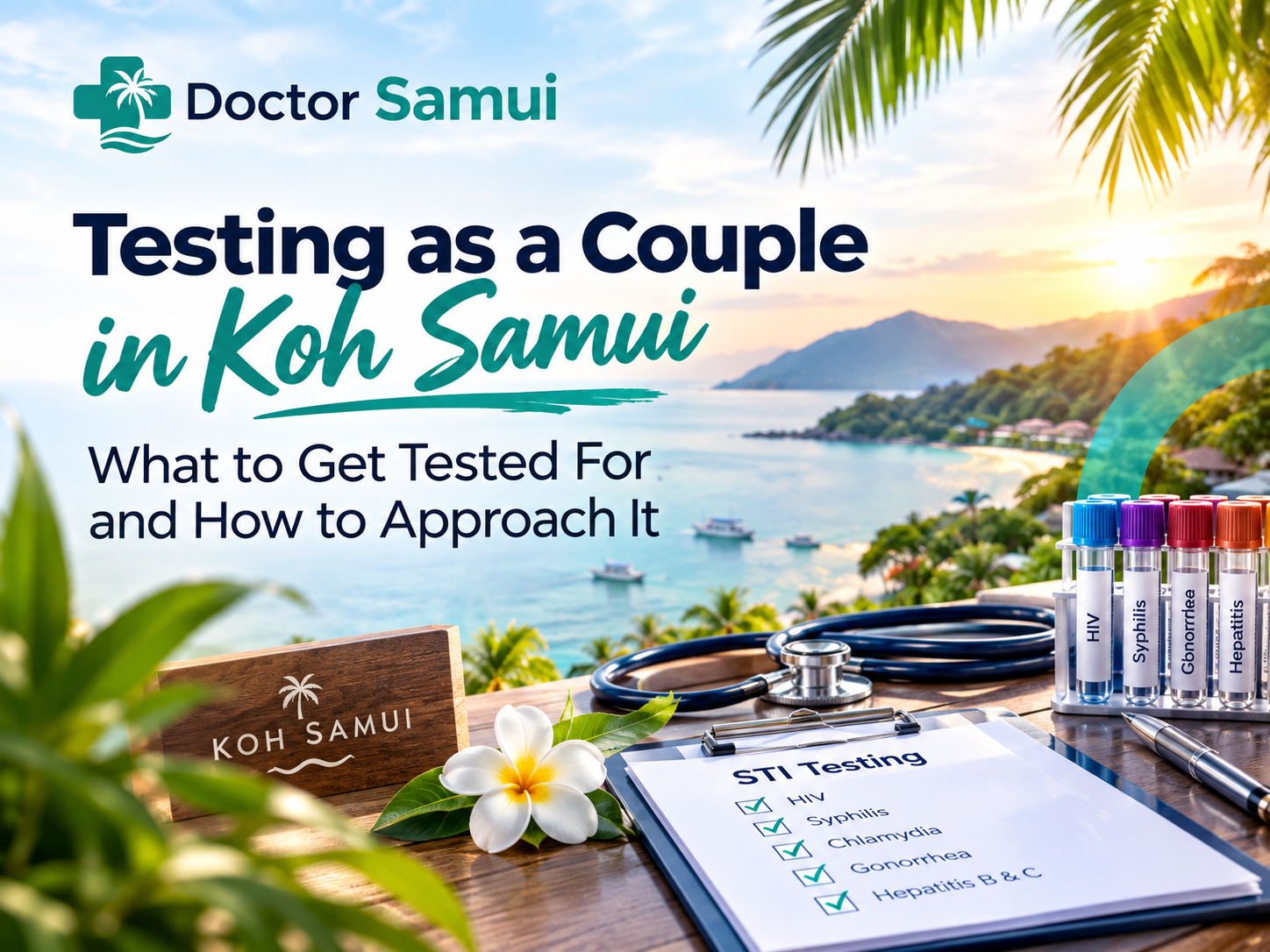
Clinically reviewed by Dr. Ponlawat Pitsuwan, Physician, Doctor Samui.
Last reviewed: September 2026
STD testing for couples in Koh Samui means both partners get tested and, if needed, treated at the same time. Testing one person while leaving the other untested leads to reinfection. Doctor Samui offers confidential joint screening at our Chaweng clinic or at your hotel or villa, with results typically in 24 to 48 hours.
You have been on Koh Samui for a few days, things have moved quickly, and now one of you is wondering whether you should both get checked. Or maybe you have been together for years, you are thinking about stopping contraception and starting a family, and you realise neither of you has ever had a proper baseline screen. Either way, couples come into our Chaweng clinic for exactly this reason more often than most people expect.
The most important thing to understand upfront: testing together is not just more convenient. It is clinically necessary. If one partner has chlamydia, gonorrhea, or syphilis and only one of you gets treated, reinfection happens. Getting tested as a unit, with results and treatment for both at the same time, is the only way to actually clear it.
Why Couples Should Get Tested Together, Not Just Individually
Many STIs cause no symptoms at all, sometimes for months or years. Chlamydia is the clearest example. One partner can carry and transmit it while feeling completely fine. The other develops symptoms, gets treated, but if their partner has not been tested and treated at the same time, reinfection follows the next time you have sex.
This is not a rare edge case. It is one of the most common reasons STIs persist in people who thought they had already dealt with them. The fix is straightforward: both partners test at the same appointment, both get results, and if treatment is needed, both take it simultaneously and abstain until you are both clear.
Baseline screening matters for long-term couples too. If neither of you has been tested since the relationship began, you do not actually know your shared status. That matters especially if you are stopping contraception, trying to conceive, or simply want to know where you stand.
What to Get Tested For as a Couple — The Core Panel
For most couples doing a joint screen, a full panel is the right call rather than individual rapid tests.
HIV is the one most people think of first. A blood test checks for the virus directly, or for the antibodies your body makes against it. Hepatitis B and C are also blood-borne and sexually transmitted, and both can be carried silently for years without symptoms.
Syphilis is making a comeback globally and on the island. It is entirely treatable with antibiotics when caught early, but the symptoms are easy to miss or mistake for something else. A blood test picks it up reliably after the window period has passed.
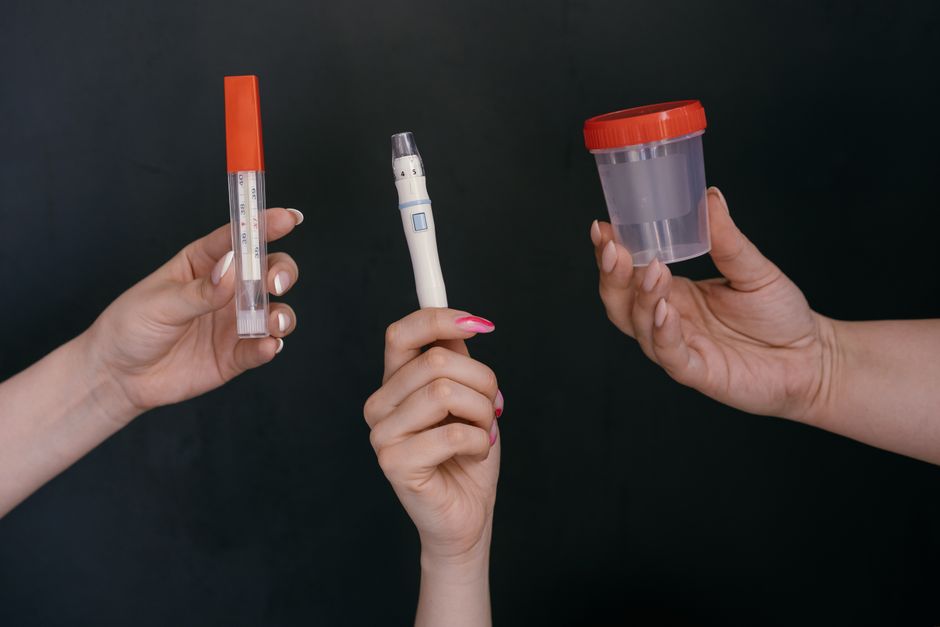
Chlamydia and gonorrhea are tested through a urine sample using a PCR test. These two are the most commonly missed infections in couples because neither usually causes obvious symptoms in both partners. Herpes antibody testing and HPV status can also be included, though those are worth discussing individually because interpreting the results is more nuanced.
| Test | Sample | What It Checks For |
|---|---|---|
| HIV antibody and antigen | Blood | HIV infection |
| Syphilis (RPR and TPHA) | Blood | Syphilis |
| Hepatitis B surface antigen | Blood | Active hepatitis B infection |
| Hepatitis C antibody | Blood | Hepatitis C exposure |
| Chlamydia PCR | Urine | Chlamydia trachomatis |
| Gonorrhea PCR | Urine | Neisseria gonorrhoeae |
| Herpes IgG antibody | Blood | HSV-1 and HSV-2 exposure |
Do Couples in Long-Term Relationships Still Need STD Testing?
This question comes up regularly, usually with a slightly sheepish look. The answer is yes, sometimes. Not because anything is being assumed about the relationship, but because neither untested partner actually knows their status from before it began.
Some infections, particularly hepatitis B, syphilis, and HIV, can be completely silent for years. If you have been together for three years and neither of you has been tested in that time, a baseline screen gives you a clean starting point. For couples on Koh Samui thinking about stopping contraception or trying to conceive, this screen genuinely matters. Untreated syphilis and hepatitis B both carry specific risks in pregnancy that are entirely preventable when caught beforehand.
Long-stay expats on the island are another group where this comes up often. Annual sexual health screening is a sensible habit, the same way you might do an annual blood pressure check. It does not need to be a crisis moment to be worth doing.
How to Bring Up STD Testing With Your Partner
This is the conversation most people find harder than the test itself. The worry is that asking your partner to get tested will feel like an accusation. It rarely does, when framed the right way.
Lead with the shared decision, not the suspicion. "I want us both to get a full health check while we are here" lands very differently to "I think one of us might have something." A holiday, a move, or stopping contraception is a natural prompt. It becomes a practical thing you are both doing, not an interrogation.
If you are not sure how to start, the Doctor Samui sexual health page has specific guidance on approaching this with a partner, including language you can actually use.
When to Test — Timing and Window Periods
Timing matters. All STI tests have a window period: the gap between exposure and when the test can reliably detect an infection. Testing too early can give a misleading negative result.
For HIV, a 4th-generation blood test is accurate from around 28 days after exposure. An HIV RNA PCR test can detect the virus earlier, from around 10 days, but which is appropriate depends on your situation and is worth discussing at the appointment. Syphilis is reliably detected from around 3 to 6 weeks after exposure. Chlamydia and gonorrhea PCR tests are accurate from about 2 weeks after exposure.
If you had a potential exposure within the last 72 hours, PEP (post-exposure prophylaxis) for HIV is time-critical. Do not wait. Contact us immediately, because PEP must be started within that window to be effective.
What Happens If One of You Tests Positive
A positive result in one partner does not automatically mean a positive in the other. But it does mean both partners need to be assessed and, for bacterial infections like chlamydia, gonorrhea, or syphilis, both treated at the same time.
For bacterial STIs, treatment is straightforward. Antibiotics clear chlamydia, gonorrhea, and syphilis reliably. Both partners take treatment simultaneously and avoid sex until both have completed the course. For HIV, a positive result opens a clear conversation about antiretroviral therapy and U=U, which means an undetectable viral load means the virus cannot be sexually transmitted to a partner. It is a manageable condition with modern medication.
If you need documentation for follow-up care at home, Doctor Samui can provide a medical letter summarising your results and treatment for your doctor to continue care after you leave.
How Couples STD Testing Works at Doctor Samui in Koh Samui
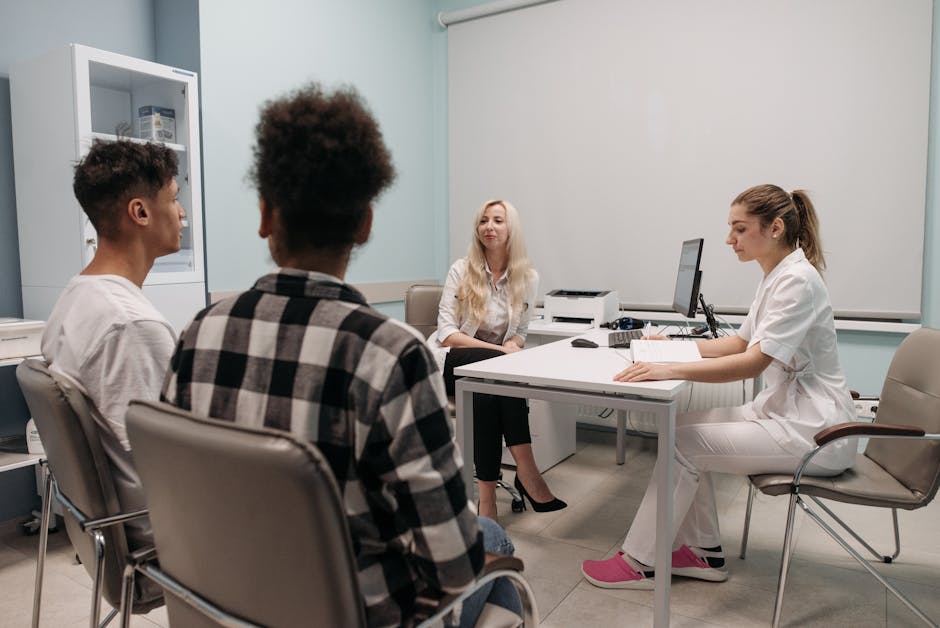
Walk-in means exactly that. You do not need an appointment, though you can book ahead if you prefer. Both partners can be seen in one consultation, either together or one after the other, depending on what you are comfortable with. Blood and urine samples are collected from both at the same time. Full lab results come back within 24 to 48 hours.
The hotel and villa visit option is worth knowing about. If you are staying in a private villa in Lamai, a resort in Chaweng, or a hotel in Bophut, a doctor or nurse comes to you. Samples are collected from both of you on-site, and results are handled exactly as they would be at the clinic. Many couples prefer this. There is no waiting room and no need to explain where you are going.
Everything is confidential. We see tourists, honeymooners, expat couples, and long-term residents. STD testing for couples in Koh Samui is a normal part of what we do here.
If you and your partner want a full joint STD screen in Koh Samui, Doctor Samui can test you both in one visit at our Chaweng clinic or at your hotel or villa, with full lab results in 24 to 48 hours. Walk-in is welcome, or contact us to arrange a private visit. Available 24 hours a day across the island.
FAQ
Dr. Ponlawat Pitsuwan
Physician, Doctor Samui
a walk-in clinic based in Chaweng, Koh Samui, with 24/7 hotel and villa visits across the island. He sees tourists, couples, and long-stay expats for STI screening, HIV testing and PEP, and sexual health consultations. His focus is straightforward, evidence-based care delivered in plain language.
