Clinically reviewed by Dr. Ponlawat Pitsuwan, Physician, Doctor Samui. Last reviewed: August 2026
Stick to plain, easy-to-digest foods: white rice, bananas, plain broth, and dry toast. Drink oral rehydration salts regularly, not just water. Avoid dairy, spicy food, caffeine, and alcohol until your stools are formed for at least 24 hours. In Koh Samui’s heat, dehydration sets in faster than you expect. If you cannot keep fluids down or symptoms last beyond 48 hours, get seen by a doctor the same day.
You ordered something at a Chaweng beach restaurant last night. By 3 a.m. you are making your fourth trip to the bathroom. Now you are lying in bed wondering what, if anything, you can safely eat. Traveler’s diarrhea hits fast here, and the first question almost everyone asks is the same: what do I eat now?
The short answer is simple food, small amounts, and a lot of the right fluids. But some instincts people have get this badly wrong. Skipping food entirely, drinking coconut water instead of rehydration salts, reaching for dairy to settle the stomach: all of these make things worse. This guide covers what actually helps, what to avoid, and when eating right is no longer enough.

What Is Actually Causing Your Diarrhea on Koh Samui?
Most tourists who come to our Chaweng clinic with diarrhea have traveler’s diarrhea. That means bacteria, usually from contaminated food or water. Common culprits include undercooked shellfish, street food left sitting in heat, tap water, ice made from tap water, and buffet food at resorts. Norovirus also circulates in holiday settings, especially where large groups eat together.
This matters for your diet because bacterial diarrhea can last three to five days even when you are eating well. If you are not improving after 48 hours of bland food and oral rehydration salts, something other than diet is likely driving it.
The Best Foods to Eat When You Have Diarrhea
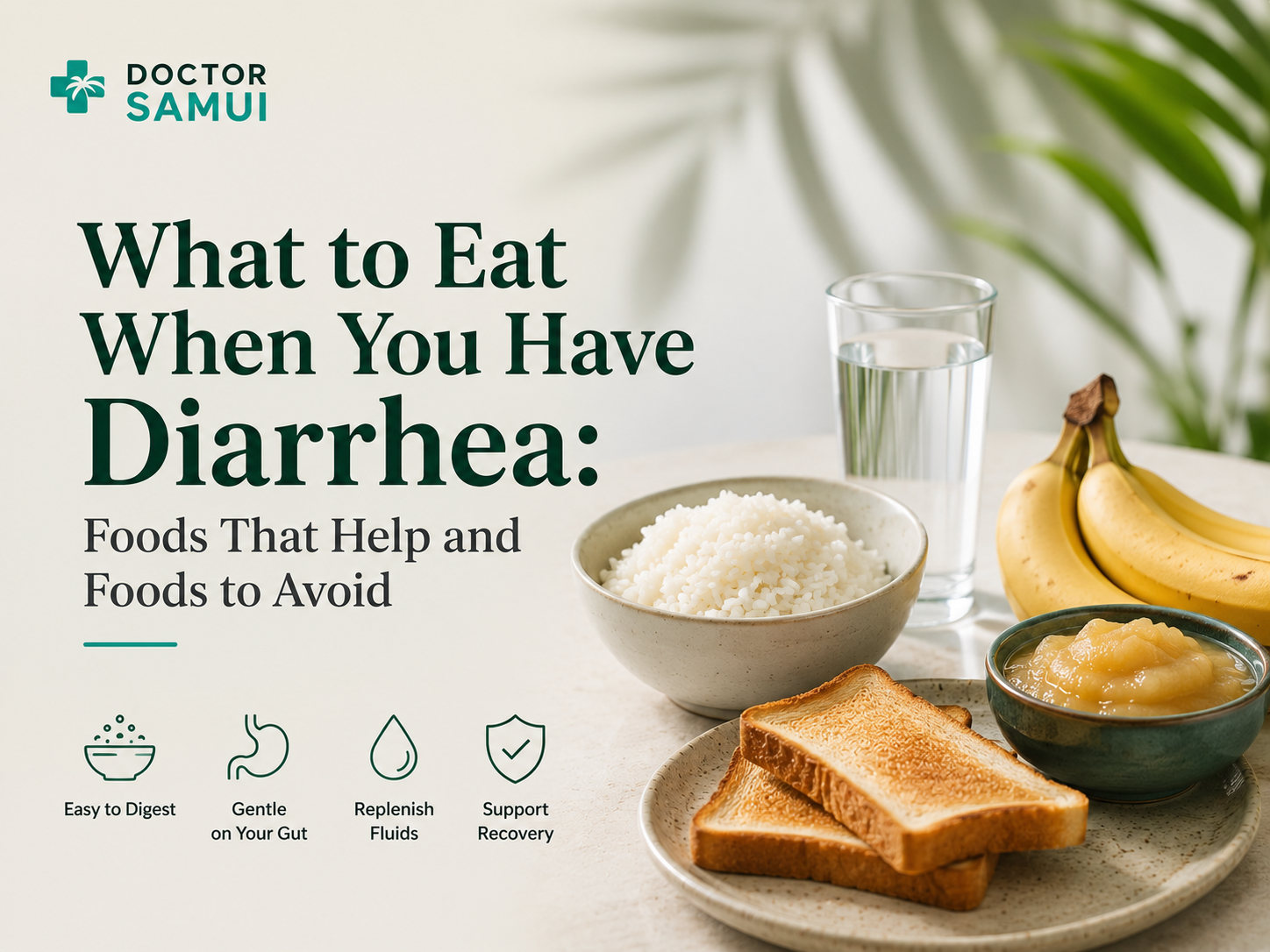
The BRAT diet, bananas, white rice, applesauce, and plain toast, is the standard starting point. These foods are low in fiber, easy to digest, and help firm up stools. You do not need to eat all four. Eat whichever ones you can stomach.
Plain boiled chicken or fish is also fine from day one. Scrambled eggs with no oil or seasoning. Plain crackers. Small portions matter more than exactly what you eat. Your gut is irritated, so give it less to process, not more variety.

Safe Local Thai Foods to Eat on Koh Samui
Most articles tell you to eat applesauce and plain toast. That is not what you find at a Samui beach restaurant or 7-Eleven. Here is what is actually available on the island and works just as well.
Jok, Thai rice porridge, is ideal. It is soft, low in fiber, and available at morning markets and many restaurants. Plain jasmine rice with clear broth is another solid option. Ripe bananas are sold everywhere and are one of the best things you can eat during diarrhea. Plain boiled chicken, which you can request at most Thai restaurants, works well too.
Skip the curries, the som tum, and anything fried. A simple rule: if it has chili in it, leave it for now.
The Best Drinks When You Have Diarrhea
Water alone is not enough. When you have diarrhea you are losing sodium and potassium alongside fluid. Replacing water without those electrolytes does not fully rehydrate you.
Oral rehydration salts (ORS) are the right tool. You can buy them at every 7-Eleven and pharmacy on the island. Mix a sachet with clean bottled water and sip steadily throughout the day. Clear broth adds sodium. Weak plain tea without milk is fine.
Coconut water comes up a lot because it is everywhere on Samui and it does contain potassium. It is a reasonable extra, but it is not a substitute for ORS. The balance of sodium and glucose in coconut water is not calibrated for rehydration the way ORS is. Use ORS first and add coconut water if you want it.
Why Hydration Matters More in Koh Samui’s Heat
In a cooler climate, diarrhea dehydrates you slowly. In 35-degree heat and high humidity, it happens much faster. You are already sweating more than usual just sitting still. Add fluid loss from diarrhea and you can reach significant dehydration within hours, especially if you are also vomiting.
We see patients at Doctor Samui who feel fine at 9 a.m. and are dizzy, dry-mouthed, and barely urinating by midday. Do not wait until you feel terrible to start drinking ORS. Start immediately.
For patients who cannot keep fluids down at all, IV rehydration is the fastest way to recover. We offer this at our Chaweng clinic and can also bring it to your hotel or villa.
Foods to Avoid When You Have Diarrhea
Dairy is the most common mistake. Diarrhea temporarily reduces your ability to digest lactose. Milk, cheese, and yogurt can all worsen symptoms, even in people who are usually fine with dairy.
Caffeine and alcohol both stimulate your gut and increase fluid loss. Skip them for at least 48 hours after your last loose stool. Fried food, spicy food, and anything with a heavy coconut milk base will aggravate an already irritated gut. High-fiber raw vegetables and fruit other than ripe bananas slow your recovery. Sugary drinks, including fruit juice and sodas, pull water into your gut and make diarrhea worse.
For more detail on what to stay away from, see our guide to foods to avoid with diarrhea.
What to Feed a Child with Diarrhea While Travelling
The guidance for children has changed. Current advice from the American Academy of Pediatrics is to continue the child’s usual age-appropriate diet as much as possible, not to restrict them strictly to plain foods. Children need nutrients to recover, and a very restricted diet for more than a day or two can leave them nutritionally short.
The priority for children is ORS, not specific food choices. Small, frequent sips of ORS prevent the main danger, which is dehydration. Avoid fruit juice, sports drinks, and sugary sodas. Do not give children loperamide. It is not safe for young children and is not appropriate for traveler’s diarrhea in kids.
If your child under two has diarrhea, has blood in their stool, or shows any signs of dehydration (sunken eyes, crying without tears, dry mouth, no wet nappy for six hours), get medical help the same day. Our team can come to your hotel if getting out feels difficult with a sick child.
How to Gradually Return to a Normal Diet
Do not stay on bland food longer than you need to. Most guidance now supports returning to a normal diet as soon as symptoms start improving, not waiting until everything feels perfect.
In the first 24 to 48 hours, keep to rice, bananas, broth, and plain protein. Once your stools start to firm up, add boiled vegetables and a wider range of simple proteins. By day three or four of improvement, most people can eat normally with a few cautions.
Avoid spicy food, alcohol, and raw seafood for at least another 48 hours after symptoms resolve. Going back too fast to a full Thai feast or a beach bar night is a common reason diarrhea returns.
Probiotics with evidence-based strains, such as Lactobacillus rhamnosus GG, may support gut recovery. The evidence is moderate but consistent. Probiotic supplements are available at pharmacies across the island.
Warning Signs That Mean You Need a Doctor Today
Dietary management is the right first step for mild traveler’s diarrhea. But some signs mean food choices are no longer the issue.
See a doctor the same day if you have blood or black colour in your stool, a fever above 38°C, severe cramping that does not ease, diarrhea lasting more than 48 to 72 hours without improvement, or vomiting that stops you keeping any fluids down. Dizziness when you stand, very dark urine, or no urination for eight or more hours are signs of significant dehydration. In Samui’s climate, these come on faster than most travellers expect.
Loperamide can reduce stool frequency in adults but should not be used if you have a fever or blood in your stool. It does not treat the underlying infection. If you are unsure whether it is right for your situation, ask us before taking it.
Diarrhea that is not improving after 48 hours, especially with fever, vomiting, or signs of dehydration, needs more than dietary management. Doctor Samui’s Chaweng clinic is open for walk-in visits, and our team offers 24/7 hotel and villa visits across Koh Samui, including Lamai, Bophut, Maenam, and Choeng Mon. We can assess your symptoms, run tests if needed, and provide IV rehydration on the spot. Contact us through doctorsamui.com or ask your hotel reception to call us directly.
FAQ
Dr. Ponlawat Pitsuwan
Physician, Doctor Samui
a walk-in clinic based in Chaweng, Koh Samui, with 24/7 hotel and villa visits across the island. He sees tourists, families, and long-stay expats for traveler’s diarrhea, food poisoning, dehydration, and gastrointestinal illness related to island travel. His focus is straightforward, evidence-based care delivered in plain language.