Clinically reviewed by Dr. Ponlawat Pitsuwan, Physician, Doctor Samui. Last reviewed: August 2026
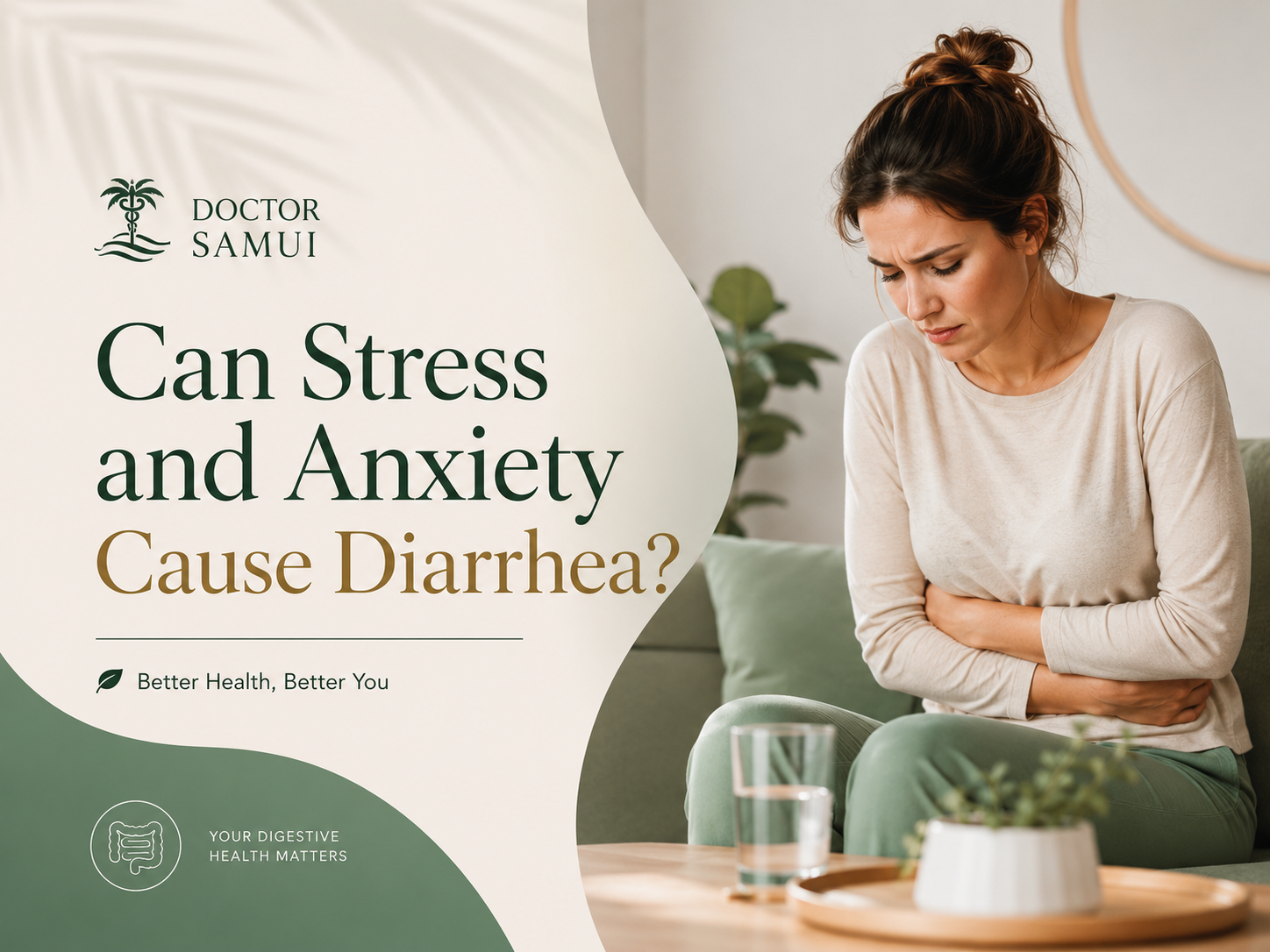
Yes, stress and anxiety can directly cause diarrhea. Your gut and brain are connected by a signalling network that responds to stress by speeding up digestion. On holiday in Koh Samui, this can overlap with food poisoning or traveller’s diarrhea, making it hard to tell what is actually going on. If symptoms last beyond 48 hours, include fever, or you see blood in your stool, get seen by a doctor the same day.
You have not eaten anything suspicious. You feel fine, maybe even excited. But somewhere between the taxi from Samui Airport and checking into your resort, your stomach starts churning. By the time you sit down for your first meal, you already need the bathroom. This is one of the most common things we hear from tourists in their first 24 hours on the island, and stress is almost always part of the answer.
Your gut reacts to stress the same way your heart does: faster, harder, less controlled. A long flight, broken sleep, the heat, a new time zone, the low-level pressure of making a holiday go right — all of it fires the same physical stress response as genuine anxiety. The result is loose stools, urgency, and cramping that can ruin your first morning at the beach. The question worth asking is whether that is stress or something you ate, and on Koh Samui, getting that answer right actually matters.

Why Stress Sends You Straight to the Bathroom
Your gut has its own nervous system, a dense web of nerves lining your intestines that is in constant conversation with your brain. When stress hits, your brain releases cortisol and adrenaline. Your gut receives those signals and speeds up. Food moves through faster. Water is not absorbed properly. The result is loose, urgent stools — what most people call nervous diarrhea.
Around 90 percent of the body’s serotonin is produced in the gut, not the brain. Stress disrupts that balance, and when serotonin spikes in the intestinal lining, the gut moves faster. This is not hypochondria. It is a genuine physical process, and it happens to a lot of people on travel days.
Holiday Stress Is Still Stress — Even When You Are Having Fun
This is the part that surprises most tourists. You do not need to feel anxious for your gut to respond. Jet lag alone shifts your cortisol rhythm. Disrupted sleep raises stress hormones overnight. Unfamiliar food smells, a changed eating schedule, the humidity, the excitement of a new place — all of these are physical stressors. Your nervous system does not distinguish between a work deadline and the disruption of a 10-hour flight into Thai heat.
We see this pattern constantly at our Chaweng clinic, especially in the first day or two of a trip. People arrive feeling good, eat carefully, avoid tap water, and still end up with loose stools. Travel itself is a real gut trigger, even when your mood is excellent.

Can Stress Cause Diarrhea — or Is It Something You Ate?
This is the right question, and in Koh Samui it is not always straightforward. Stress diarrhea and traveller’s diarrhea from a bacterial or parasitic infection can feel almost identical in the first few hours.
Stress diarrhea tends to start during or right after a clear trigger: arrival, a long travel day, a big change in routine. You get loose stools and urgency, but no fever, no vomiting, no blood, and things usually settle once you rest and rehydrate. An infection usually brings fever, sometimes vomiting, and symptoms that do not improve or get steadily worse. Blood or mucus in your stool is always a sign to get tested, not to wait.
The problem is that both can happen at the same time. Stress lowers gut barrier function, which makes you more vulnerable to bacteria in unfamiliar food and water. If you are not sure which one you are dealing with, do not reach for antibiotics. Antibiotics do not treat stress diarrhea, and taking them when there is no infection disrupts your gut in ways that can outlast your holiday. Come in for a proper assessment first, including a stool test if needed.
How Koh Samui’s Heat Makes This Worse
At home, a brief bout of loose stools is inconvenient. Here, it can tip you into dehydration faster than you expect. You are already sweating more than usual from the heat and humidity. If you spent the morning at a beach club in Chaweng or walking the Fisherman’s Village market in Bophut, your baseline fluid loss is already higher than it would be on a cool day back home. Add a few episodes of diarrhea and the numbers shift quickly, especially for children and older travellers.
Dizziness, a dry mouth, dark urine, and a headache that paracetamol does not shift are all signs your body is behind on fluids. If you are also drinking alcohol, that risk goes up. Oral rehydration salts are the right first response, and you can pick them up at any 7-Eleven on the island. If vomiting is making that difficult, IV rehydration at the clinic or via a hotel visit is the fastest way to recover.
Red Flags — When to Stop Waiting and Get Seen
Most stress diarrhea resolves in a few hours to a day with rest, rehydration, and a bland diet. You do not need a doctor for that. But some symptoms should not wait.
See a doctor the same day if you have a fever above 38.5°C, if there is blood or mucus in your stool, if vomiting is stopping you from keeping fluids down, or if diarrhea has not improved after 48 hours. For children under two, any of those signs means same-day assessment. Children dehydrate faster than adults, and in this heat the window between mild and serious dehydration is shorter than most parents expect.
Do not assume it is stress if your symptoms are getting worse, not better. An infection left untreated can cause ongoing gut sensitivity long after the original illness has cleared. Getting it right early saves a much longer recovery.
What to Do at Your Hotel Right Now
If your symptoms are mild and you have no fever, start here. Drink oral rehydration salts, not just plain water. Plain water alone does not replace the electrolytes lost through diarrhea. Eat small amounts of bland food: plain rice, banana, dry toast. Avoid dairy, spicy food, and alcohol until your gut has settled.
Rest genuinely helps. If your diarrhea is travel-triggered, giving your nervous system a quiet few hours often makes a real difference. A cool room and no pressure to be anywhere are underrated medicine. If you need loperamide to reduce urgency for a specific situation, that is reasonable for mild cases without fever — but do not use it if you have a fever or blood in your stool, as it can slow the clearance of an active infection. If you are uncertain, call before you reach for it. Doctor Samui offers 24/7 hotel and villa visits across Chaweng, Lamai, Bophut, Maenam, and the rest of the island, so you do not need to travel when you are not well.
Not sure if it is stress, something you ate, or an infection? Doctor Samui offers same-day walk-in appointments at our Chaweng clinic and 24/7 hotel and villa visits across Koh Samui. We can assess your symptoms, run a stool test if needed, and get you the right treatment without guesswork. You do not have to wait it out alone.